
Urban Gardening – A Path to Sustainable Food Systems in Cities
Empowering Communities to Grow Local, Eat Fresh, and Reduce Environmental Impact''
Delivered by [Asim]
Good morning,
Distinguished guests, colleagues, and fellow citizens,
Thank you for the opportunity to speak with you today about an issue that is both deeply practical and profoundly transformative: urban gardening—a grassroots solution with the potential to reshape our cities, strengthen our communities, and build more sustainable food systems for future generations.
As we stand at a critical moment in our environmental and social journey, the way we produce, distribute, and consume food has come under increasing scrutiny. Our modern food systems are heavily reliant on long supply chains, fossil fuels, and centralized agriculture, often located hundreds or even thousands of miles away from where the food is ultimately consumed. This model contributes significantly to greenhouse gas emissions, food waste, and a loss of connection between people and the natural processes that sustain them.
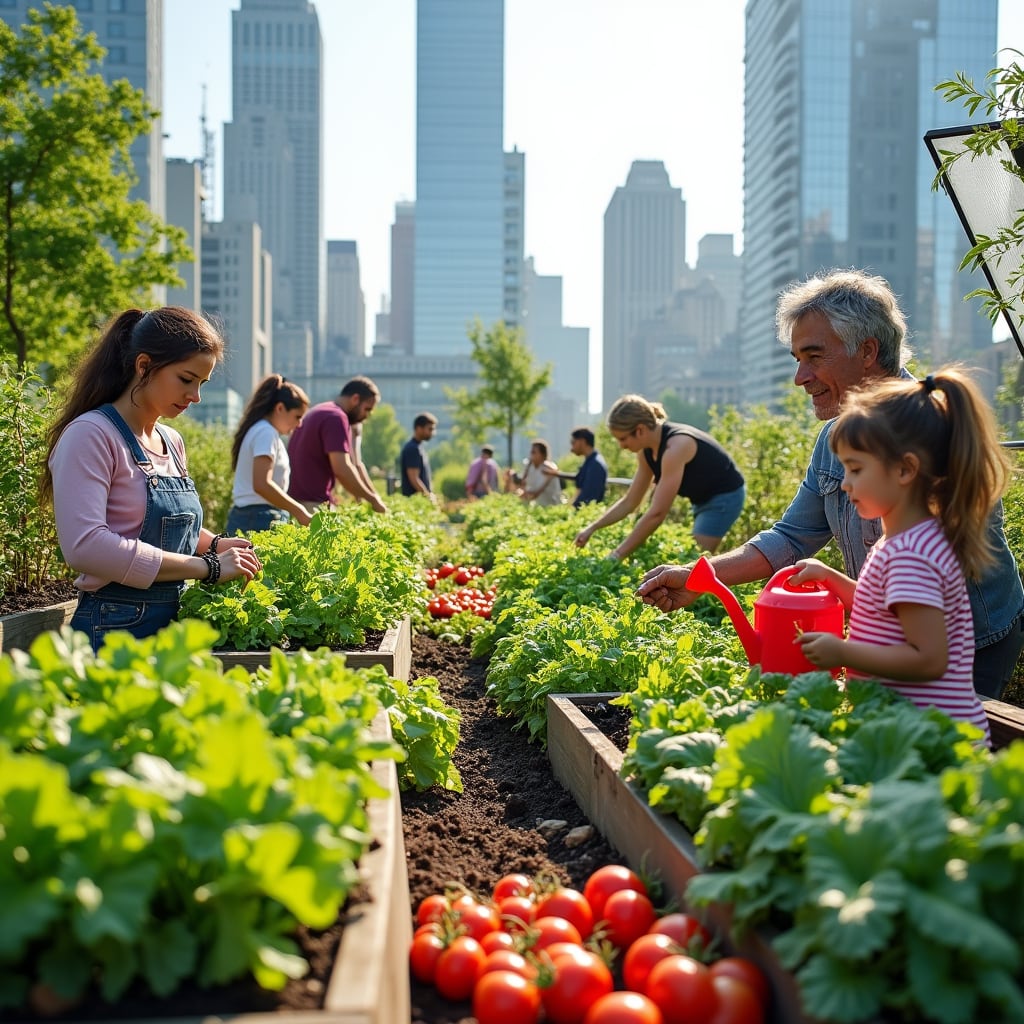
And yet, the answer to many of these challenges may be closer than we think—perhaps just outside our window, on a rooftop, in a backyard, or on a shared plot of land. Urban gardening—the practice of growing food in cities—is not a new idea, but it is one whose time has come. In fact, it has the power to revolutionize how we think about food, sustainability, and community resilience.
Let us begin by considering the environmental impact.
One of the most compelling reasons to promote urban gardening is its contribution to environmental sustainability. Traditional industrial agriculture often involves heavy machinery, synthetic fertilizers, and extensive transportation, all of which increase the carbon footprint of our food. In contrast, growing food locally, within urban areas, drastically reduces the need for transport and packaging. It minimizes food miles, cuts emissions, and reduces reliance on nonrenewable resources.
Moreover, urban gardens promote biodiversity. By creating green pockets in cities—whether in backyards, community lots, or rooftop terraces—we invite pollinators, support local ecosystems, and improve air quality. These gardens also play a role in mitigating the urban heat island effect, helping to cool our cities naturally.
But the benefits of urban gardening extend beyond the environment. They reach deep into the fabric of our communities.
In many cities, access to fresh, healthy, and affordable food is not a guarantee. Food deserts, areas where nutritious food is difficult to obtain, disproportionately affect low-income neighborhoods. Urban gardening can be a direct and effective response to this inequity. By empowering residents to grow their own food, we foster food sovereignty—the ability of communities to define their own food systems.
Urban gardens also act as hubs for education and social connection. They become places where people come together to share knowledge, work collaboratively, and build stronger relationships. Children learn where their food comes from and develop a deeper respect for nature. Elderly residents find meaningful ways to engage with their community and share wisdom. Immigrant families can grow crops familiar from their home countries, preserving culture and tradition.
These gardens also offer psychological and emotional benefits. In a world dominated by screens and schedules, tending to plants can be a powerful act of mindfulness. Studies show that gardening reduces stress, anxiety, and even symptoms of depression. It reconnects us with natural cycles—growth, decay, renewal—that are often forgotten in urban life.
Of course, like any meaningful change, urban gardening is not without its challenges. Space is limited, soil can be contaminated, and access to resources such as water, seeds, and tools is not always equal. However, these obstacles are not insurmountable. With supportive public policy, community-led initiatives, and educational outreach, we can scale urban gardening in equitable and impactful ways.
Governments and city planners must recognize the value of green space as essential infrastructure. Incentives can be provided for rooftop gardens, vacant lot cultivation, and school gardening programs. Local organizations can offer training, support networks, and resources for beginner gardeners. And urban agriculture must be integrated into broader discussions on sustainability, food security, and climate adaptation.
Technology also offers new possibilities. Innovations like vertical gardening, hydroponics, and aquaponics allow us to grow more food in less space using fewer resources. These methods are particularly valuable in densely populated areas where traditional gardening might not be feasible.
Ultimately, urban gardening represents a return to something profoundly human. It is a reclaiming of agency over our food, a reawakening of our connection to the Earth, and a reimagining of our cities as places not just of consumption, but of cultivation.
So, I leave you today with this vision:
Imagine a city where every rooftop is a garden.
Where children grow tomatoes in their schoolyards.
Where seniors harvest herbs in community plots.
Where neighborhoods come together not just to eat, but to grow.
This is not a dream. It is a future within reach.
But it starts with a seed.
A seed of intention, a seed of action, a seed of hope.
Let us plant that seed today—on our balconies, in our schools, in our policies, and most importantly, in our minds.
Because the path to a sustainable future may very well begin in the soil beneath our feet—even if that soil is in the heart of a city.
Thank you.
About the Creator
Asim Mehmood
*"I autopsy my life's turning points to extract growth hacks with heart.
Where vulnerability meets strength. True stories of personal growth and self-discovery.
Let's grow together."
Keep reading
More stories from Asim Mehmood and writers in Earth and other communities.
30 Days, 30 Meltdowns: The Truth About Forcing Yourself to Wake Up Early
I had always heard the success stories—people swearing by the magic of waking up at 5 AM. They talked about how the early hours gave them a jumpstart on their day, filled with productivity, focus, and time to conquer the world before the rest of it even started moving. I wanted that. I thought, if they could do it, so could I. So, I decided to commit. I set my alarm for 5 AM, ready to become one of those "early risers" everyone raves about.
By Asim Mehmood9 months ago in Lifehack
Harnessing Pyrolysis for Forest Fire Mitigation
Forest ecosystems face increasing wildfire risks due to climate change, prolonged drought, and human activity. Traditional fire prevention methods, including controlled burns and mechanical thinning, have proven partially effective but carry limitations in scalability and environmental impact. Integrating pyrolysis-based strategies presents an innovative pathway to reduce combustible biomass while generating valuable by-products, aligning ecological stewardship with economic utility.
By Wayne Shen5 days ago in Earth
Pentagon Contractor Indicted Over Alleged Leak Tied to Raided Washington Post Reporter
A Pentagon contractor has been indicted in connection with an alleged leak tied to a Washington Post reporter, marking a significant escalation in the U.S. government’s scrutiny of leaks involving national security information. The case has raised questions about press freedom, government overreach, and the balance between security and transparency, stirring debates in political, legal, and journalistic circles. Background of the Case According to court documents, the Pentagon contractor is accused of disclosing classified or sensitive information to a Washington Post journalist, whose office was previously raided by federal authorities as part of a leak investigation. The allegations include: Transmitting sensitive information without authorization. Coordinating with journalists who may have used the material in published reports. Potentially compromising national security operations or personnel. Federal prosecutors allege that the contractor knowingly violated U.S. law by disclosing information protected under federal statutes governing classified material. The Washington Post Connection This case is closely linked to a prior federal raid on a Washington Post reporter, an unprecedented action that drew widespread criticism from journalists and press freedom advocates. The raid reportedly aimed to identify the source of leaks regarding sensitive military or defense operations. The indictment of the Pentagon contractor underscores the government’s ongoing efforts to identify and prosecute sources of classified leaks, even when they involve interactions with journalists. Critics argue that such investigations risk chilling investigative reporting and undermining the First Amendment. Legal Details of the Indictment While some details remain sealed due to the sensitive nature of the information, the indictment reportedly charges the contractor with: Unauthorized disclosure of national defense information. Conspiracy to leak classified material. Violation of federal secrecy and security laws. The contractor now faces potential penalties including prison time, fines, and the permanent loss of security clearance. The case will be closely watched by legal experts, media organizations, and policy analysts, as it could set important precedents for how leaks are investigated and prosecuted. Implications for Press Freedom Journalists and press freedom organizations have raised concerns over the broader implications of this case. Key issues include: Chilling effect on investigative journalism: If government employees fear prosecution for speaking to reporters, crucial stories may go unpublished. Source protection: Confidential sources are vital for reporting on matters of public interest, particularly regarding government and military operations. Transparency vs. security: Balancing the public’s right to know with national security interests remains a complex challenge. The Washington Post and other news outlets have emphasized that government actions should respect constitutional protections for press freedom, even when investigating leaks. Government’s Perspective From the government’s standpoint, the case highlights the risks posed by unauthorized disclosures of sensitive information. Officials argue that leaks can: Compromise ongoing military operations. Endanger personnel and intelligence assets. Undermine national security and international relations. Prosecutors assert that the Pentagon contractor acted knowingly and illegally, justifying the indictment as necessary to protect national interests. Previous Leak Cases and Context This indictment comes amid a series of high-profile leak investigations involving U.S. government employees, contractors, and journalists: Previous cases have involved classified defense documents, intelligence reports, and diplomatic cables. Some investigations resulted in prosecutions, while others sparked controversy over press freedom and government overreach. These cases often raise complex legal questions about the definition of classified information and the rights of journalists to report on public interest issues. Legal experts say this Pentagon contractor case may be one of the most significant yet, given its direct tie to a mainstream news outlet. Public and Media Reaction The indictment has elicited strong reactions from multiple sectors: Journalists: Press freedom advocates express concern that prosecuting sources of leaks could intimidate whistleblowers and reporters. Legal analysts: Experts are closely watching how the courts interpret laws governing classified material and the limits of government authority. Policy makers: Some lawmakers have emphasized the need for clearer guidelines on leaks and protections for investigative reporting. Civil liberties organizations have warned that aggressive leak investigations may inhibit government accountability, especially on issues involving national defense and public interest. Potential Outcomes and Next Steps The Pentagon contractor now faces trial proceedings, which may include: Pre-trial motions challenging the scope of evidence and the legality of the indictment. Examination of whether journalists’ communications can be implicated in legal proceedings. Decisions on sentencing if convicted, including potential prison time and fines. Observers predict that the case may also influence future government policies on leak investigations and employee handling of sensitive information. Why This Matters This case illustrates the delicate balance between national security and press freedom. Key takeaways include: Government employees and contractors must exercise caution when handling classified material. Journalists rely on confidential sources to report on matters of public interest. Legal and ethical frameworks must address both the risks of leaks and the protection of free speech. The outcome of this case could set legal precedents affecting not just defense contractors, but journalists, whistleblowers, and government transparency efforts. Final Thoughts The indictment of a Pentagon contractor over an alleged leak linked to a raided Washington Post reporter underscores the complex intersection of national security, law, and press freedom. While the government seeks to protect sensitive information, the case also raises questions about constitutional rights, transparency, and accountability. As proceedings unfold, this case will likely continue to be a touchstone in discussions about how the U.S. balances security concerns with the democratic imperative of a free press, and how future leak investigations are conducted
By Muhammad Hassanabout 4 hours ago in Earth



Comments
There are no comments for this story
Be the first to respond and start the conversation.