
Unveiling the Vastness: Earth's Humble Place in the Expansive Universe
From Grains of Sand to Galaxies: A Journey through Cosmic Magnitudes

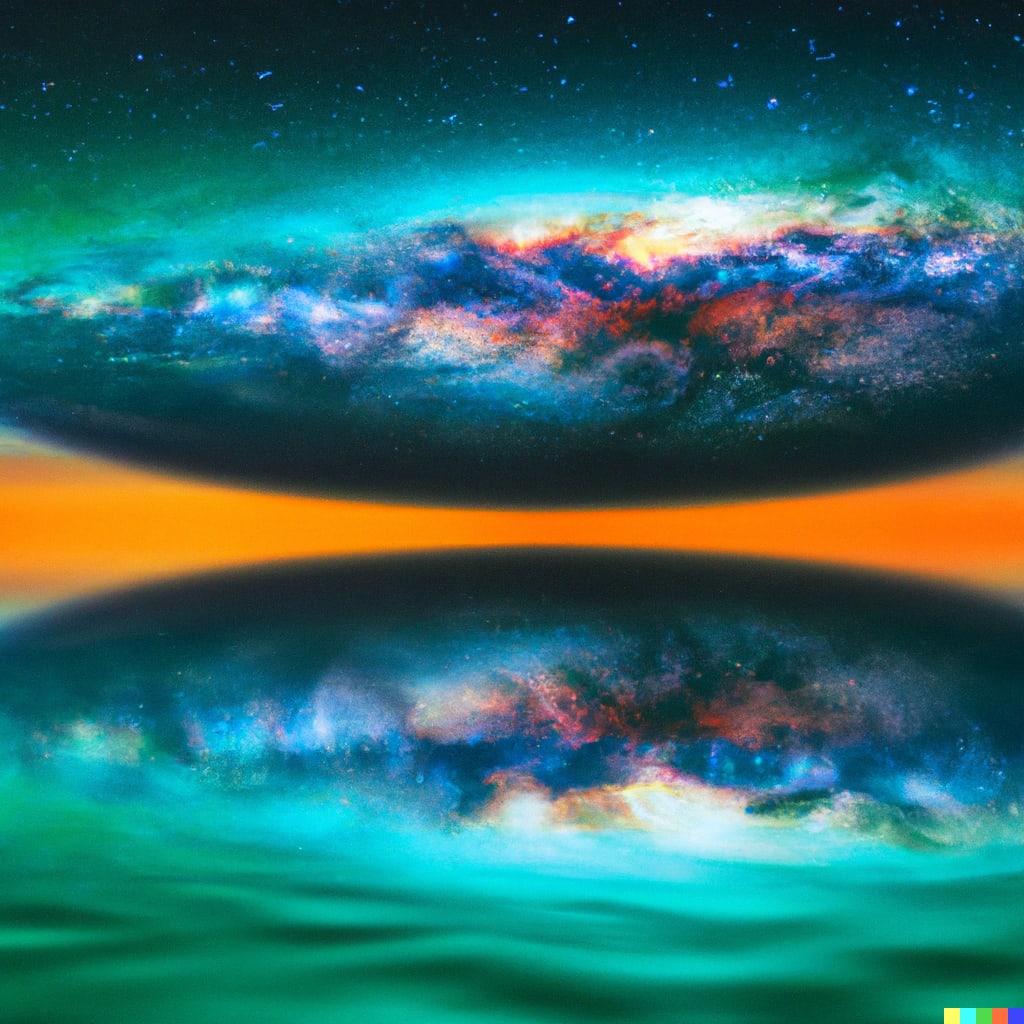
Welcome to planet Earth, your home within the vast expanse of the universe. In our immediate vicinity, within our solar system, lies the moon, which may not appear too distant at first glance. However, at its farthest point, the moon and Earth are separated by a staggering distance of 252,088 miles. To put this into perspective, this distance is sufficient to accommodate all the planets in our solar system.
Speaking of planets, let's explore their sizes and features. Jupiter boasts the Great Red Spot, a colossal storm that spans roughly twice the size of Earth. Saturn, on the other hand, dwarfs Earth by a factor of nine in width. Its magnificent rings are so vast that some of the fragments within them are comparable in size to mountains. But these celestial wonders pale in comparison to our very own Sun.
Now, let's consider Earth's perspective from various locations within our solar system. When viewed from the moon, Mars, or even behind Saturn's rings, Earth appears as a tiny dot. When we venture even farther to the outer reaches of our solar system, such as beyond Neptune, Earth becomes a minuscule speck located four billion miles away. To grasp the magnitude of a billion, consider this: one million seconds is equivalent to approximately eleven and a half days, while one billion seconds elapse over a span of more than 31 years.
Now, let's take a step back and contemplate the sheer size of our Sun compared to Earth. The comparison is truly awe-inspiring and can be quite unsettling. Furthermore, when standing on the surface of Mars, one can observe the same Sun that Carl Sagan once contemplated
The vastness of the universe is beyond comprehension. The total number of stars in existence surpasses the countless grains of sand adorning all the beaches on Earth. Among these stars, there are colossal giants that far exceed the size of our Sun. Take, for instance, VY Canis Majoris, the largest known star, which boasts a diameter approximately 2,000 times greater than that of our Sun.
However, even these immense stars are overshadowed by the sheer magnitude of galaxies. If we were to shrink our solar system down to the size of a quarter and apply the same scale to the Milky Way, our galaxy would stretch across the United States. To put it into perspective, the diameter of the Milky Way measures a staggering 100,000 light-years, equivalent to approximately 621 quadrillion, 371 trillion, 192 billion, 237 million, three hundred thirty-three thousand, eight hundred ninety miles.
Within this vast expanse lies our humble abode, a tiny fraction of the Milky Way. Yet, even our galaxy is dwarfed by others. For instance, NGC 674, a spiral galaxy similar to our own, spans twice the width of the Milky Way, stretching over two hundred thousand light-years.
Now, let's broaden our perspective further. In a single image captured by the Hubble telescope, we observe thousands upon thousands of galaxies, each containing millions or billions of stars, accompanied by their own planetary systems. Some of the celestial objects captured in this image may have formed as early as 11 billion years ago, a mere three billion years after the Big Bang.
It is essential to bear in mind that this image represents only a minuscule fraction of the vast universe. So, whenever you feel dismayed by the cancellation of your favorite show or the early arrival of Christmas music, remember this: Earth is our home, a tiny speck within the grand tapestry of the cosmos.
The vastness of the universe is beyond comprehension. Consider this: the total number of stars in existence surpasses the countless grains of sand adorning all the beaches on Earth, making our home planet but a tiny speck in the grand cosmic tapestry. Among these stars, there are colossal giants that far exceed the size of our Sun, like the awe-inspiring VY Canis Majoris, boasting a diameter approximately 2,000 times greater than that of our Sun.
However, even these immense stars are mere specks when compared to the sheer magnitude of galaxies. If we were to shrink our solar system down to the size of a quarter and apply the same scale to the Milky Way, our galaxy would stretch across the United States, illustrating its vastness. To put it into perspective, the diameter of the Milky Way measures a staggering 100,000 light-years, equivalent to approximately 621 quadrillion, 371 trillion, 192 billion, 237 million, three hundred thirty-three thousand, eight hundred ninety miles.
Within this vast expanse lies our humble abode, a tiny fraction of the Milky Way. Yet, even our galaxy is dwarfed by others. Take, for instance, NGC 674, a spiral galaxy similar to our own, stretching over two hundred thousand light-years, twice the width of the Milky Way.
Now, let's broaden our perspective further. In a single image captured by the Hubble telescope, we observe thousands upon thousands of galaxies, each containing millions or billions of stars, accompanied by their own planetary systems. Some of the celestial objects captured in this image may have formed as early as 11 billion years ago, a mere three billion years after the Big Bang. This period, known as one of the busiest star-forming periods, reveals the astounding cosmic processes at play.
It is essential to bear in mind that this image represents only a minuscule fraction of the vast universe, reminding us of our relative insignificance in the grand scheme of things. So, whenever you feel dismayed by the cancellation of your favorite show or the early arrival of Christmas music, take solace in the fact that Earth is our home, a tiny speck within the grand tapestry of the cosmos, inviting us to embrace the wonder and mysteries that lie beyond our comprehension.
About the Creator
Tourists Banned From Entering a Famous Snowfall Spot for Four Days: What Happened and Why It Matters
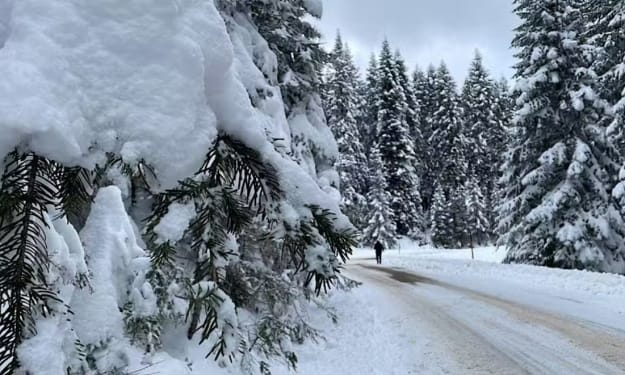
Snowfall destinations attract millions of tourists every year. Fresh snow, white landscapes, and winter activities turn certain locations into seasonal hotspots. But sometimes, nature’s beauty comes with serious risks. Recently, authorities temporarily banned tourists from entering a famous snowfall spot for four days, citing safety, environmental, and logistical concerns. The decision sparked debate among travelers, local businesses, and environmental experts. While many tourists expressed disappointment, officials argued that the ban was necessary to protect lives, infrastructure, and the fragile winter environment. Why Authorities Imposed the Ban The temporary closure was not an impulsive move. Officials announced the restriction after extreme snowfall overwhelmed the area, making roads dangerous and emergency access difficult. Heavy snow accumulation reduced visibility, increased avalanche risks, and caused traffic congestion that emergency services could not manage effectively. In previous years, similar conditions had resulted in stranded vehicles, medical emergencies, and damage to local infrastructure. Authorities learned that allowing unrestricted tourism during extreme snowfall could turn a scenic trip into a disaster. By banning entry for four days, officials aimed to: Clear roads and restore access routes Reduce the risk of accidents and avalanches Allow emergency services to operate efficiently Prevent environmental damage caused by overcrowding Tourist Reactions: Frustration and Understanding Many tourists had planned their trips weeks in advance. Hotels were booked, transportation arranged, and expectations set. For them, the sudden ban felt unfair and inconvenient. Social media quickly filled with complaints, with travelers questioning why better planning hadn’t prevented the closure. However, others supported the decision, acknowledging that safety should always come first. Experienced travelers pointed out that winter tourism carries inherent risks, especially in mountainous or high-altitude regions. As one frequent visitor noted online, “Snow is beautiful, but it doesn’t care about travel plans.” Impact on Local Businesses Local businesses often feel the immediate impact of such bans. Hotels, restaurants, tour operators, and small vendors rely heavily on seasonal tourism. A four-day closure can mean significant financial losses, especially during peak snowfall periods. Some business owners expressed concern about lost revenue, while others supported the ban as a necessary short-term sacrifice. Many acknowledged that accidents or fatalities would cause far greater long-term harm to the region’s reputation. In some cases, local authorities offered partial relief measures, such as rescheduling permits, extending hotel bookings, or waiving certain fees. These steps helped ease tensions between officials and the tourism industry. Environmental Concerns During Peak Snowfall Beyond safety, environmental protection played a major role in the decision. Popular snowfall destinations often experience severe strain during peak tourist seasons. Large crowds can damage snow-covered vegetation, increase waste, and disturb wildlife. When snow accumulates rapidly, ecosystems become even more vulnerable. Trampling through fragile areas, littering, and off-road driving can cause long-lasting damage that takes years to recover. Temporary bans give nature time to stabilize. Snowpack settles, wildlife adjusts, and authorities can manage waste and infrastructure more effectively. In this sense, the restriction serves not only humans but the environment as well. The Growing Challenge of Overtourism This incident highlights a broader global issue: overtourism. As social media makes scenic locations instantly famous, tourist numbers can surge beyond what places are designed to handle. Snowfall spots are especially vulnerable because weather conditions can change rapidly. Without strict controls, overcrowding can lead to: Traffic jams in remote areas Overburdened emergency services Increased pollution Higher accident rates Temporary bans are increasingly being used as a management tool, allowing authorities to balance tourism with safety and sustainability. How Authorities Decide When to Close Tourist Sites Decisions like this are usually based on data, not guesswork. Authorities monitor: Snow depth and weather forecasts Road and infrastructure conditions Emergency response capacity Past incident records When multiple risk factors align, closures become unavoidable. Officials also consult meteorologists, environmental experts, and local administrations before announcing restrictions. Clear communication is essential. In this case, officials used public notices, social media updates, and travel advisories to inform tourists and prevent confusion. What Tourists Can Learn From This For travelers, the incident offers valuable lessons. Winter travel requires flexibility. Weather-related bans are not punishments—they are protective measures. Tourists can reduce disruption by: Checking local advisories before traveling Booking refundable accommodations Avoiding peak congestion periods Respecting local rules and restrictions Understanding the realities of winter destinations can make travel safer and more enjoyable. Will Bans Like This Become More Common? As climate patterns become more unpredictable, temporary closures may become more frequent. Sudden heavy snowfall, extreme cold, or rapid snowmelt can quickly turn tourist-friendly areas into hazardous zones. Authorities worldwide are likely to adopt stricter crowd-control measures, especially in fragile or high-risk environments. While inconvenient, these steps are part of responsible tourism management. Final Thoughts The four-day ban on tourists entering a famous snowfall spot reminds us that nature sets the rules—not travel schedules. While such decisions may disappoint visitors and affect local businesses, they play a crucial role in ensuring safety, protecting ecosystems, and preventing long-term damage. Responsible tourism requires patience, adaptability, and respect for local conditions. Sometimes, the smartest travel decision is waiting until nature is ready to welcome visitors again.
By Muhammad Hassan2 days ago in Earth
Trump’s Posturing Over Greenland Has Changed the Transatlantic Alliance Forever
In recent weeks, U.S. President Donald Trump’s aggressive stance on Greenland has sent shockwaves through Europe, prompting officials to warn that the transatlantic alliance may never return to its previous equilibrium. What began as heated discussions over Arctic strategy and territorial influence quickly escalated into a diplomatic standoff that tested the foundations of NATO, revealing tensions that European leaders say could have long-term consequences.
By Muhammad Hassan5 days ago in Earth



Comments
There are no comments for this story
Be the first to respond and start the conversation.