
Unveiling the Earth's Restless Forces: Exploring Landslides and Mudslides
The Earth's surface, seemingly solid and unchanging, is in a constant state of flux. Beneath its serene exterior lie dynamic processes that can trigger sudden and catastrophic events, such as landslides and mudslides.


**Introduction**
The Earth's surface, seemingly solid and unchanging, is in a constant state of flux. Beneath its serene exterior lie dynamic processes that can trigger sudden and catastrophic events, such as landslides and mudslides. These natural phenomena, driven by geological forces and environmental conditions, can have devastating impacts on landscapes, communities, and ecosystems. In this article, we delve into the intricate world of landslides and mudslides, exploring their causes, characteristics, consequences, and the importance of understanding and managing these powerful forces of nature.
**Landslides and Mudslides: Unpredictable Forces**
Landslides and mudslides are geological events involving the downhill movement of soil, rock, and debris. These terms are often used interchangeably, but there are distinctions: landslides refer to the movement of rock or soil, while mudslides involve a slurry of water and sediment. The forces that trigger these events can vary, and they can occur suddenly, without warning, presenting challenges for prediction and mitigation.
**Causes of Landslides and Mudslides**
1. **Rainfall and Saturation:** Excessive rainfall can saturate the ground, reducing its stability and triggering landslides. In cases where the soil becomes oversaturated, it can lead to mudslides as the water-soil mixture becomes fluid and flows downhill.
2. **Earthquakes:** The ground-shaking produced by earthquakes can weaken the stability of slopes and trigger landslides. In areas prone to seismic activity, even minor tremors can set off significant slides.
3. **Slope Instability:** Natural features like steep slopes, cliffs, and escarpments are susceptible to landslides due to gravity and the inherent instability of certain types of terrain.
4. **Human Activities:** Activities such as deforestation, construction, mining, and excavation can alter the natural equilibrium of slopes, increasing the risk of landslides and mudslides.
5. **Volcanic Activity:** The rapid melting of ice or snow during a volcanic eruption can trigger volcanic mudslides called lahars. These flows of volcanic ash, water, and debris can be highly destructive.
**Characteristics of Landslides and Mudslides**
Landslides and mudslides can manifest in various forms, each with its own characteristics and mechanisms:
1. **Rockfalls and Rockslides:** These involve the detachment and rapid downward movement of individual rocks or large blocks of rock along a slope.
2. **Debris Flows:** Also known as mudslides, these are fast-moving mixtures of water, sediment, and debris. They often resemble a flowing river of mud and can be extremely destructive.
3. **Lahars:** These are volcanic mudslides triggered by volcanic activity. They can travel great distances, burying communities and landscapes under layers of volcanic ash and debris.
4. **Rotational Landslides:** These involve the sliding of a mass of rock or soil along a curved surface. They can lead to the formation of depressions known as sinkholes.
**Consequences and Impacts**
The consequences of landslides and mudslides can be catastrophic, affecting a wide range of aspects:
1. **Loss of Life and Property:** Landslides and mudslides can bury homes, infrastructure, and communities, leading to fatalities and extensive property damage.
2. **Economic Impact:** The destruction of infrastructure, including roads, bridges, and utilities, can disrupt economic activities and hinder recovery efforts.
3. **Environmental Damage:** The abrupt movement of soil and rock can erode landscapes, damage ecosystems, and alter watercourses.
4. **Secondary Hazards:** The sudden displacement of debris can block rivers and streams, leading to damming and potential flooding when the blockage releases.
**Managing the Risk**
Understanding and managing the risk of landslides and mudslides are vital for the safety and well-being of communities:
1. **Early Warning Systems:** Monitoring weather conditions, ground stability, and seismic activity can aid in predicting potential landslides and issuing timely warnings.
2. **Land Use Planning:** Implementing land use policies that restrict development in high-risk areas can help prevent the construction of vulnerable structures in landslide-prone regions.
3. **Stabilization Measures:** Engineering solutions such as retaining walls, slope reinforcement, and drainage systems can help stabilize slopes and reduce the risk of landslides.
4. **Educational Outreach:** Raising awareness about the causes, warning signs, and safety measures related to landslides and mudslides is crucial for community preparedness.
**Conclusion: Respecting Earth's Dynamic Forces**
Landslides and mudslides remind us of the Earth's dynamic and unpredictable nature. While we may never completely control these natural forces, we can take measures to understand, predict, and mitigate their impact. Through a combination of scientific research, technological innovation, and informed community action, we can reduce the risk and devastation caused by these geological phenomena. Respecting the power of the Earth's restless forces and working together to manage their potential consequences are essential steps in safeguarding our communities, ecosystems, and future generations.
About the Creator
kathy rich
Welcome to a realm of boundless insights and creative inspiration. Whether you're looking for engaging storytelling, or information, I'm here to be your ultimate source of information. With a vast array of topics at my virtual fingertips.
Keep reading
More stories from kathy rich and writers in Earth and other communities.
The Silent Navigators: Unveiling the Intricacies of Ocean Currents and Circulation
**Introduction** Beneath the vast expanse of our planet's oceans lies a hidden world of motion, power, and interconnectedness – ocean currents. These dynamic flows of water, shaped by complex interactions between wind, temperature, salinity, and Earth's rotation, play a fundamental role in regulating our climate, distributing heat, and shaping marine ecosystems. This article delves into the fascinating realm of ocean currents and circulation, exploring their mechanisms, global significance, and profound impact on the Earth's delicate balance.
By kathy rich3 years ago in Earth
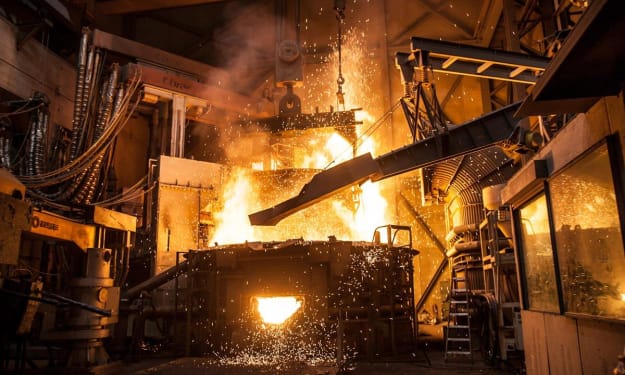
Industrial Deployment of Biochar in Modern Metal Smelting Systems
Biochar is increasingly examined as a functional carbonaceous material in high-temperature metallurgical operations. Traditionally dominated by fossil-derived coke and coal, metal smelting processes are under pressure to decarbonize while maintaining reductive efficiency and structural reliability. Biochar, when properly engineered, presents a technically viable supplementary reductant in the production of steel, silicon, and ferroalloy. Its application, however, requires stringent control of physicochemical properties and integration within existing furnace infrastructure.
By Wayne Shen4 days ago in Earth



Comments
There are no comments for this story
Be the first to respond and start the conversation.