
Unveiling Earth's Geological Drama
The Rift Valley, Continental Drifts, and the Spectacle of a Future Split
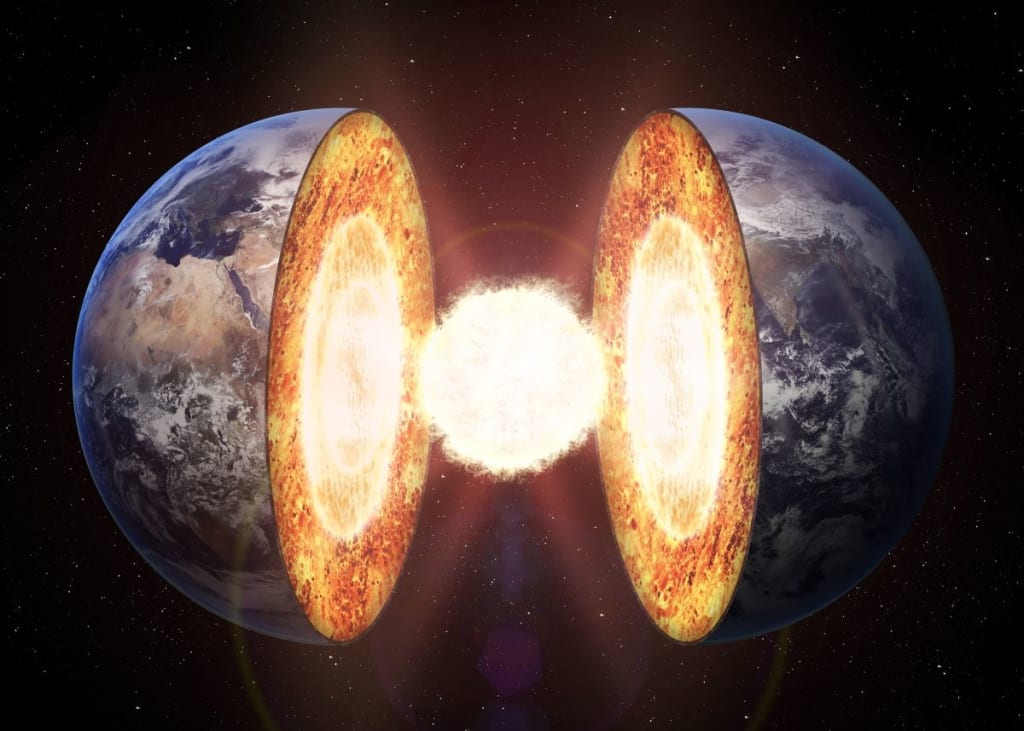
Imagine a massive crevice appearing beneath your house. What would you do? Most likely, gather your belongings and evacuate the structure. This scenario unfolded for a Kenyan in 2018 when a colossal crevice formed almost overnight beneath his home. Although he escaped to safety, the event revealed a more profound issue than initially thought.
The crevice emerged after a month of heavy rainfall in the region west of the Kenyan capital, Nairobi, situated in a seismically active area. Stretching for miles and reaching a width of 65 feet, the crevice, covered in ash from a nearby dormant volcano, damaged a crucial local road, leading to its ominous nickname, the "Grand Canyon."
A similar incident occurred in 2023, prompting Kenya's Highway Authority to close the road for repairs. Preliminary reports indicated heavy rains as the likely cause. This rupture is part of the Great Rift Valley, extending from Jordan in the north to Mozambique in East Africa.
Rift valleys, found worldwide, occur where tectonic plates move apart, creating massive slabs of rock on Earth's outermost layer. These plates, resting on molten rock below, make the regions unstable. The East African Rift, one of four major rifts globally, results from the movement of the Arabian plate away from the African mainland.
The crevice in Kenya formed within the rift valley between the Nubian and Somali plates, as they slowly move apart. The growing rift suggests that, eventually, the African continent will split into two. Scientists estimate this process, progressing at a rate of a quarter of an inch per year, will lead to a split in 5 to 10 million years, possibly extending to 50 million years.
The outcome will be two African subcontinents, separated by a new ocean, becoming the planet's sixth. This transformation will grant access to the sea for currently landlocked countries, allowing for the construction of harbors and facilitating international trade. Three countries, including Kenya, will find themselves straddling two continents.
While the prospect of Africa splitting may sound dramatic, it reflects a natural occurrence not witnessed for hundreds of millions of years. The last significant transformation was during the Jurassic period, coincidentally depicted in Spielberg's 1993 blockbuster, where a supercontinent called Gondwana included South America, Antarctica, India, Africa, Arabia, Madagascar, and Australia.
Throughout Earth's history, supercontinents formed and broke apart, driven by tectonic activity beneath the Earth's surface. Pangaea, existing some 200 million years ago, was surrounded by the oceanic precursor to the Pacific Ocean. Fossil evidence, such as that of Mesosaurus found in both Africa and South America, indicates the continents were once a single landmass.
Continental drift has occurred multiple times, with Pannotia forming 600 million years ago and Rodinia a billion years ago. Tectonic activity continues to shape Earth, with seafloor spreading causing continents to drift apart. North America, for example, is gradually moving away from Europe.
Geologists predict a new supercontinent, "Amasia," forming around the North Pole in the next 50 million to 200 million years. While the timescale is vast, it underscores the dynamic nature of Earth's geological processes.
In conclusion, the geological narratives of the Rift Valley, continental drifts, and the prospect of a future split offer a profound glimpse into the dynamic nature of our planet. From the immediate challenges posed by crevices and ruptures to the grand scale of tectonic plates shifting over millions of years, Earth's ongoing transformation is an awe-inspiring spectacle. The unfolding drama, echoing events that shaped the world millions of years ago, invites us to appreciate the forces sculpting our planet's landscape.
As we contemplate the slow but relentless march of tectonic plates, the impending split of continents, and the birth of a new ocean, we are reminded of the imperceptible yet inexorable changes that have shaped Earth's history. This geological symphony, played out over eons, prompts reflection on the interconnectedness of Earth's past, present, and future. It underscores the resilience of life in adapting to a planet in constant flux and the remarkable stories etched into the very fabric of the Earth beneath our feet.
In the face of such geological marvels, we find ourselves at the intersection of the immediate challenges of crevice formations and the profound, far-reaching implications of continental drifts. The story of Earth's transformation continues, leaving us with a heightened awareness of the dynamic forces that have and will continue to shape our world for millions of years to come.
About the Creator
What might an extraterrestrial invasion of Earth look like?
The author used artificial intelligence in the crafting of this article. Although Hollywood depicts visits by aliens as horrifying experiences where humans die or even are eaten alive, scientists and philosophers say that’s probably not what an invasion would like.
By David Heitz3 days ago in Earth
AQI Cigarette Calculator: Understanding Air Pollution
The air we breathe is a complex mixture of gases and particles, many of which are invisible to the naked eye. While we can feel the heat of a sunny day or the chill of the wind, the silent, creeping impact of air pollution is far less tangible. This lack of tangibility makes it a difficult public health threat to communicate and motivate action against. A powerful innovation in environmental health communication has emerged to bridge this gap: the concept of the AQI cigarette calculator.
By Walter Schiller-Anders4 days ago in Earth
Living in a hemp house
Hemp, a multi-purpose crop that delivers fibres, shivs, seeds, and pharmaceuticals is currently used in insulation materials and bio-composites for a more sustainable construction industry. Russ Martin and his wife Karon Korp tell their story as owners of the first hemp house in the U.S.
By Susan Fourtané 7 days ago in Interview


Comments
There are no comments for this story
Be the first to respond and start the conversation.