
Unraveling the Galactic Enigmas: Astonishing Discoveries and Mysterious Phenomena in the Milky Way
From Morse Code-Like Filaments to Puzzling Gamma Radiation: Exploring the Fascinating Secrets of Our Celestial Home
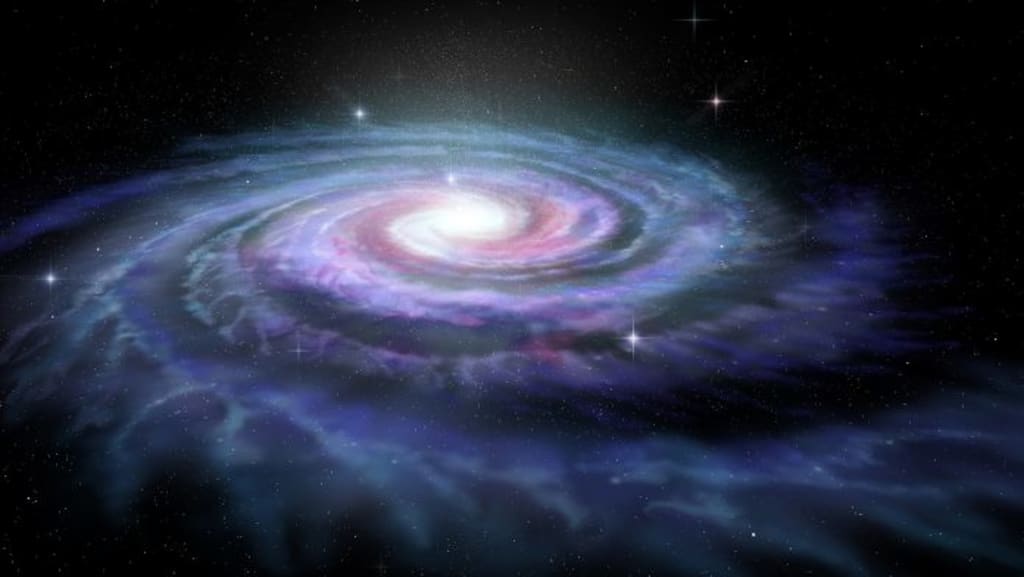
The Milky Way galaxy, our home, presents itself as a colossal rotating pinwheel in space. It is a spiral galaxy that emerged approximately 14 billion years ago and is brimming with diverse celestial entities, including stars, nebulae (clouds of dust and gas), planets, asteroids, and even us, along with the people around us. All of these components extend outward from the central region of the galaxy in magnificent spiraling arms, offering a breathtaking view.
The Milky Way spans about one hundred thousand light years across and takes a mind-boggling 250 million years for our sun and the entire solar system to complete one revolution around the galaxy's center. When we gaze at the night sky, most stars we observe are located within one of the Milky Way's arms. Before the invention of telescopes, stars appeared blurry and merged into a single luminous streak stretching across the heavens, resembling a river of milk, hence the name of our galaxy.
Now, let's delve into some recent and thrilling news. An international team of scientists has made a groundbreaking discovery hidden in the heart of the Milky Way. They have found a peculiar structure resembling Morse code, raising the question of whether our galaxy is attempting to communicate with us. In the early 1980s, astronomers discovered massive one-dimensional filaments extending vertically near the supermassive black hole, Sagittarius A*, at the center of our galaxy. Recently, a new type of such filaments has been found, which are shorter and lie either horizontally or radially, like spokes on a wheel, emanating from the black hole.
Although these filaments share certain similarities, researchers believe they likely have different origins. The vertical filaments reach staggering heights of up to 150 light years, while the horizontal ones resemble the dashes and dots of Morse code. Careful research confirmed that the filaments are not random but are associated with the outflow of the black hole. This discovery enables the study of the black hole's spin and the orientation of its accretion disk, a rotating disk of matter formed around the black hole due to its immense gravitational pull.
The vertical filaments are magnetic, while the horizontal ones seem to emit thermal radiation. Additionally, the vertical filaments contain particles moving at speeds close to the speed of light, whereas the horizontal ones do not exhibit this characteristic. Furthermore, the number and size of vertical filaments far surpass those of the horizontally stretching filaments.
Nonetheless, this discovery remains filled with numerous mysteries, and astronomers are eager to unravel them. Yet, these filaments are not the only enigmatic and unusual phenomena found in the Milky Way. Some years ago, Australian researchers discovered a strange spinning object unlike anything seen before in the galaxy. This object emits powerful bursts of radio energy every 20 minutes, an unprecedented occurrence that baffles astronomers. The object is believed to be around 4,000 light years away from Earth, exceptionally bright, and possesses an incredibly strong magnetic field.
Despite extensive investigations, the object's origin remains unclear, leading to several theories. Some experts propose it could be an ultra-long-period magnetar or a white dwarf, while others consider it might be the remnants of a collapsed star or an entirely new type of celestial entity. What is evident is that astronomers have observed the signal across a wide range of frequencies, indicating that its source is natural and not artificial.
Another mystery surrounding the Milky Way revolves around its gamma radiation emission. Observations from the Fermi gamma-ray Space Telescope revealed that the galaxy's center emits significantly more gamma radiation than its outskirts. However, despite nearly a decade of research, a satisfactory explanation for this phenomenon has not been found.
One theory proposed that the intense glow results from the annihilation of dark matter in the galactic center. Although dark matter cannot be directly observed, if particles of dark matter collide and annihilate each other, they could produce gamma rays. However, this theory faced challenges, as gamma-ray particles should be evenly distributed in space if this were the case, which is not observed.
An alternative explanation suggests that the glowing center could be due to millisecond pulsars, rapidly spinning neutron stars emitting light in clumps rather than smoothly. Although this theory seems plausible, many scientists remain unconvinced, seeking further evidence to support this hypothesis. They argue that the light clumps could also be the result of interactions between gas, stars, and cosmic rays in the galaxy's central region.
Ultimately, these intriguing phenomena and mysteries in the Milky Way continue to captivate astronomers, inspiring them to delve deeper into these cosmic enigmas, conducting more research and experiments to unlock the secrets of our extraordinary galaxy.
About the Creator
Keep reading
More stories from writers in Earth and other communities.
Why Fruit Shell Biomass Is Perfect for Charcoal Making: A Property Analysis
When it comes to sustainable charcoal production, not all biomass materials are created equal. Among the various options—from wood chips to agricultural residues—fruit shell biomass (such as walnut shells, coconut shells, peanut shells, and almond shells) stands out as an ideal candidate. Its unique physical and chemical properties not only make the charcoal making process more efficient but also result in high-quality charcoal with versatile applications. In this post, we’ll break down the key properties that make fruit shell biomass a top choice for charcoal production, and touch on how these properties interact with charcoal making equipment to optimize outcomes.
By Bestonpyrolysis3 days ago in Earth
Five-Year-Old Liam Ramos and His Father Released From Texas Detention Center
The release of five-year-old Liam Ramos and his father from a Texas detention center has sparked renewed discussion about immigration detention policies, family separations, and humanitarian treatment standards. The case has attracted attention from advocacy groups, legal experts, and community organizations, highlighting the complex balance between border enforcement and human rights considerations.
By Aarif Lashari5 days ago in Earth
Our Song
Evening has given way to night. Gently, I settle next to you on the comfortable, old love seat and reach for your hand. You snatch it away, again. It cuts me to the quick, but I hide the pain, understanding that the reaction is but part of your demented state. Since the accident, your presence here in our cozy home has been clouded by a haze I can't see. Nevertheless, I feel the frigidity of your expressions and it serves as an excruciating reminder of the immeasurable distance between us.
By Dana Crandell2 days ago in Fiction



Comments
There are no comments for this story
Be the first to respond and start the conversation.