
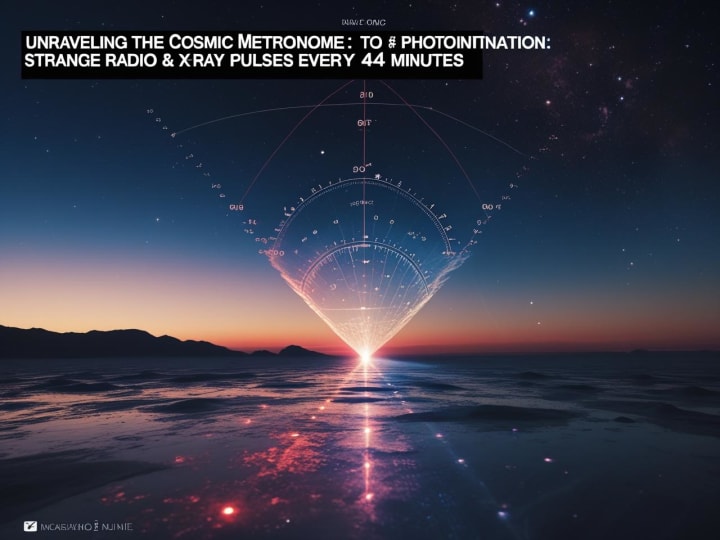
Unraveling the Cosmic Metronome: Strange Radio & X‑Ray Pulses Every 44 Minutes
How a mysterious object named ASKAP J1832–0911 is challenging astronomers—and captivating the world—with its rhythmic, enigmatic bursts

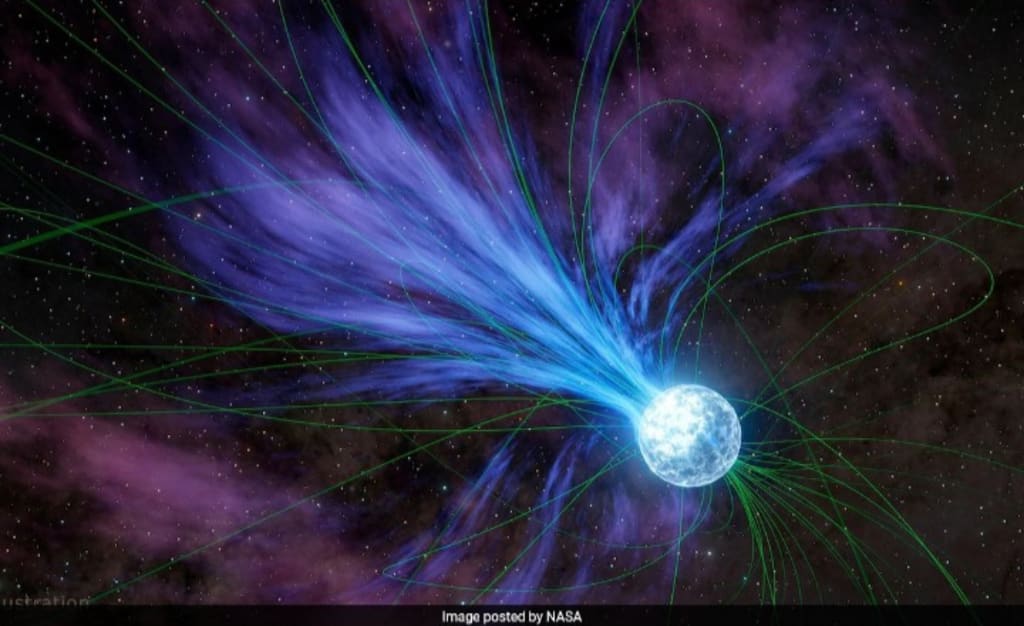
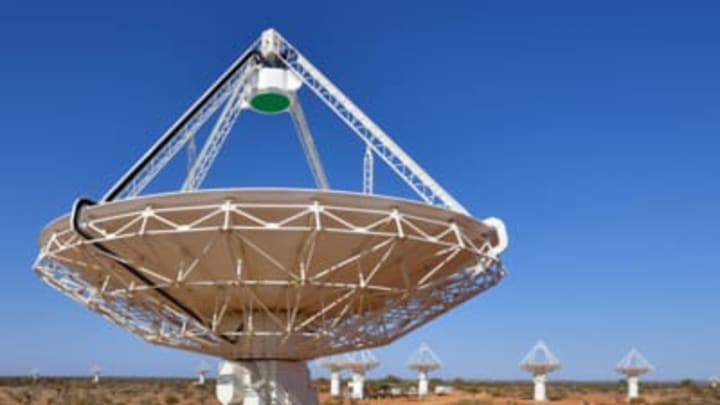
In a finding that seems almost like something out of science fiction, astronomers have identified a cosmic entity that emits precisely timed signals—both radio and X-ray—every 44 minutes, a pattern that has never been seen before. This entity, now referred to as ASKAP J1832–0911, was initially detected by the Australian Square Kilometre Array Pathfinder (ASKAP) and subsequently verified with data from NASA’s Chandra X-ray Observatory.
⏳ A Celestial Clock With a 44‑Minute Tick
What distinguishes this discovery is the clockwork-like pattern of its emissions. For several minutes, powerful bursts of radio and X-ray energy erupt, then disappear—only to return exactly 44 minutes later. This periodicity greatly surpasses the millisecond-to-second rotation cycles of pulsars, and it is unique even among 'long-period transients' (LPTs).
Dr. Andy Wang from Curtin University articulates it well: 'Like nothing we’ve ever encountered.' These signals are not mere random cosmic noise—they exhibit the hallmark of intentional, rhythmic activity.
🧩 Theories That Fail to Add Up
The astronomy community has put forward various theories, yet none completely aligns with all the data:
1. Magnetar Hypothesis
Magnetars—neutron stars characterized by exceptionally strong magnetic fields—are recognized for their sporadic high-energy outbursts. A slowly rotating magnetar that activates intermittently might account for the bursts, but maintaining precise energy and timing poses significant challenges.
2. Binary Star System
Another theory suggests a tightly bound binary system: possibly a magnetized white dwarf and a neutron star in orbit around each other. Their interactions could lead to periodic emissions. However, this model has difficulty explaining the precise duration and the dual nature of radio/X-ray emissions.
3. A New Class of Celestial Object
Some researchers propose that we are observing a completely new category of object—potentially an extreme instance of LPTs. Remarkably, only around ten LPTs have been identified since 2022, but ASKAP J1832–0911 stands out as the first known LPT to emit both radio and X-ray energy simultaneously.

📡 Why This Discovery Matters
The significance of comprehending ASKAP J1832–0911 is substantial:
Enhancing Stellar Evolution: Existing theories regarding the evolution of neutron stars or white dwarfs may need to be updated—particularly in terms of magnetic field dynamics and rotational behavior.
Broadening Time-Domain Astronomy: The majority of astronomical surveys concentrate on spatial mapping. This finding emphasizes the necessity to investigate objects through their temporal characteristics, which could reveal an entirely new dimension of the cosmic landscape.
Investigating the Interstellar Medium: Regular bursts can act as signals, allowing researchers to study how interstellar space alters signals over extensive distances. Each pulse may function as a probe of the cosmic material present between stars.
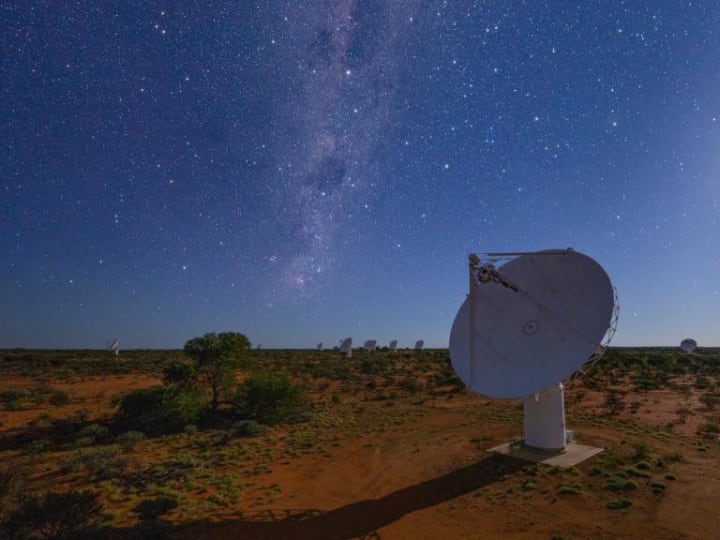
Encouraging Global Collaboration: This signal was captured by ASKAP and NASA’s Chandra. In the future, observatories such as China’s FAST, South Africa’s MeerKAT, and the U.S.’s VLA will participate in this exploration.
🔭 The Road Ahead: Observation & Exploration
Astronomers are currently developing strategies across three crucial areas of research:
1. Ongoing Monitoring
They will continue to observe the bursts to identify any changes—whether in the 44-minute cycle, intensity of the bursts, duration, or the characteristics of the signal spectrum. Minor variations could point to environmental shifts or a slowdown in rotation.
2. Searching for Relatives
Research teams around the globe are examining the skies to find other celestial bodies exhibiting similar periodic activity. Discovering even a few would imply that this is not an isolated event, altering our understanding of stellar phenomena.
3. Enhancing Theoretical Frameworks
With the acquisition of new data, astrophysicists are looking to build or modify existing models. Is there a possibility that we require a hybrid approach involving unusual magnetar states, dynamics of binary systems, or novel physics related to dense stars?
🔍 A Universe Full of Surprises
While pulsars—neutron stars that rotate and were first identified in the 1960s—are indeed captivating, their periods are typically measured in milliseconds or seconds. However, ASKAP J1832–0911 is challenging these established norms. In a way, the universe is operating on a different rhythm—44 minutes for each cycle.
This also serves as a reminder that this isn’t the first instance of an unusual cosmic rhythm. In 2024, astronomers discovered GLEAM‑X J0704‑37, a red dwarf exhibiting hour-long radio pulses likely driven by interactions between stellar and magnetic forces. Once again, ASKAP J1832–0911 defies expectations by merging precise repeating intervals with emissions across multiple wavelengths.
📣 The Final Word: You Heard It Here First
In the vast expanse of the universe, ASKAP J1832–0911 stands out as a new thread—one intricately woven in precise 44-minute intervals. Its discovery serves as a rallying cry for astronomers around the globe: there are still mysteries waiting to redefine physics, challenge existing theories, and spark curiosity. Whether it signifies a new category of stellar remnant, uncovers surprising magneto-rotational dynamics, or presents new cosmic mechanics, ASKAP J1832–0911 transcends mere curiosity—it offers a glimpse into the unknown, a gentle push encouraging humanity to look skyward with renewed awe.
About the Creator
MILTON CHANDRA ADIKARY
Independent Writer | Research-Based Stories | Unique Perspectives
I craft well-researched articles on science, technology, space, and the unexplained. I write what others miss. Subscribe for smart stories with real value.
Keep reading
More stories from MILTON CHANDRA ADIKARY and writers in Earth and other communities.
June 2025 Sky Spectacle: 9 Astronomical Events That Will Leave You Starstruck
June 2025 is poised to be an exceptionally exciting month for astronomy enthusiasts in recent times. With at least nine significant celestial occurrences scheduled, the night sky will be bustling with activity—from meteor showers and planetary alignments to full moons that hold cultural importance. Regardless of whether you have a telescope or simply a keen pair of eyes, these events can be observed with little equipment from various locations around the globe. Here’s what to anticipate this month and the reasons behind its significance.
By MILTON CHANDRA ADIKARY8 months ago in Earth
Severe Geomagnetic Storm Could Bring Northern Lights Across Much of the U.S.
On Monday evening, skywatchers from the Pacific Northwest to the Midwest got ready for something out of the ordinary: a celestial display that typically occurs at high northern latitudes. Americans who provide forecasts as a powerful cloud of charged particles from the sun accelerates toward the Earth's magnetic field, the National Oceanic and Atmospheric Administration (NOAA) has issued a "G4 (Severe) geomagnetic storm watch."
By Raviha Imranabout 5 hours ago in Earth
Greenland News
Greenland News Greenland has increasingly drawn global attention in recent years due to its political developments, environmental changes, and growing strategic importance. As the world looks more closely at the Arctic region, news from Greenland reflects a unique mix of local priorities and international interest. From climate-related challenges to economic opportunities and governance issues, Greenland continues to shape its own path while remaining closely connected to global affairs.
By America today 2 days ago in Earth



Comments
There are no comments for this story
Be the first to respond and start the conversation.