
June 2025 Sky Spectacle: 9 Astronomical Events That Will Leave You Starstruck
From the dazzling Strawberry Moon to a rare Mars-Moon pairing, June’s night skies offer a celestial showcase that both casual stargazers and serious astronomers won’t want to miss.

June 2025 is poised to be an exceptionally exciting month for astronomy enthusiasts in recent times. With at least nine significant celestial occurrences scheduled, the night sky will be bustling with activity—from meteor showers and planetary alignments to full moons that hold cultural importance. Regardless of whether you have a telescope or simply a keen pair of eyes, these events can be observed with little equipment from various locations around the globe. Here’s what to anticipate this month and the reasons behind its significance.
June 1 – Venus Shines at Its Brightest
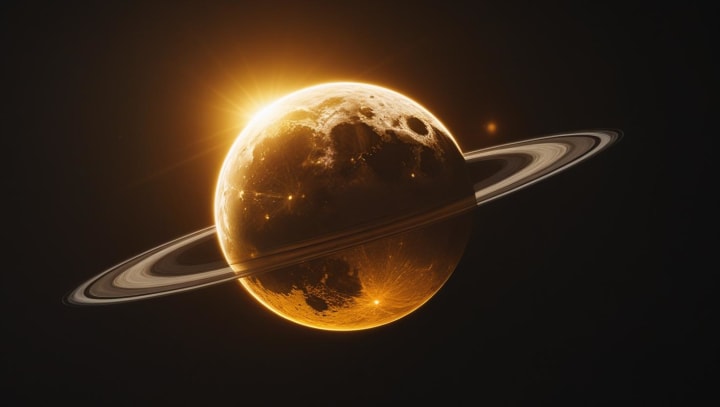
Commencing the month is Venus, which will attain its maximum brightness in the evening sky on June 1. Commonly known as the "Evening Star," Venus will be readily observable shortly after sunset in the western sky. This presents one of the prime opportunities of the year to view the planet without the aid of optical instruments. Its luminosity can even create a shadow in exceptionally dark locations, a remarkable occurrence for a planet.
June 2 – Great Hercules Cluster
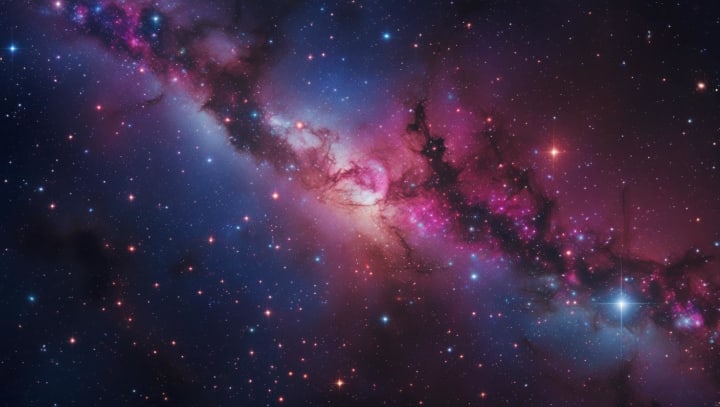
Next, on June 2, the Great Hercules Cluster (M13) will be perfectly situated for viewing. This globular cluster, found in the Hercules constellation, comprises hundreds of thousands of stars closely packed into a sphere approximately 25,000 light years away from Earth. To the unaided eye, it might look like a dim, fuzzy sphere, but when viewed through binoculars or a small telescope, it transforms into a rich and sparkling cloud of stars.
June 7 – The Arietid Meteor Shower Reaches Its Peak
The Arietid meteor shower, recognized as one of the most prominent daylight meteor showers, reaches its peak on June 7. Although the majority of meteors may be challenging to observe because of the sunlight, those who rise early just before dawn might be fortunate enough to witness a few luminous streaks in the eastern sky. Under optimal conditions, astronomers anticipate seeing as many as 50 meteors per hour, although visibility will be significantly influenced by the observer's location and the level of light pollution.
June 11 – The Strawberry Moon Ascends
The full moon of June, referred to as the Strawberry Moon, is set to take place on June 11. This name was given by Native American tribes to signify the brief season for harvesting strawberries, and as it rises, this full moon will present itself as large and golden. While it will not truly be pink or red, atmospheric conditions close to the horizon may impart a somewhat warmer tint than is typically observed. This event is essential for both photographers and romantics to witness.
June 16 – The Butterfly Cluster Fully Visible
On June 16, astronomy enthusiasts will have the opportunity to observe the Butterfly Cluster (M6) located in the constellation Scorpius. This open cluster bears a resemblance to the fragile wings of a butterfly and is composed of numerous blue and orange stars. Optimal viewing conditions are found in the Southern Hemisphere or at low northern latitudes, making this star cluster ideal for observation with binoculars.
June 22 – An Insight into the Trifid Nebula
June 22 offers an opportunity to view the Trifid Nebula (M20), a luminous star-forming area located in the constellation Sagittarius. The nebula derives its name from the dark dust lanes that segment it into three sections. Even with basic telescopes, observers can witness the vibrant gases—primarily hydrogen and helium—that constitute this stellar nursery.
June 25 – Optimal Night for Stargazing
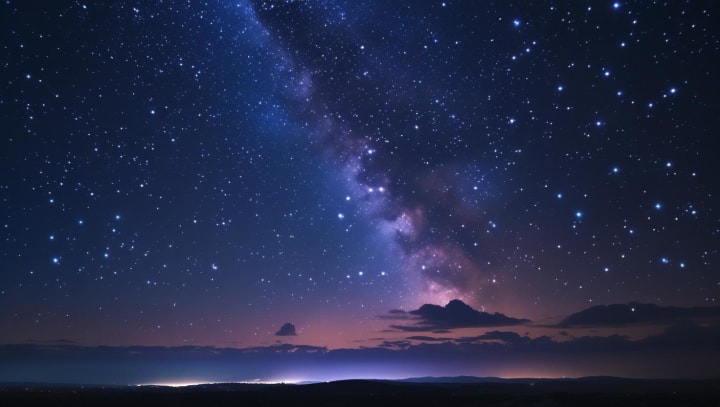
Astronomers concur that June 25 will be the most favorable night of the month for stargazing in general. The Moon will be in its final quarter, resulting in reduced light interference, and prominent constellations such as Scorpius, Sagittarius, and Hercules will be positioned high in the sky. If you are seeking a night to relax and immerse yourself in the stars, this is the occasion.
June 27 – The Return of the Bootid Meteor Shower
The Bootids of June, recognized for their erratic performances, are expected to reach their peak on June 27. Typically, this meteor shower is modest, averaging around 5 meteors per hour; however, it has been known to exhibit unexpected bursts of activity. Individuals observing from the Northern Hemisphere are advised to gaze towards the northwestern sky following sunset to maximize their viewing opportunities.
June 30 – Mars Conjuncts the Moon
Concluding the month in a remarkable manner, Mars will be positioned in close proximity to the Moon on the evening of June 30. In certain areas, the Moon will even obscure Mars, temporarily rendering it invisible. This unusual occurrence provides a striking conclusion to June’s celestial display—and an ideal chance for photography.
Conclusion: A Month to Remember
With an impressive array of events, June 2025 presents opportunities for all—from casual sky watchers to experienced astronomers. These astronomical marvels remind us of the expansive and constantly evolving universe we inhabit. Therefore, be sure to mark your calendar, prepare a blanket or a telescope, and brace yourself for a month of stargazing that will leave a lasting impression.
About the Creator
MILTON CHANDRA ADIKARY
Independent Writer | Research-Based Stories | Unique Perspectives
I craft well-researched articles on science, technology, space, and the unexplained. I write what others miss. Subscribe for smart stories with real value.
Keep reading
More stories from MILTON CHANDRA ADIKARY and writers in Earth and other communities.
Teleios: The Silent Sphere That Defies the Cosmos
In the immense stretch of the Milky Way, astronomers have recently discovered a mysterious object that challenges traditional cosmic categories. Dubbed Teleios, this celestial entity is notable not only for its flawlessly spherical form but also for its unusual quietness—transmitting merely weak radio signals while being invisible in other wavelengths.
By MILTON CHANDRA ADIKARY7 months ago in Earth
China’s Ambitious Satellite Plan: 200,000 Satellites and Counting
China has submitted an astonishing application to the International Telecommunication Union (ITU) to launch 200,000 satellites over the coming years. To put this into perspective, the entire world currently operates far fewer than this number. Even SpaceX’s Starlink project, one of the largest satellite networks globally, has plans for around 42,000 satellites. China’s proposal signals an unprecedented escalation in space activity and raises important questions: what are these satellites for, and what implications do they hold for global technology, security, and the environment? The Purpose Behind the Numbers At first glance, launching 200,000 satellites may seem excessive, but China’s goals are strategic and multifaceted. Experts suggest that these satellites could serve several purposes: 1. Global Internet Coverage China is aiming to build a massive low-Earth orbit (LEO) satellite network, similar to Starlink and OneWeb. By positioning thousands of satellites closer to Earth, they can provide high-speed internet to remote regions, rural areas, and even ships or aircraft in the oceans. This could help China expand its digital influence globally, offering connectivity in areas where traditional internet infrastructure is weak or non-existent. 2. Enhanced Military and Surveillance Capabilities A satellite network of this scale is also a game-changer for defense and surveillance. Satellites can monitor troop movements, track ships, and provide early warning systems. China’s military has been investing heavily in space-based technology, and these satellites could be a crucial part of modernizing its intelligence, surveillance, and reconnaissance (ISR) capabilities. 3. Scientific Research and Earth Observation Some of these satellites may be dedicated to Earth observation, collecting data on climate, agriculture, natural disasters, and urban development. With thousands of satellites constantly orbiting the planet, China could achieve near real-time monitoring of environmental changes and resource management, giving scientists and policymakers an unprecedented level of insight. 4. Competition in the Commercial Space Sector China’s plan is not purely for government use. The commercial potential of satellite networks is massive, from providing satellite internet services to supporting the burgeoning space economy. Companies under Chinese state and private ownership could leverage this infrastructure to offer services domestically and internationally, challenging Western tech giants in global space markets. The Scale of the Ambition Launching 200,000 satellites is not just ambitious; it’s historic. If approved and executed, China would operate more satellites than all other countries combined, fundamentally reshaping how space is utilized. However, there are serious logistical challenges. Manufacturing, launching, and maintaining hundreds of thousands of satellites requires enormous resources, advanced technology, and careful orbital planning to avoid collisions. China has made major progress in its space launch capacity, with frequent missions through the Long March rocket family and ongoing developments at the Wenchang and Jiuquan Spaceports. Yet, sustaining such a colossal fleet will test even the most advanced space programs. Global Implications The potential consequences of China’s satellite plan are profound, both technologically and geopolitically. 1. Space Traffic Management A network of 200,000 satellites could drastically increase the risk of collisions in orbit. Space debris is already a growing concern, and introducing tens of thousands of new satellites may exacerbate this problem. International cooperation and sophisticated traffic management systems will be essential to prevent catastrophic accidents in space. 2. Geopolitical Tensions China’s space ambitions may intensify global rivalry in space technology, particularly with the United States, Europe, and other spacefaring nations. Control over satellite networks can translate into strategic advantages, from military surveillance to dominance in global communications infrastructure. This may lead to a new phase of space competition reminiscent of the Cold War’s space race. 3. Impact on Astronomy Astronomers have already expressed concern over satellite mega-constellations interfering with observations. Thousands of bright satellites moving across the night sky can distort telescope images and hinder research into deep space phenomena. If China proceeds with 200,000 satellites, the challenge to professional and amateur astronomers will be enormous. 4. Global Connectivity Revolution On the positive side, if managed responsibly, China’s satellite network could revolutionize global connectivity, bringing internet access to millions of people who currently have none. It could accelerate digital development in underserved regions, support education, and foster global commerce in unprecedented ways. Regulatory Hurdles The ITU regulates global satellite usage, including frequency allocation and orbital slots. For China to launch 200,000 satellites, it must secure approval from the ITU, which evaluates whether such an immense network could interfere with other countries’ satellites or violate international agreements. This is not a mere formality—approval for a project of this scale could take years and may require negotiations with multiple nations. Conclusion: A Bold Step Toward the Future China’s application to launch 200,000 satellites is a bold statement about the future of space and global technology. It reflects the country’s ambition to dominate in digital infrastructure, military capability, and commercial space enterprise. While challenges abound—from space debris and regulatory hurdles to geopolitical tensions—the potential benefits are significant, particularly for connectivity and scientific advancement. As the world watches China’s next steps, one thing is clear: the age of satellite mega-constellations is here. How humanity navigates the risks and rewards of this new frontier will shape the future of communication, security, and our presence in space for decades to come.
By Muhammad Hassan3 days ago in Earth




Comments (1)
June's astronomy lineup is awesome! Venus at its brightest, the Hercules Cluster, and the Arietids. Gonna be a great month for stargazing.