
Unlocking the Secrets of Animal Communication
Can AI help humans communicate with animals?


For over five decades, researchers have been captivated by the communication methods of African elephants, particularly the intricate ways in which they convey messages to one another. Notably, Joyce Poole, a pioneering figure in this field, made a remarkable observation: when one elephant called out, often only one family member would respond, while others remained indifferent. This led Poole to consider the possibility that elephants might have a unique way of directing their calls to specific individuals, akin to using names.
In collaboration with Mickey Pardo, Poole set out to study this phenomenon in greater depth. They meticulously recorded elephant calls and analyzed the surrounding behaviors to identify patterns and meanings. By encoding nearly 500 recorded calls and correlating them with behavioral data into a statistical model, they could predict with surprising accuracy who the intended recipient of a call was. This groundbreaking study suggested that African savanna elephants might indeed possess a form of naming convention in their communication.
This research serves as a prime example of how machine learning is unraveling the complexities of animal communication, offering insights that have previously eluded human understanding. As interest in animal communication grows, some AI researchers are exploring the potential to create large language models tailored for interspecies dialogue. Traditional methods of studying animal vocalizations typically involve recording sounds, observing behaviors, and employing playback techniques to gauge responses. However, field recordings often face challenges, notably the "cocktail party problem," where overlapping vocalizations from multiple animals create a cacophony that complicates analysis.
AI has successfully addressed similar issues in human speech recognition, and researchers are now applying these advancements to the realm of animal communication. By utilizing machine learning algorithms, they can isolate individual animal calls from noisy recordings, making playback methods more effective and accurate. For instance, in a recent study, researchers trained a model called Deep Karaoke to distinguish between instruments and vocals in music tracks. This same principle can be applied to animal sounds, allowing researchers to identify and analyze distinct vocalizations from groups of animals, such as macaque monkeys.
Yossi Yovel, another prominent researcher in the field, trained a statistical model on a substantial dataset of 15,000 vocalizations from Egyptian fruit bats. This model not only identified the source of the calls but also contextualized their meanings based on behavioral responses. However, one challenge of supervised learning models lies in their reliance on human interpretation and labeling. This limitation may restrict the depth of understanding these models can achieve, as they depend on existing knowledge of animal communication.
To circumvent these limitations, some AI researchers advocate for the use of self-supervised models, which can analyze large datasets of unlabeled animal sounds to uncover patterns independently. This approach is akin to how natural language processing models like ChatGPT learn, using vast amounts of unstructured data from the internet to identify relationships and structures within language. Aza Raskin, co-founder of the Earth Species Project, envisions building models for animal communication that could enable translation between human and nonhuman languages based on shared linguistic patterns.
However, developing such models is not without its complexities. Animals communicate not only through vocalizations but also through various other sensory modalities, such as visual cues and body language. Models like DALL-E and Midjourney demonstrate that different forms of communication can be aligned, suggesting a framework through which human and animal communication might intersect. Research has shown that species like dolphins and elephants exhibit self-awareness, further complicating the quest for understanding their forms of communication.
One significant challenge facing researchers is the validation of self-supervised learning models. This stage involves refining the models by assessing their accuracy, which poses a difficulty when dealing with communication systems so different from our own. Additionally, researchers caution against overestimating the potential for seamless dialogue with nonhuman animals. While it is essential to recognize the differences between human language and animal communication, it is equally crucial to appreciate the complexities and nuances inherent in both.
A vital first step in this endeavor involves expanding the database of animal vocalizations. Researchers worldwide are currently engaged in comprehensive data collection efforts, tagging and recording animal sounds, video, and spatial data to feed these data-hungry models. This collaborative effort aims to increase our understanding of animal communication systems and the potential for AI to bridge the gap between species.
While the prospect of true interspecies communication facilitated by AI remains uncertain, the journey toward this goal is poised to deepen our understanding and appreciation of the diverse forms of communication that exist within the animal kingdom. Through these discoveries, we can recognize that humans are not the only species capable of communication, empathy, and complex thought. Ultimately, this journey not only promises to enhance our knowledge of animal behavior but also underscores the importance of protecting the incredible species we share our planet with.
About the Creator
Mariana
I'm a storyteller at heart, weaving narratives that uncover the extraordinary. I write to provoke thought, inspire and stir the soul. Join me in exploring the magic in the mundane, where creativity and passion leave a lasting impact.
New York Prepares for Possibly Its Heaviest Snowfall in Years
New York City and surrounding areas are preparing for what could be one of the heaviest snowfalls in years, according to meteorologists. The forecast predicts intense snow, gusty winds, and potentially hazardous conditions, prompting city officials, emergency services, and residents to take precautionary measures.
By Muhammad Hassana day ago in Earth
Australia Organic Fertilizer Market Size and Forecast 2025–2033
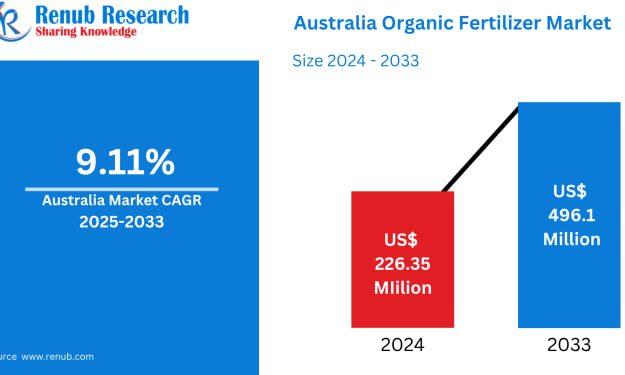
Australia Organic Fertilizer Market Outlook The Australia Organic Fertilizer Market is entering a strong growth phase as sustainability becomes a core priority for farmers, consumers, and policymakers alike. According to Renub Research, the market is expected to reach US$ 496.1 million by 2033, rising from US$ 226.35 million in 2024, expanding at a CAGR of 9.11% from 2025 to 2033.
By jaiklin Fanandish3 days ago in Earth



Comments (2)
Wonderful stuff
Thanks for sharing