
How Climate Change Could Exacerbate Arsenic Contamination in Rice: A Looming Global Health Crisis
Health Impacts: A Silent Epidemic in Rice-Dependent Populations

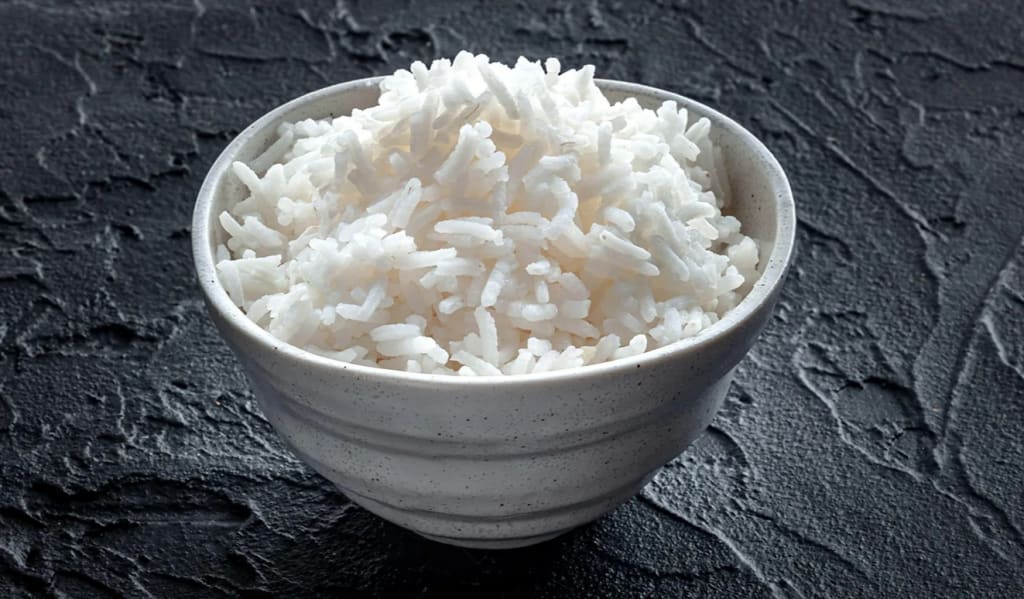
Rice, the staple food for over half of the world’s population, faces a dual threat from climate change: not only could yields decline in key growing regions, but the grain may also accumulate dangerous levels of arsenic, a toxic carcinogen. Recent research highlights how rising temperatures, shifting precipitation patterns, and elevated atmospheric carbon dioxide (CO₂) levels are altering soil chemistry and plant physiology in ways that amplify arsenic uptake in rice crops. This convergence of environmental and health risks poses unprecedented challenges for food security and public health, particularly in Asia, where rice accounts for up to 70% of daily caloric intake in countries like Bangladesh and Cambodia.
The Science of Arsenic Mobilization in Rice Paddies
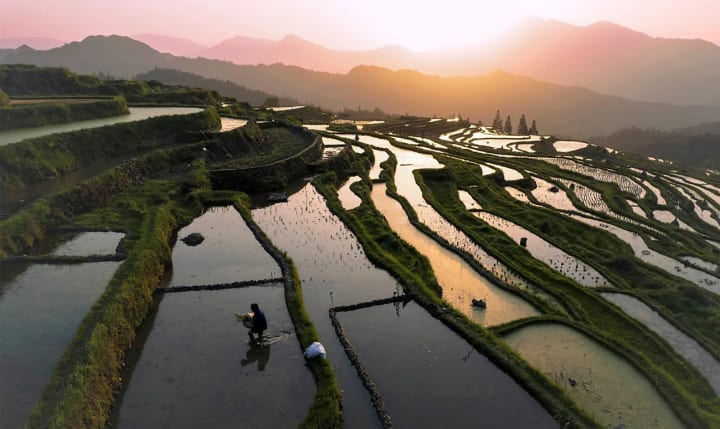
Arsenic occurs naturally in soils, but its bioavailability—the form accessible to plants—depends heavily on environmental conditions. In anaerobic (oxygen-poor) environments, such as flooded rice paddies, soil microbes convert inorganic arsenic into more soluble forms. Rice plants, which grow in waterlogged fields, absorb arsenic through their root systems more efficiently than other crops due to their unique physiology.
Climate change intensifies this process through two primary mechanisms:
1. Warmer Temperatures: Higher soil temperatures accelerate microbial activity, increasing the rate at which arsenic is released from mineral bonds. A 2024 study projected that a 2°C temperature rise could boost arsenic concentrations in rice grains by up to 30% in South Asia.
2. Elevated CO₂ Levels: Plants grown under high CO₂ conditions often develop larger root systems and faster transpiration rates, which can draw more arsenic from the soil. Experiments in controlled environments show CO₂ levels of 550 ppm (projected for 2050) increase arsenic uptake by 12–15% compared to current conditions.
These changes interact with extreme weather events. For instance, prolonged droughts force farmers to irrigate with groundwater, which in regions like Bangladesh’s Ganges Delta often contains naturally high arsenic levels. Conversely, heavy rainfall can flush arsenic into waterways, contaminating previously unaffected fields.
Health Impacts: A Silent Epidemic in Rice-Dependent Populations
Chronic exposure to inorganic arsenic—the toxic form prevalent in rice—is linked to devastating health outcomes:
Cancer: Long-term ingestion increases risks of lung, bladder, and skin cancers. In Bangladesh, where rice arsenic levels average 150 µg/kg (exceeding WHO limits of 100 µg/kg), cancer rates in high-exposure areas are 2–3 times the national average.
Developmental Disorders: Children exposed to arsenic in utero or early childhood show reduced cognitive function and motor skills. A 2023 cohort study in West Bengal found that infants consuming arsenic-contaminated rice had 8–10% lower IQ scores by age 5 compared to controls.
Cardiovascular and Metabolic Diseases: Emerging evidence ties low-level arsenic exposure to hypertension, heart disease, and type 2 diabetes. Researchers attribute this to arsenic’s role in disrupting cellular energy production and promoting inflammation.
The burden falls disproportionately on low-income communities. In rural Cambodia, families spending 60% of their income on food often cannot diversify their diets, leaving them reliant on arsenic-laden rice. Pregnant women and young children are particularly vulnerable due to higher metabolic rates and developmental sensitivity.
Regional Vulnerabilities and Food Security Implications
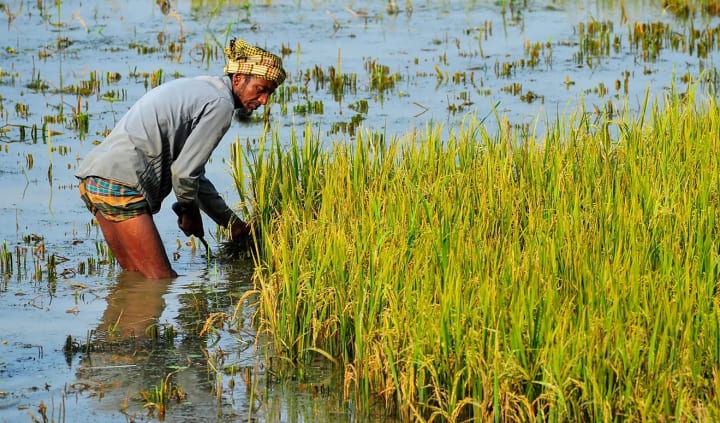
Asia’s rice-producing nations face a perfect storm of climate and contamination risks:
Bangladesh and India: Groundwater irrigation in the Ganges-Brahmaputra Delta—home to 500 million people—has already created an “arsenic belt.” Climate-driven droughts could force deeper well drilling, tapping into more contaminated aquifers.
Vietnam and Thailand: Rising sea levels are salinizing coastal paddies in the Mekong Delta. Saltwater intrusion alters soil chemistry, further enhancing arsenic mobility. Vietnam’s rice exports, critical to its economy, may face trade restrictions if arsenic levels escalate.
Sub-Saharan Africa: While not traditionally a rice-heavy region, rising rice consumption in countries like Nigeria and Senegal—driven by urbanization and population growth—coincides with climate stresses. New rice farms in arsenic-rich geologies (e.g., Ethiopia’s Rift Valley) could replicate Asia’s crisis.
Compounding these risks, climate models predict yield losses of 10–15% for rice by 2050 due to heat stress and water scarcity. This “double jeopardy” of less food and more toxic food threatens to undo decades of progress in global nutrition.
Mitigation Strategies: From Soil Management to Policy Reform
Addressing this crisis requires interdisciplinary solutions:
Agricultural Innovations:
Water Management: Alternating wet and dry irrigation (AWD) reduces arsenic uptake by 40–60% while conserving water. Pilot projects in Bangladesh show farmers can maintain yields using 30% less water.
Arsenic-Resistant Varieties: Researchers at the International Rice Research Institute (IRRI) are developing cultivars with genetic traits that limit arsenic transport to grains. Trials of the “IR-64” strain show 50% lower arsenic accumulation.
Soil Remediation: Adding iron-based additives to paddies binds arsenic into insoluble compounds. In Vietnam, applying iron sulfate reduced grain arsenic by 35% without affecting yields.
Policy Interventions:
Monitoring and Standards: Only 12 countries have enforceable arsenic limits for rice. Expanding testing infrastructure and adopting WHO guidelines could prevent contaminated rice from entering markets.
Dietary Diversification: Public health campaigns promoting alternative staples (e.g., millet, sorghum) in arsenic hotspots could reduce exposure. India’s National Nutrition Mission now subsidizes millet for 50 million households.
Conclusion: A Race Against Time

The interplay of climate change and arsenic contamination in rice exemplifies the complex, cascading risks facing global food systems. Without urgent action, millions could face the grim choice between starvation and poisoning. Success hinges on integrating climate adaptation with food safety governance—a challenge that demands cooperation across scientific, agricultural, and political realms. As Dr. Keeve Nachman of Johns Hopkins University warns, “We’ve long known rice is a dietary source of arsenic, but climate change is turning a manageable problem into a runaway threat”. The window to avert disaster is narrowing, but with targeted investments and innovation, a safer future remains within reach.
About the Creator
Tech Horizons
Exploring the future of technology, AI, gadgets, and innovations shaping tomorrow. Stay updated with Tech Horizons!
Keep reading
More stories from Tech Horizons and writers in Earth and other communities.
El Niño is likely to return in 2026. Here's what that means for Houston and Texas.
La Niña has been active since mid-October. However, according to the January update from the National Oceanic and Atmospheric Administration, it’s likely to end over the next couple of months, and a transition to El Niño is likely to occur later this year.
By Dena Falken Esq5 days ago in Earth
Trump’s Greenland Threats Push Europe Toward Divorcing America
When you think of Greenland, the first things that probably come to mind are icebergs, polar bears, and maybe some adventurous explorers. But lately, Greenland has become the center of a major diplomatic drama — one that’s forcing Europe to question its long-standing relationship with the United States. And the spark? Donald Trump’s threats over Greenland. The Controversy: Trump’s Unusual Move Back in January 2026, Trump shocked the world again, not with an election campaign but with a bold — and many would say bizarre — plan to acquire Greenland. But he didn’t stop at just “expressing interest.” He threatened eight European nations with tariffs — starting at 10% and potentially climbing to 25% — unless Denmark agreed to sell Greenland to the U.S. Yes, you read that right: tariffs on allies to buy a remote Arctic island. For Europe, this was more than shocking — it felt like a betrayal from a partner they’ve relied on for decades. Europe’s Response: Outrage and Solidarity European leaders didn’t hold back. Germany, France, Norway, the UK, and others banded together to condemn Trump’s approach. The message was clear: Europe won’t be blackmailed. Even usually cautious leaders spoke up. Norway’s Prime Minister bluntly said, “Threats have no place among allies.” Meanwhile, European Commission President Ursula von der Leyen emphasized that tariffs between allies “have no place” and could undermine decades of cooperation. This isn’t just a political disagreement. Europe sees this as a test of trust, sovereignty, and alliance reliability. Why Greenland Matters At first glance, Greenland might seem like just a frozen island. But strategically, it’s a big deal: Location: Greenland sits between North America and Europe, controlling key air and sea routes. Military Importance: It hosts radar and U.S. military infrastructure critical to early-warning systems. Resources: Beneath the ice lie minerals and rare earth elements that the world desperately needs. For Europe, Greenland is also about principle. The island belongs to Denmark and the Greenlandic people, not Washington. Europe’s support for Denmark shows a broader commitment to respecting sovereignty — a principle that Trump’s threats directly challenged. The Bigger Picture: A Crisis of Trust Greenland may just be the tip of the iceberg. For years, European nations have felt frustrated by U.S. policies that seemed unpredictable — whether it’s climate agreements, trade deals, or security commitments. Trump’s Greenland threats amplified these frustrations. Suddenly, Europe is questioning something fundamental: Can the U.S. be trusted as a long-term partner? Some European leaders have even started talking about a kind of “divorce” from the U.S. — not literally leaving NATO, but rethinking how dependent they should be on America for security and strategic decisions. Europe’s Path Toward Strategic Independence This Greenland drama is accelerating discussions about European strategic autonomy. Basically, Europe is asking: Should we be able to protect our own interests without always relying on the U.S.? The EU has long talked about building stronger defense capabilities and investing more in its own military, but progress has been slow. Greenland might just be the wake-up call that finally pushes Europe to act. What’s Next? So, what happens from here? Europe isn’t just going to sit quietly. Leaders are looking at: Economic counter-measures like tariffs on U.S. goods Strengthening European defense and security collaboration Reasserting Europe’s role on the global stage, with less reliance on Washington Even if Europe doesn’t fully “divorce” America, Greenland is changing the terms of the transatlantic partnership. Europe will now demand more respect, clearer rules, and recognition of its sovereignty — and they’re not afraid to make that clear. Why This Matters to All of Us You might wonder why this matters if you’re not in Europe or the U.S. Greenland may seem remote, but this story is about alliances, trust, and how global power is shifting. The way Europe responds could reshape the world order, affect trade, military cooperation, and even the global economy. And for anyone following U.S.-European relations, it’s a reminder that sometimes the smallest places — even a frozen island — can have huge global consequences. Bottom line: Trump’s Greenland threats aren’t just a bizarre footnote in history. They’re a wake-up call for Europe, forcing the continent to rethink its ties with America and consider a future where it can act independently — strategically, economically, and politically. Greenland, icy as it is, might just melt the old rules of alliance forever.
By Muhammad Hassanabout 9 hours ago in Earth
Center Stage with Paul Stewart
*** I'm keen to republish the interviews I did for my series with Vocal creators. It's been a few years and I thought it might be nice to revisit these wonderful conversations. I'll be releasing them one at a time for a few weeks/months.
By Heather Hubler4 days ago in Interview



Comments
There are no comments for this story
Be the first to respond and start the conversation.