
Understanding Yellowstone's Supervolcano: Myth vs. Reality
Do we need to be worried if the Supervolcano will erupt
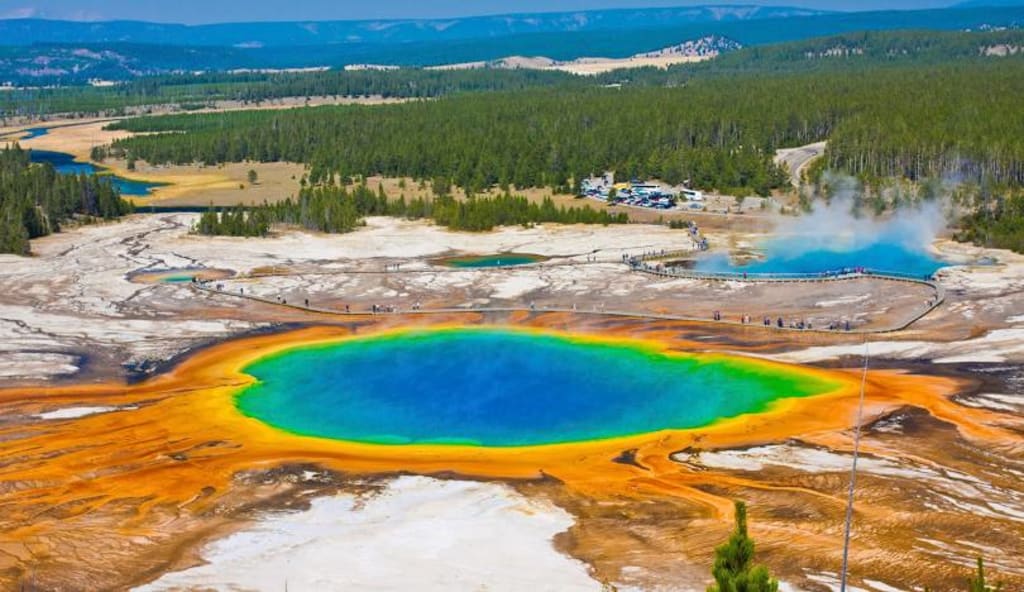
Yellowstone National Park, renowned for its geysers and hot springs, sits atop a massive supervolcano. This geological wonder boasts not just one, but two extensive magma chambers discovered by researchers in 2015, significantly larger than previously thought. Together, these chambers hold enough magma to fill the Grand Canyon eleven times over (University of Utah, 2015).
Geologic Activity and Seismic Monitoring
Despite occasional media speculation, Yellowstone's supervolcano is currently stable. The area experiences regular seismic activity, with a recent notable swarm of 106 earthquakes in March 2023, the largest registering a magnitude of 3.7 (University of Utah Seismograph Stations, 2023). These seismic swarms, while concerning to some, are within expected ranges for Yellowstone and are closely monitored by experts.
Volcanic Explosivity and Eruption Potential
Yellowstone's volcanic explosivity index (VEI) is 8 out of 8, indicating the potential for a cataclysmic event if it were to erupt. To put this into perspective, the Pinatubo eruption in 1991, rated VEI-6, is considered one of the most powerful in recent history (USGS, 2023).
Historical Eruptions and Impact
Yellowstone has experienced several supereruptions, the most recent being the Lava Creek eruption approximately 640,000 years ago. These eruptions have had global impacts, spewing massive amounts of volcanic ash and gases into the atmosphere, leading to widespread climate cooling and ecological disruption (USGS, 2023).
Volcanoes can also impact neighboring areas through various types of volcanic activity, the extent and practicality of this impact depend on the specific characteristics of the volcano and the surrounding landscape. Monitoring, preparedness, and response efforts play crucial roles in managing and mitigating risks to communities in neighboring areas.
Authorities and communities in neighboring areas implement measures to reduce the impact of volcanic hazards. This includes land-use planning, infrastructure development, and education about volcanic risks.
Monitoring and Preparedness
The Yellowstone Volcano Observatory continuously monitors various indicators of volcanic activity, including ground deformation, seismicity, and thermal features. These efforts are crucial for early detection of any potential changes that could indicate an impending eruption (USGS, 2023).
Conclusion
While Yellowstone's supervolcano remains an area of scientific fascination and occasional concern, current data and expert analyses suggest that a catastrophic eruption is not imminent. The complex geological processes at work beneath the park are closely monitored to ensure early warning and preparedness measures are in place.
Understanding Yellowstone's supervolcano requires distinguishing between sensationalism and scientific reality. By staying informed and relying on credible sources, we can appreciate the geological marvel of Yellowstone while recognizing the importance of ongoing research and preparedness efforts.
Recent developments underscore the dynamic nature of Yellowstone's volcanic system and highlight the importance of continued monitoring and research to better understand and mitigate volcanic hazards in this iconic national park.
Lastly, while desk on hand efforts are in place to ensure tourist safety at Yellowstone, visitors are also encouraged to exercise caution, adhere to park regulations, and stay informed about current conditions. Awareness of the dynamic nature of the park's geology and potential hazards is essential for enjoying a safe and memorable visit to this iconic natural wonder.
References:
United States Geological Survey (USGS). (2002). USGS Open-File Report 2002-0142: Yellowstone Lake geology and geophysics. Retrieved from https://pubs.usgs.gov/of/2002/of02-142/
United States Geological Survey (USGS). (2007). USGS Professional Paper 1717: The scientific basis for Yellowstone's supervolcano. Retrieved from https://pubs.usgs.gov/pp/1717/
University of Utah. (2015). Yellowstone's magma reservoir much bigger than thought.
University of Utah Seismograph Stations. (2023). March 2023 Yellowstone earthquake swarm.
US Geological Survey (USGS). (2023). Yellowstone Volcano Observatory - Monitoring.


Comments (2)
The descriptions made it easy to visualize the scene, Great job!
Nice concept