
The Roar of the Giants: A Deep Dive into History’s Most Cataclysmic Eruptions
The Great Volcanic Awakening
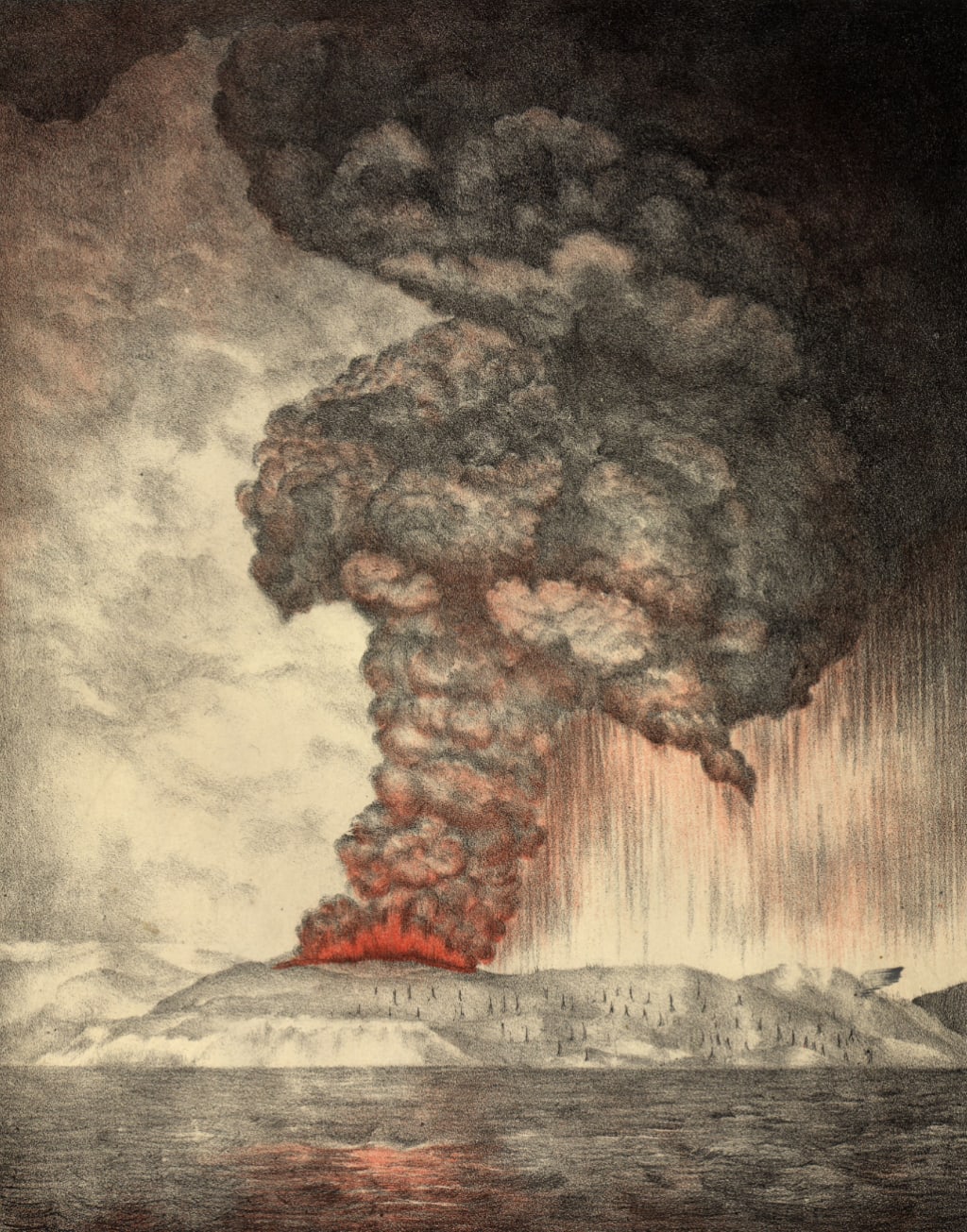
Today, I embarked on a fascinating exploration of some of the most devastating volcanic events in human history. My journey took me through the ancient ruins of volcanic catastrophes, uncovering the awe-inspiring and terrifying forces that shape our planet. Let’s dive into these volcanic giants and their impact on our world.
The Awakening of Krakatoa: A Cataclysm in 1883
The tale began with the monstrous eruption of Krakatoa in the Sunda Strait of Indonesia. Imagine a volcano that had been dormant for over 200 years suddenly awakening with a fury that was nothing short of apocalyptic. In May 1883, Krakatoa sent shockwaves across the globe. The black ash cloud that erupted reached heights of 50 meters—about nine times the height of Mount Everest!
The sheer power of the eruption caused tsunamis that devastated coastal regions as far away as South Africa. The eruption shattered the island into fragments and produced sounds so loud they could be heard 3,000 miles away in Australia. This wasn’t just an eruption; it was a symphony of destruction, the roar likened to the thunder of heavy cannons. The eruption’s aftermath led to a volcanic winter that cooled global temperatures and created stunning visual phenomena.
For years, sunsets around the world became a canvas of vibrant reds and oranges, a display of nature's raw power. One artist, Edward Munch, might have been inspired by these fiery skies for his iconic painting, *The Scream*. The eruption even produced rare celestial phenomena like the Bishop’s ring and turned the Moon into a surreal canvas of blue and green hues.
The Chill of 1815: Mount Tambora’s Year Without a Summer
Next on the agenda was the 1815 eruption of Mount Tambora on the island of Sumbawa, Indonesia. This eruption was the largest in recorded history and had global repercussions. Known as the "Year Without a Summer," it led to severe climate anomalies across Europe and North America. The year 1816 saw a dramatic drop in temperatures, unseasonal frosts, and failed crops, which triggered widespread famine and disease. It was so severe that some historians argue it spurred the invention of the bicycle as a more practical mode of transport.
Scientists later traced these climatic shifts back to the eruption, revealing how volcanic activity can cause dramatic, short-term climate changes. The eruption released particles into the atmosphere that scattered sunlight, leading to a brief but intense volcanic winter.
The Toba Supervolcano: The Mother of All Eruptions
Finally, I delved into the eruption of the Toba supervolcano around 74,000 years ago, an event that was the largest volcanic eruption in the past 28 million years. This eruption was so massive it created a caldera that can still be seen from space today. The volcanic debris from Toba blanketed parts of Indonesia, India, and the Indian Ocean, triggering a volcanic winter that lasted up to a decade.
Some anthropologists link this eruption to the "Toba catastrophe theory," which suggests that the eruption caused a dramatic reduction in human populations. However, recent studies offer a more nuanced view. Research led by Benjamin Black at Rutgers University showed that while the Northern Hemisphere experienced severe cooling, the Southern Hemisphere remained relatively unaffected. This new perspective challenges earlier theories about the eruption's role in shaping human genetic diversity.
Volcanic Eruptions and Their Lasting Impressions
These stories of Krakatoa, Tambora, and Toba remind us of the immense power of nature and its ability to alter the course of history. While supervolcanoes like Toba are rare, their impact on the climate and human society is profound. Every few decades, we experience smaller volcanic events that offer a glimpse into the larger processes at work, helping scientists refine climate models and understand past events.
In reflecting on these monumental eruptions, I’m struck by the resilience of life and the ways we study the past to prepare for future uncertainties. Volcanic eruptions, while devastating, are also natural processes that shape the Earth’s surface and climate.
As I close this journal entry, I’m left in awe of the forces that drive our planet and the stories of survival and adaptation that emerge from these global catastrophes.
About the Creator
Asda Chairman Allan Leighton Has Struggled to Rebuild the Supermarket’s Market Share
Asda was once a dominant force on the UK’s high streets, known for low prices, broad appeal, and fierce competition with Tesco and Sainsbury’s. But in recent years, the supermarket giant has found itself slipping behind rivals in an increasingly brutal grocery war. Despite the return of Allan Leighton as chairman, rebuilding Asda’s market share has proven far more challenging than many expected.
By Aarif Lashariabout 5 hours ago in Earth
Stock Market Today: Nasdaq Futures Rise; Oil Skids After Trump Dials Down Iran Tension
If you’ve been following the markets this week, you’ve probably noticed how sensitive traders are to geopolitical headlines. On Thursday, Nasdaq futures rose, while oil prices dropped after U.S. President Donald Trump made remarks that dialed down fears of immediate military escalation with Iran. It’s a classic example of how news can move multiple markets at once — tech stocks climbing while commodities react in the opposite direction. Nasdaq Futures Bounce Back Technology and growth-focused stocks led the recovery in futures trading. Nasdaq futures climbed, signaling that investors are regaining confidence after recent volatility. Many traders have been cautious, with some taking profits from high-flying tech names, but today’s rebound shows that market optimism is returning. Corporate earnings are a big factor here. Several tech giants, including semiconductor and software companies, have beaten analyst expectations in recent weeks. These results support longer-term growth narratives, giving investors confidence that the tech sector can continue to outperform even amid economic uncertainty. For anyone watching the markets, this is a reminder: futures are forward-looking indicators. When traders see signs of stabilization — like reduced geopolitical tension or strong earnings — markets often react positively before the official trading session even begins. Oil Prices Fall Amid Eased Tensions On the flip side, oil prices skidded. The energy market had been pricing in potential supply disruptions due to the tension with Iran, particularly in critical regions like the Strait of Hormuz. But after Trump’s comments, traders interpreted a lower risk of military conflict, and crude futures dropped sharply. West Texas Intermediate (WTI) and Brent crude both saw declines of around 4–5%, as investors adjusted their positions. This shows how geopolitical risk premiums can inflate commodity prices — and how quickly they can disappear once the perceived threat diminishes. Lower oil prices are a double-edged sword. On one hand, cheaper fuel eases costs for consumers and businesses. On the other, energy companies and oil-exporting nations may face pressure on revenue and profits if prices remain soft. Why Geopolitics Moves Markets The Middle East continues to be a major driver of global market sentiment. Even the possibility of conflict in oil-rich regions can make investors nervous, sending equities lower and commodities higher. Conversely, statements that calm these fears can produce quick rebounds in risk assets like stocks and a decline in commodities like oil. This week’s developments show just how reactive the markets have become. A single remark from a world leader — in this case, Trump — can shift risk perception and trigger immediate moves across multiple asset classes. Earnings and Economic Data Still Key While geopolitical headlines dominate daily moves, corporate earnings and economic data remain critical for long-term market trends. Financial giants like Morgan Stanley recently reported results that beat expectations, boosting their stock prices and reinforcing positive sentiment in the sector. Investors are paying close attention to these fundamentals. Earnings reports and macroeconomic indicators provide insight into underlying trends, helping traders separate short-term volatility from sustainable growth. What Investors Should Watch For stock investors: The rebound in Nasdaq futures suggests that growth and technology stocks are finding support, but volatility is still high. Active risk management and portfolio diversification remain essential. For energy markets: Today’s slump in oil prices highlights how commodities react to geopolitical sentiment. Traders should watch for developments in the Middle East, as any escalation could reverse the decline in prices almost immediately. For global markets overall: Investors must balance multiple narratives — geopolitical events, corporate earnings, economic data, and interest rate expectations. This interplay shapes risk appetite and influences how capital flows across sectors and regions. The Takeaway Today’s market action illustrates a broader theme: markets are highly sensitive to shifts in risk perception. When geopolitical tension eases, equities tend to rise, and risk-sensitive commodities like oil fall. But when threats reappear, sentiment can flip, reminding investors that global markets are dynamic and interconnected. This combination of Nasdaq gains and falling oil prices isn’t just about numbers — it’s about investor psychology, risk management, and the speed at which news travels in our global economy. The lesson is clear: staying informed and flexible is more important than ever for anyone participating in today’s markets.
By Muhammad Hassan4 days ago in Earth



Comments
There are no comments for this story
Be the first to respond and start the conversation.