
Ultimate Agriculture Drone Spraying Guide for Agribusiness
Discover how agriculture drone spraying boosts efficiency, reduces costs, and improves crop yields.

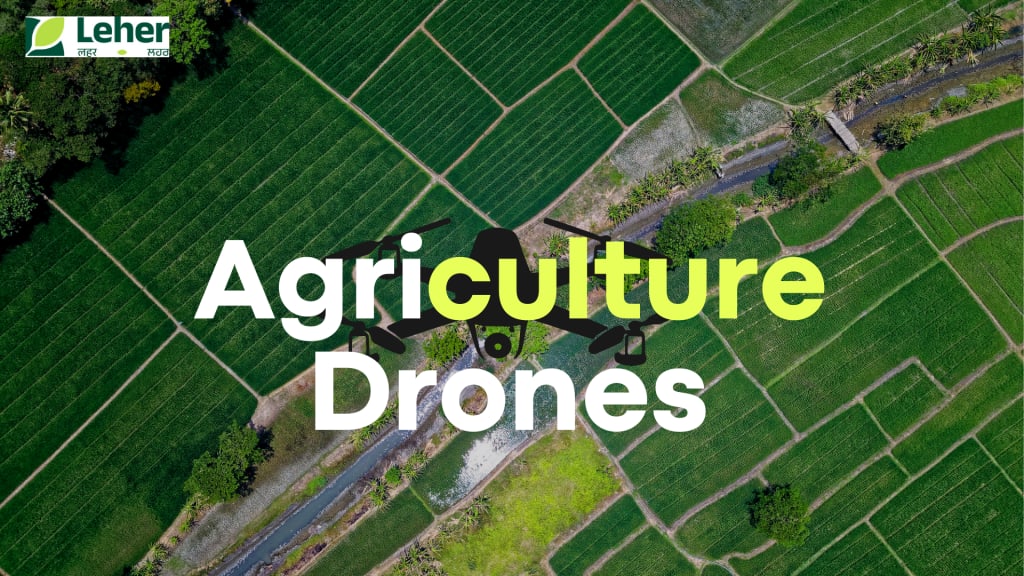
Since integrating advanced technologies into agriculture, a revolutionary change has occurred, one innovation being agriculture drone spraying. Agribusiness now has a transforming high-tech aspect in farming that enhances efficiency while reducing labor costs and ensuring the precision of spraying crops.
This guide will outline various benefits, working cost mechanisms, and criteria before buying this agriculture spraying drone.
What is Agriculture Drone Spraying?
Fertilizers, pesticides, herbicides, and other liquid solutions are sprayed on crops using unmanned aerial vehicles (UAVs), also known as agriculture drones. These help farmers spray a large area uniformly without wasting chemicals.
Drone spraying technology provides accurate, automated, and eco-friendly crop treatment compared with earlier spraying methods, which employ manual or heavy machinery.
Benefits of Using Drones for Spraying in Agriculture
Efficiency, cost-effectiveness, and precise application of chemicals to healthier yields are the differences drones bring to crop spraying.
1. Increased Efficiency & Time-Saving
Drones may cover huge fields in a short period while reducing the actual time required compared to the existing conventional spraying modes.
2. Precision & Reduced Chemical Waste
Advanced GPS coupled with AI can ensure the efficient application of these chemicals while decreasing the surplus quantities used in farmlands without harming the ecosystem.
3. Cost Savings on Labor & Equipment
It makes farming more financially viable as, instead of spraying machines and traditional laborers, drones will ensure a cost decrease in operation during agriculture.
4. Reduced Soil Compaction
Unlike heavy machinery that compacts the soil and affects crop health, drones work from the air without compacting the soil or destroying its fertility.
5. Access to Hard-to-Reach Areas
With drones, hard-to-reach regions, steep slopes, and remote farmlands will easily be covered to ensure even spraying coverage.
How Agriculture Spraying Drones Work
Learn how precision, automation, and real-time monitoring are helping agriculture spraying drones operate with maximum efficiency and crop protection.
Flight Planning: Farmers input GPS coordinates and adjust spray parameters using an app.
Automated Spraying: The drone starts flying according to pre-set paths while varying spraying intensity.
Real-time Monitoring: Sensors and AI monitor environmental conditions to spray efficiently.
Precision Delivery: Chemicals are only discharged at target locations, reducing drift and runoff.
Farming Drone Price: What to Expect?
The price of farming drones varies depending on the capacity for spraying, battery life, and GPS, among other automation levels. These can be generalized through the following examples of farming drone prices:
Entry-Level Drones: ₹1,70,000 – ₹4,20,000 (suitable for small farms, basic features).
Mid-Range Drones: ₹4,20,000 – ₹12,50,000 (advanced automation, larger tank capacity).
High-End Drones: ₹12,50,000 – ₹42,00,000+ (AI-driven, multi-functional, ideal for large-scale agribusiness).
Factors Affecting Farming Drone Price
1. Spraying capacity in liters per flight
2. Battery lifetime & charging duration
3. Flight Range & Altitude
4. Automation degree & AI integration
5. Brand reputation & manufacturer repute
Choosing the Right Agriculture Drone for Your Farm
When selecting an agriculture spraying drone, consider the following:
Farm Size: Large-scale farms require more powerful drones with larger capacity and long-range battery life.
Budget: Consider a drone with a balance between cost and feature.
Technology Needs: Search for AI, GPS, and automated flight planning.
Regulations: Follow local drone laws and spray permits.
Conclusion
Spraying through drones in agriculture is transforming how farmers deal with their crops: far more efficient, cost-effective, and sustainable. It may become the best investment in productivity enhancement for agribusinesses and in minimizing the cost of labor and chemicals. Indeed, the evolution of drones used for farming shall introduce more features that meet all expectations of efficiency in spraying.
If one is searching for the best agricultural spraying solutions using drones, Leher is at the forefront of innovation, providing technological superiority in modern farming.
About the Creator
Leher.ag
Leher’s drone spraying services promote sustainable farming by reducing pesticide and water usage by up to 30% and 90%, respectively. By ensuring precise application, their technology minimizes environmental runoff and soil degradation.
The Ongoing Search for Water on Mars
For decades, scientists have been fascinated by the possibility of water on Mars. Known for its dry, dusty landscape and reddish appearance, Mars was once thought to be a completely barren world. However, modern discoveries have revealed that the planet may have once had abundant water—and scientists are still searching for evidence of it today.
By Irshad Abbasi 4 days ago in Earth



Comments
There are no comments for this story
Be the first to respond and start the conversation.