
UK-China Relationship in a ‘Good, Strong Place,’ Starmer Says After ‘Productive’ Talks With Xi
A New Chapter in Diplomacy Amid Global Uncertainty
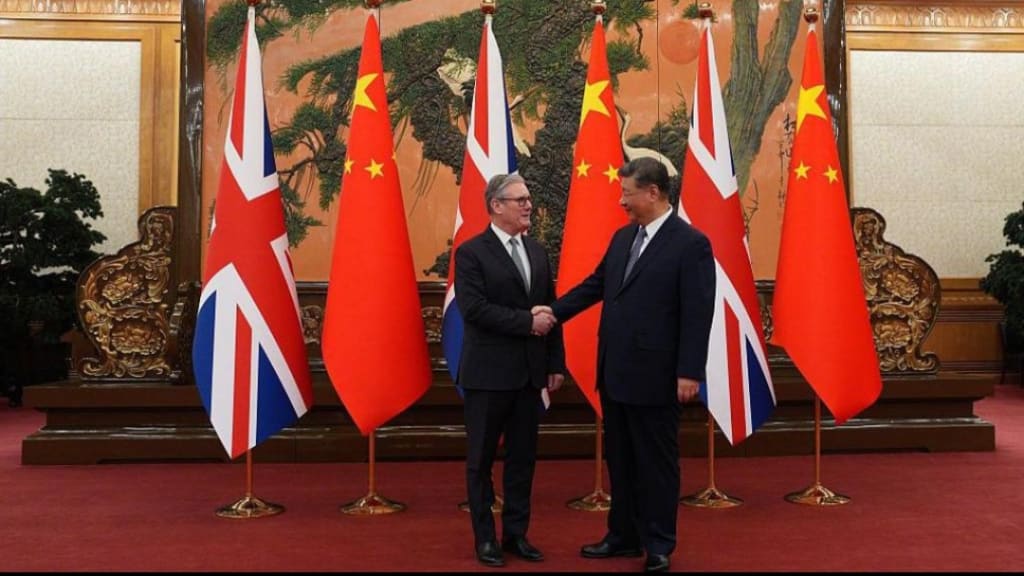
The United Kingdom’s relationship with China is in a “good, strong place,” Prime Minister Keir Starmer has said, following what he described as productive talks with Chinese President Xi Jinping. The comments signal a potential recalibration of UK-China relations after years marked by tension, mistrust, and strategic caution.
Starmer’s remarks come at a time when global geopolitics are increasingly complex, with economic uncertainty, security concerns, and climate challenges pushing major powers toward renewed diplomatic engagement. For Britain, maintaining a balanced relationship with China—one of the world’s largest economies—remains both an opportunity and a challenge.
A Shift in Tone From Confrontation to Engagement
Relations between the UK and China have been strained in recent years over issues including human rights, Hong Kong, trade imbalances, and national security. Previous governments adopted a more confrontational stance, tightening restrictions on Chinese investment and publicly criticizing Beijing’s policies.
Starmer’s comments suggest a more pragmatic approach, emphasizing dialogue rather than distance. While reaffirming the UK’s commitment to democratic values and international law, the prime minister has stressed the importance of open communication and cooperation where interests align.
Diplomatic sources describe the meeting between Starmer and Xi as constructive, focusing on shared global challenges rather than ideological divides.
Economic Ties Remain Central
Trade and investment remain a cornerstone of the UK-China relationship. China is one of the UK’s largest trading partners, and British businesses operate across sectors ranging from finance and education to manufacturing and green technology.
During the talks, economic cooperation reportedly featured prominently, with discussions covering:
Trade stability and market access
Investment opportunities in green energy and infrastructure
Collaboration in science, technology, and innovation
Starmer acknowledged that economic engagement must be balanced with national security and resilience, but emphasized that disengagement would not serve Britain’s long-term interests.
Managing Differences Without Escalation
Despite the positive tone, Starmer was careful not to downplay existing disagreements. Issues such as human rights in Xinjiang, freedoms in Hong Kong, and cybersecurity risks remain areas of concern for the UK.
However, the government’s position appears to be that constructive engagement is more effective than isolation. By keeping diplomatic channels open, the UK aims to raise concerns directly while avoiding unnecessary escalation.
This approach mirrors strategies adopted by several European nations seeking to maintain economic ties with China while safeguarding political principles.
Global Context: Why Now?
The renewed engagement comes amid broader global shifts:
The war in Ukraine has reshaped alliances and economic priorities
Supply chain disruptions have highlighted the risks of overdependence
Climate change demands cooperation between major emitters
In this context, dialogue between London and Beijing is seen as pragmatic rather than ideological. Both countries recognize that cooperation on climate policy, global health, and financial stability is difficult without sustained communication.
Starmer’s comments suggest that Britain is seeking to position itself as a stable, pragmatic global actor, capable of managing complex relationships in a multipolar world.
Domestic Reaction in the UK
Reaction within the UK has been mixed. Business leaders have largely welcomed the tone, arguing that predictable relations with China are essential for economic confidence and growth.
Critics, however, caution against softening the UK’s stance too far. Some lawmakers and human rights groups worry that improved relations could lead to compromises on values or weaken Britain’s voice on international rights issues.
Starmer has responded by insisting that engagement does not mean endorsement, and that the UK will continue to speak out where necessary.
China’s Perspective
From Beijing’s standpoint, improved relations with the UK fit into a broader strategy of stabilizing ties with Western nations amid economic pressures at home and growing global scrutiny.
Chinese state media described the talks as positive, emphasizing mutual respect, economic cooperation, and the importance of avoiding confrontation. Analysts suggest China views the UK as a key European partner, particularly post-Brexit, as Britain seeks to redefine its global trade and diplomatic role.
The Road Ahead
While Starmer’s remarks mark a positive moment, experts caution that sustaining momentum will require careful management. The UK-China relationship remains complex, shaped by competing interests, values, and global alliances.
Key issues to watch include:
Future trade negotiations and investment reviews
Cooperation on climate change and global health
How the UK balances its China policy with relationships with the US and EU
The government’s challenge will be maintaining open dialogue without compromising security or principles.
Conclusion: Pragmatism Over Posturing
Starmer’s declaration that the UK-China relationship is in a “good, strong place” reflects a shift toward pragmatic diplomacy in an era of uncertainty. While differences remain, the emphasis on dialogue suggests a recognition that global challenges cannot be addressed through isolation alone.
Whether this approach delivers long-term benefits will depend on how effectively both sides manage disagreements while building cooperation where possible. For now, the talks signal a willingness to engage—an important step in navigating one of the world’s most consequential bilateral relationships.
About the Creator
Keep reading
More stories from Aarif Lashari and writers in Earth and other communities.
Assisted Dying Bill ‘No Hope’ of Passing Unless Lords Change Approach, Warns Peer
The future of the assisted dying bill in the UK is hanging by a thread, with a senior peer warning that it has “no hope” of passing unless the House of Lords dramatically changes its current approach. The stark warning has reignited a deeply emotional national debate—one that sits at the crossroads of ethics, personal freedom, medical responsibility, and the role of Parliament in end-of-life decisions.
By Aarif Lashariabout 17 hours ago in Earth
An increase in Mediterranean climate extremes is recorded by pine trees.
Eastern Spain's pine trees are a silent archive of weather history. Mountain pines used wood rings to record wet and dry years long before rain gauges and satellites were invented. Now, when scientists study those rings, they find a blatant warning.
By Francis Dami2 days ago in Earth
USA Weather Forecast, Next 3 Days cold
Day 1 — Friday: Winter Storm Impact Begins Across much of the nation from the southern plains to the Northeast, storm conditions will rapidly intensify: Snow and Ice Spread — Snow and freezing rain will expand eastward, leading to slick roads and hazardous travel. Ice accumulations could be significant in certain corridors, particularly across parts of Texas, the Mississippi Valley, and the Southeast.
By USA daily update 7 days ago in Earth


Comments
There are no comments for this story
Be the first to respond and start the conversation.