
Tsunami Warning in California: Preparedness, Impact, and Lessons Learned
How California Faces the Threat of Tsunamis in a Changing Climate

California, with its stunning coastline and vibrant coastal communities, is not only known for its beauty but also for the geologic risks it faces. One of the most significant and terrifying of these is the threat of a tsunami. Although tsunamis are rare events on the U.S. West Coast, warnings in recent years have raised public awareness and prompted officials to enhance preparedness efforts. A tsunami warning in California is more than just a weather alert — it’s a call to action for residents, emergency services, and government authorities to be ready for a natural disaster that can cause catastrophic loss of life and property.
Understanding Tsunamis
Tsunamis are large ocean waves usually caused by underwater earthquakes, volcanic eruptions, or landslides. When these seismic events disturb the ocean floor, they displace large volumes of water and send waves racing across the ocean at hundreds of miles per hour. By the time these waves reach shallow coastal waters, they can grow in height dramatically and flood coastal regions.
California is located along the Pacific Ring of Fire, a seismically active zone where tectonic plates meet. This makes the state vulnerable to tsunamis, especially those generated by earthquakes occurring in the Pacific Ocean, such as those near Alaska, Japan, or Chile.The 2022 Tsunami Warning: A Wake-Up Call
One recent and notable example was the tsunami advisory issued on January 15, 2022, after the eruption of the Hunga Tonga-Hunga Ha’apai volcano in the South Pacific Ocean. Although the volcanic eruption occurred thousands of miles away from California, it sent shockwaves across the Pacific and triggered a tsunami advisory for the entire U.S. West Coast, including California.
The tsunami waves that eventually reached California were relatively small, generally between 1 to 3 feet in height. Nevertheless, the advisory served as a critical test of the state’s warning systems and emergency response readiness. Coastal towns like Santa Cruz, Crescent City, and Ventura experienced minor flooding, harbor damage, and strong currents. Authorities issued beach closures, evacuated some low-lying areas, and urged people to stay away from the shoreline.
Though the damage was limited, this event was a reminder that tsunamis don’t need to be massive to pose a threat — especially to harbors, boats, and people near the water.
California’s Tsunami Preparedness
In response to past tsunami events and the ongoing risk, California has taken significant steps to prepare for potential disasters. The California Governor’s Office of Emergency Services (Cal OES), in coordination with the National Weather Service (NWS) and local agencies, has developed a multi-layered tsunami alert system.
This includes:
Emergency Alert Systems: Local and state agencies can issue emergency broadcasts on TV, radio, and mobile phones to warn the public of incoming threats.
Tsunami Evacuation Maps: Communities along the coast have access to detailed maps that show which areas are at risk and where to evacuate safely.
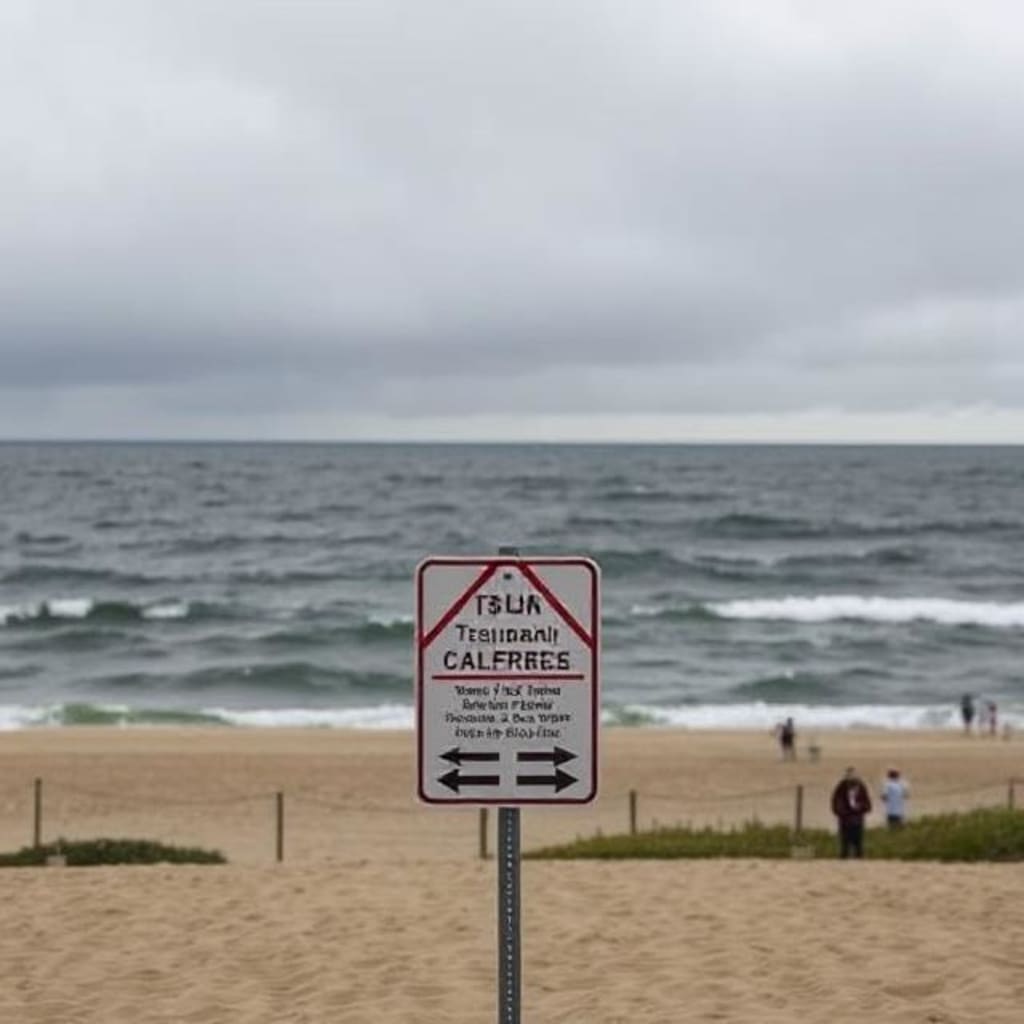
Tsunami Warning Signs: Roads and beach areas are marked with signs pointing to tsunami evacuation routes.
Public Education Campaigns: Awareness programs teach residents and tourists what to do in the event of a tsunami, including the importance of reaching higher ground immediately.
In addition to infrastructure and education, California also conducts regular tsunami drills. Schools, hospitals, and emergency responders participate in these exercises to improve coordination and reduce response times.

What Residents Should Know
Every Californian who lives near the coast should understand the basics of tsunami safety. The most important rule is: If you feel an earthquake, drop, cover, and hold on — then move to higher ground immediately. Tsunamis can arrive within minutes of a nearby earthquake, leaving little time to react. For distant-source tsunamis (like those from across the ocean), there is often several hours of warning time.
It’s also crucial for residents to sign up for emergency alerts through their county’s alert system and be familiar with local evacuation routes. Preparedness can make all the difference when seconds count.
Looking Ahead
Scientists and emergency planners agree that while we cannot prevent tsunamis, we can reduce their impact through planning, education, and early warning systems. As climate change and sea level rise threaten to worsen the impact of coastal disasters, California's approach to tsunami preparedness serves as a model for other coastal regions around the world.
Tsunami warnings may seem rare or even over-cautious to some, but they exist to save lives. Every warning is an opportunity to test the system, learn from experience, and ensure communities are better equipped to face the next event.
About the Creator
Junaid Shahid
“Real stories. Real emotions. Real impact. Words that stay with you.”
“Observing society, challenging narratives, and delivering stories that matter.”
“Questioning power, amplifying the unheard, and writing for change—one story at a time.”
Keep reading
More stories from Junaid Shahid and writers in Earth and other communities.
Extreme Heat Sweeps Across the U.S.: Millions Under Threat”
A powerful heat wave is sweeping across much of the United States, especially in the Midwest, the Southeast, and up along the East Coast. This heat wave is being driven by a heat dome, a weather pattern that traps hot air in one place for many days. With temperatures often soaring over 100 °F (38 °C) and humidity adding to the heat, this situation is putting millions of people at serious risk.
By Junaid Shahid 8 months ago in Confessions
President Trump Calls Putin to Discuss Ending the Wars in Iran and Ukraine
Introduction In a significant diplomatic move, U.S. President Donald Trump recently held a phone conversation with Russian President Vladimir Putin to discuss ongoing conflicts in the Middle East and Eastern Europe. The call focused on the war involving Iran and the prolonged Russia-Ukraine conflict, both of which have raised global concerns about stability, security, and economic consequences. The conversation highlights growing international pressure to find peaceful solutions to these major conflicts.
By shaoor afridia day ago in Earth
Early March 2026: 4 Goals Accomplished
It's early March and I've now accomplished my 4th writing goal for the year of 2026. Before diving into the behind-the-scenes of it... why not tell you up front what that accomplishment was? I was published in a 2nd publication for this year. Published in Helix Literary Magazine out of Central Connecticut State University. You can read it for free right now!
By Stephen Kramer Avitabile5 days ago in Writers



Comments
There are no comments for this story
Be the first to respond and start the conversation.