
Trumpets in the Sky: The Bloom That Turns Streets into Pink Tunnels
When nature throws a festival, it doesn't need confetti—just Tabebuia rosea in full bloom.

A Street-Lining Spectacle
Imagine walking under a canopy of pink blossoms, where each breeze sends down gentle showers of petals. That dreamlike scene isn’t a fantasy—it’s what happens when Tabebuia rosea, also known as the Pink Trumpet Tree, bursts into bloom. From parks to boulevards, this tropical tree has become a favorite in urban landscapes, especially in countries with warm climates.
When in full bloom, the tree sheds nearly all its leaves, leaving behind a stunning silhouette of trumpet-shaped flowers. Streets become tunnels of blush, and people can’t resist stopping for photos or just to soak in the view. It’s one of nature’s most dramatic makeovers, and it happens like clockwork each dry season.
Not Just Pretty—It’s Well-Adapted
Despite its delicate look, Tabebuia rosea is incredibly hardy. Native to Central and South America, it thrives in poor soil, withstands drought, and grows quickly. That makes it not only ornamental but also practical for reforestation, urban greening, and erosion control.
Its ability to adapt to different environments is part of what makes it so widely planted around the world. From tropical Asia to the Americas, the Pink Trumpet Tree brings its seasonal show wherever the sun shines.
A Magnet for Life
Tabebuia rosea doesn’t bloom quietly. Its nectar-rich flowers attract bees, butterflies, and birds, turning the blooming season into a full-on ecological party. It's not just the human eye that’s drawn to its beauty—entire food chains seem to notice.
This seasonal magnetism helps pollinate nearby plants too, making it a vital member of the landscape. A single tree becomes a mini-ecosystem, buzzing with activity and renewal.
Symbolism in Full Bloom
In many cultures, pink flowers represent hope, new beginnings, and the fleeting beauty of life. The Tabebuia’s sudden, breathtaking transformation—followed by a swift return to greenery—reminds many of how quickly beauty can bloom and fade.
In some countries, its blossoms are seen as symbols of seasonal change, marking the end of dry spells or the start of exams and festivities. Whether or not you attach meaning to the petals, it’s hard not to feel a sense of awe beneath a pink Tabebuia sky.
The Petal Carpet Phenomenon
One of the most magical moments arrives not during, but after peak bloom—when the petals fall to the ground. What’s left is a vibrant, natural carpet of pink and white hues, as if spring decided to roll out the red carpet.
These fallen petals often stay for days, cushioning the earth like a floral snow. People plan photoshoots, artists sketch them, and children play among them. It’s a momentary gift from nature, fleeting but unforgettable.
A Tree That Brings People Together
In some cities, the blooming of Tabebuia rosea marks the unofficial start of spring festivals or neighborhood events. Communities gather to admire the view, and social media lights up with shared photos and poetry.
It’s a reminder that nature doesn’t just exist in forests and mountains—it finds its way into the heart of the city and gives everyone a reason to look up and smile.
Final Thought: A Gentle Giant That Speaks in Flowers
Tabebuia rosea isn’t just a tree—it’s a seasonal storyteller. With every bloom, it speaks of joy, change, and the quiet resilience of nature. While its pink trumpet flowers may only last a few weeks, their impact lingers much longer in the hearts of those who witness them.
In a world constantly chasing the extraordinary, Tabebuia rosea reminds us that magic often grows on the side of the road—quiet, humble, and beautifully in tune with the rhythm of nature. It doesn't shout to be seen, yet once it blooms, it’s impossible to ignore. And perhaps, that’s the kind of beauty we need more of—fleeting yet unforgettable, soft yet powerful.
About the Creator
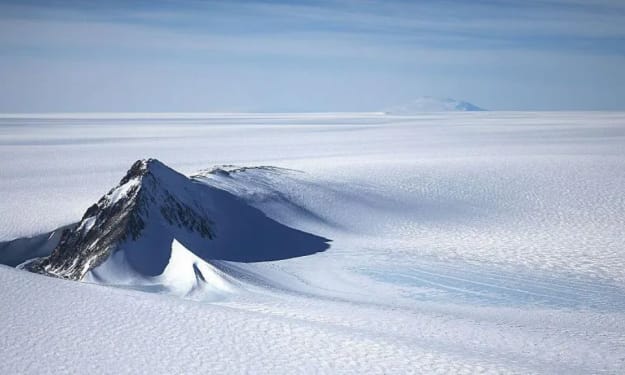
Landscape Beneath Antarctica's Icy Surface Revealed in Unprecedented Detail
For decades, Antarctica has been the Earth’s ultimate mystery — a vast expanse of ice covering almost 14 million square kilometers, hiding secrets beneath its frozen surface. Now, thanks to advanced radar technology and satellite mapping, scientists have produced the most detailed map yet of the continent’s hidden landscape, revealing mountains, valleys, subglacial lakes, and river systems that were previously invisible. This discovery is more than just a scientific curiosity. Understanding Antarctica’s topography beneath the ice is critical for predicting ice sheet stability, global sea-level rise, and climate change impacts. The new data could also shed light on Earth’s geological history and the ways in which life may survive in extreme environments. How Scientists Mapped the Hidden Terrain For years, researchers have relied on a combination of methods to peek beneath the ice: Ice-penetrating radar: Devices mounted on aircraft or satellites send radio waves through ice layers, which bounce back when they hit bedrock, revealing contours beneath kilometers of frozen water. Satellite gravimetry: Small variations in Earth’s gravitational field help infer the presence of mountains, valleys, and subglacial lakes. Seismic surveys: Explosions or controlled vibrations allow scientists to detect underground structures by measuring the way seismic waves travel through different materials. Using these techniques, a consortium of international researchers created a high-resolution map of Antarctica’s sub-ice topography, revealing features that rival the landscapes of continents that have been visible for millions of years. What’s Beneath the Ice? The map reveals a striking variety of features: Mountain ranges: Peaks rise more than 4,000 meters above the surrounding terrain, hidden beneath miles of ice. Some of these ranges may be older than the Rockies or the Alps. Deep valleys: Vast troughs and gorges, carved by ancient rivers or tectonic activity, provide clues about how the continent evolved over millions of years. Subglacial lakes: Scientists have identified hundreds of liquid water lakes trapped beneath the ice, including the famous Lake Vostok. These lakes remain liquid due to pressure and geothermal heat and may host microbial life isolated for millions of years. Subglacial river networks: Surprisingly, water flows beneath the ice in channels and rivers, slowly carving pathways that affect ice sheet movement. This intricate landscape challenges the perception of Antarctica as a flat, featureless ice sheet. Instead, it is a dynamic and complex environment, where hidden topography influences everything from ice flow to global sea levels. Why This Discovery Matters The importance of understanding what lies beneath Antarctica’s ice cannot be overstated: Predicting Ice Sheet Stability: Ice sheets move more quickly over smooth surfaces than over rugged terrain. Knowing where mountains and valleys lie helps scientists predict which areas of ice may collapse first, potentially raising sea levels faster than anticipated. Climate Change Models: Subglacial lakes and water channels lubricate the ice from below, influencing melting rates. Incorporating these features into models improves accuracy in forecasting future sea-level rise. Earth’s Geological History: The newly revealed landscape offers a window into Antarctica’s past — from tectonic shifts to ancient rivers and climates. This data helps reconstruct how continents drifted and climates evolved over millions of years. Search for Extreme Life: Subglacial lakes may harbor microbial life isolated for millions of years, providing insights into life in extreme environments, potentially even on other planets. Global Implications Antarctica may feel distant, but its ice sheets hold the key to global sea-level stability. Even small changes beneath the ice can have profound consequences for coastal cities around the world. With melting accelerated by climate change, understanding the terrain under the ice is crucial for planning and mitigation. Governments, scientists, and environmental organizations are now using this information to: Improve climate models for sea-level rise predictions Identify vulnerable regions of the ice sheet Guide future research missions to subglacial lakes and mountains The discovery also strengthens the case for continued international collaboration in Antarctica, where research and environmental protection are governed by treaties emphasizing peaceful scientific study. Challenges Ahead Mapping Antarctica is far from complete. Extreme weather, thick ice sheets, and logistical difficulties make the continent one of the hardest places to study. While radar and satellite technologies have advanced, field validation and deeper exploration remain difficult and expensive. Researchers also face ethical and environmental concerns. Drilling into subglacial lakes to sample microbial life, for instance, must be done carefully to avoid contamination. Antarctica’s fragile ecosystem demands that scientific progress balances discovery with protection. Looking to the Future The detailed map of Antarctica’s hidden landscape opens new possibilities for exploration and understanding: Ice Flow Predictions: With accurate topography, scientists can model how ice sheets will respond to warming climates more precisely. Resource Insights: While exploitation is restricted by international agreements, understanding subglacial mineral deposits can inform potential future uses. Extreme Environment Biology: Studying subglacial lakes could reveal new species adapted to cold, dark, and high-pressure environments, broadening our understanding of life on Earth. The data also strengthens international scientific cooperation, as multiple countries share findings and resources to better understand a continent that belongs to no single nation. Final Thoughts Antarctica’s ice may appear static and endless, but beneath it lies a vibrant and rugged landscape filled with mountains, valleys, lakes, and rivers. The new detailed mapping of this hidden world is a landmark achievement in Earth science, combining advanced technology, international collaboration, and the human drive to explore. By uncovering what lies beneath the ice, scientists are not just satisfying curiosity — they are equipping humanity with the knowledge to protect our planet, anticipate climate challenges, and understand the deep history of Earth itself. Antarctica’s secrets, once locked beneath kilometers of ice, are finally being revealed, and what we learn could reshape our understanding of the planet and our place within it.
By Muhammad Hassan3 days ago in Earth



Comments
There are no comments for this story
Be the first to respond and start the conversation.