
Landscape Beneath Antarctica's Icy Surface Revealed in Unprecedented Detail
Scientists uncover hidden mountains, valleys, and lakes beneath Antarctica, offering new insights into climate change and the planet’s frozen frontier.

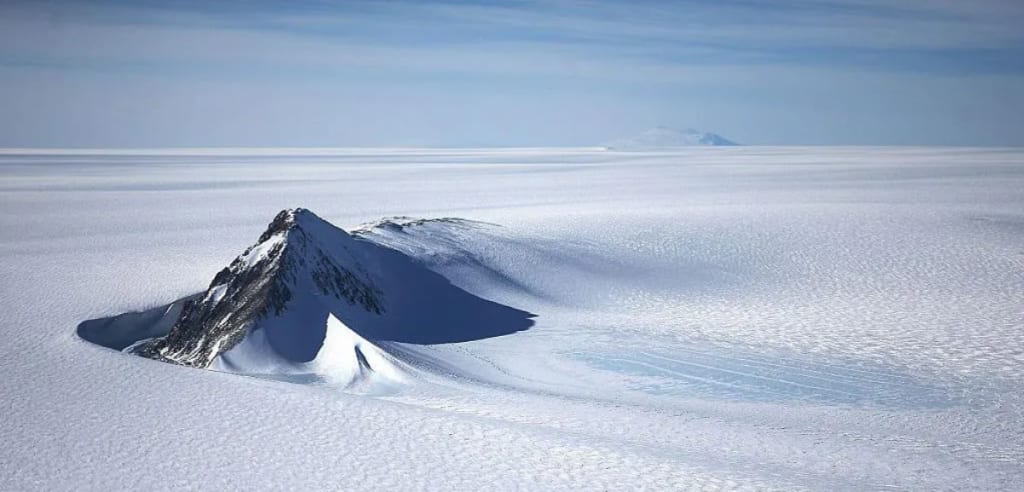
For decades, Antarctica has been the Earth’s ultimate mystery — a vast expanse of ice covering almost 14 million square kilometers, hiding secrets beneath its frozen surface. Now, thanks to advanced radar technology and satellite mapping, scientists have produced the most detailed map yet of the continent’s hidden landscape, revealing mountains, valleys, subglacial lakes, and river systems that were previously invisible.
This discovery is more than just a scientific curiosity. Understanding Antarctica’s topography beneath the ice is critical for predicting ice sheet stability, global sea-level rise, and climate change impacts. The new data could also shed light on Earth’s geological history and the ways in which life may survive in extreme environments.
How Scientists Mapped the Hidden Terrain
For years, researchers have relied on a combination of methods to peek beneath the ice:
Ice-penetrating radar: Devices mounted on aircraft or satellites send radio waves through ice layers, which bounce back when they hit bedrock, revealing contours beneath kilometers of frozen water.
Satellite gravimetry: Small variations in Earth’s gravitational field help infer the presence of mountains, valleys, and subglacial lakes.
Seismic surveys: Explosions or controlled vibrations allow scientists to detect underground structures by measuring the way seismic waves travel through different materials.
Using these techniques, a consortium of international researchers created a high-resolution map of Antarctica’s sub-ice topography, revealing features that rival the landscapes of continents that have been visible for millions of years.
What’s Beneath the Ice?
The map reveals a striking variety of features:
Mountain ranges: Peaks rise more than 4,000 meters above the surrounding terrain, hidden beneath miles of ice. Some of these ranges may be older than the Rockies or the Alps.
Deep valleys: Vast troughs and gorges, carved by ancient rivers or tectonic activity, provide clues about how the continent evolved over millions of years.
Subglacial lakes: Scientists have identified hundreds of liquid water lakes trapped beneath the ice, including the famous Lake Vostok. These lakes remain liquid due to pressure and geothermal heat and may host microbial life isolated for millions of years.
Subglacial river networks: Surprisingly, water flows beneath the ice in channels and rivers, slowly carving pathways that affect ice sheet movement.
This intricate landscape challenges the perception of Antarctica as a flat, featureless ice sheet. Instead, it is a dynamic and complex environment, where hidden topography influences everything from ice flow to global sea levels.
Why This Discovery Matters
The importance of understanding what lies beneath Antarctica’s ice cannot be overstated:
Predicting Ice Sheet Stability: Ice sheets move more quickly over smooth surfaces than over rugged terrain. Knowing where mountains and valleys lie helps scientists predict which areas of ice may collapse first, potentially raising sea levels faster than anticipated.
Climate Change Models: Subglacial lakes and water channels lubricate the ice from below, influencing melting rates. Incorporating these features into models improves accuracy in forecasting future sea-level rise.
Earth’s Geological History: The newly revealed landscape offers a window into Antarctica’s past — from tectonic shifts to ancient rivers and climates. This data helps reconstruct how continents drifted and climates evolved over millions of years.
Search for Extreme Life: Subglacial lakes may harbor microbial life isolated for millions of years, providing insights into life in extreme environments, potentially even on other planets.
Global Implications
Antarctica may feel distant, but its ice sheets hold the key to global sea-level stability. Even small changes beneath the ice can have profound consequences for coastal cities around the world. With melting accelerated by climate change, understanding the terrain under the ice is crucial for planning and mitigation.
Governments, scientists, and environmental organizations are now using this information to:
Improve climate models for sea-level rise predictions
Identify vulnerable regions of the ice sheet
Guide future research missions to subglacial lakes and mountains
The discovery also strengthens the case for continued international collaboration in Antarctica, where research and environmental protection are governed by treaties emphasizing peaceful scientific study.
Challenges Ahead
Mapping Antarctica is far from complete. Extreme weather, thick ice sheets, and logistical difficulties make the continent one of the hardest places to study. While radar and satellite technologies have advanced, field validation and deeper exploration remain difficult and expensive.
Researchers also face ethical and environmental concerns. Drilling into subglacial lakes to sample microbial life, for instance, must be done carefully to avoid contamination. Antarctica’s fragile ecosystem demands that scientific progress balances discovery with protection.
Looking to the Future
The detailed map of Antarctica’s hidden landscape opens new possibilities for exploration and understanding:
Ice Flow Predictions: With accurate topography, scientists can model how ice sheets will respond to warming climates more precisely.
Resource Insights: While exploitation is restricted by international agreements, understanding subglacial mineral deposits can inform potential future uses.
Extreme Environment Biology: Studying subglacial lakes could reveal new species adapted to cold, dark, and high-pressure environments, broadening our understanding of life on Earth.
The data also strengthens international scientific cooperation, as multiple countries share findings and resources to better understand a continent that belongs to no single nation.
Final Thoughts
Antarctica’s ice may appear static and endless, but beneath it lies a vibrant and rugged landscape filled with mountains, valleys, lakes, and rivers. The new detailed mapping of this hidden world is a landmark achievement in Earth science, combining advanced technology, international collaboration, and the human drive to explore.
By uncovering what lies beneath the ice, scientists are not just satisfying curiosity — they are equipping humanity with the knowledge to protect our planet, anticipate climate challenges, and understand the deep history of Earth itself.
Antarctica’s secrets, once locked beneath kilometers of ice, are finally being revealed, and what we learn could reshape our understanding of the planet and our place within it.
About the Creator
Muhammad Hassan
Muhammad Hassan | Content writer with 2 years of experience crafting engaging articles on world news, current affairs, and trending topics. I simplify complex stories to keep readers informed and connected.
Keep reading
More stories from Muhammad Hassan and writers in Earth and other communities.
Elon Musk Says Retirement Savings “Won’t Matter” in 20 Years—Here’s What Experts Think
Recently, Elon Musk sparked a heated debate on social media with a bold claim: in 20 years, traditional retirement savings “won’t matter.” The Tesla and SpaceX CEO suggested that the way people think about money and retirement today might be completely obsolete in a couple of decades. As usual, Musk’s statements are equal parts provocative and visionary, leaving many wondering whether they should rethink their financial plans entirely. To get clarity, we reached out to seven personal finance and AI experts to hear their thoughts on Musk’s prediction. Their insights provide a mix of caution, optimism, and futuristic thinking. 1. The Case for Obsolescence: AI and Automation AI strategist Dr. Karen Liu believes Musk isn’t exaggerating when he talks about the diminishing importance of retirement savings. “If AI and automation continue at the current pace, many traditional jobs could disappear,” she explains. “By 2046, people might earn income from AI-driven ventures, digital assets, or royalties rather than a 9-to-5 paycheck. In that case, the way we save for retirement could indeed look very different.” She emphasizes that new financial models might emerge, such as universal basic income (UBI) or AI-managed wealth portfolios, making conventional retirement accounts less critical. “People might no longer need 401(k)s or IRAs in the same way we do now,” she adds. 2. The Human Factor: Some Things Don’t Change Personal finance advisor Marcus Bell takes a more conservative view. “Even if the economy changes drastically, money management skills won’t be irrelevant,” he says. “Musk may be right that retirement savings as we know them may evolve, but having a financial cushion will always matter. Emergencies, healthcare costs, and life changes won’t disappear.” Bell suggests a hybrid approach: continue contributing to traditional retirement accounts while exploring alternative investments like digital currencies, AI-managed funds, or entrepreneurial ventures. 3. Cryptocurrency and the Digital Asset Revolution Crypto expert Priya Desai sees Musk’s comment as a nod toward the rise of digital assets. “By 2046, much of personal wealth may reside in cryptocurrencies, tokenized real estate, and NFTs rather than bank accounts or pensions,” she says. Desai believes that blockchain technology could redefine ownership and wealth accumulation, making traditional retirement savings less central. However, she cautions: “Digital assets are highly volatile. While they may replace some retirement vehicles, they aren’t a guaranteed substitute. Diversification will remain crucial.” 4. AI-Powered Wealth Management AI entrepreneur Rohan Kapoor points out that AI itself could make traditional retirement planning almost obsolete. “Imagine AI systems that continuously optimize your investments, taxes, and spending in real-time,” he says. “If AI handles wealth accumulation more efficiently than humans, you may not need to manually save and plan decades in advance.” Kapoor predicts that by 2046, AI advisors could create personalized financial lifelines that automatically adjust for inflation, market changes, and lifestyle goals. In this scenario, traditional 401(k)s might feel outdated. 5. The Social Safety Net Factor Economist Dr. Elise Morgan reminds us that social and political structures will also play a role. “Even if technology changes how wealth is accumulated, government programs like Social Security, healthcare, or UBI will shape retirement,” she explains. “Musk’s statement assumes a high-tech, highly automated economy, which is just one possible scenario.” Morgan urges caution: relying solely on futuristic predictions could be risky. Traditional savings may still act as a fallback if economic or technological disruptions fail to deliver as Musk anticipates. 6. Mindset and Wealth Beyond Money Financial psychologist Sandra Liu emphasizes that wealth isn’t only monetary. “Even if retirement accounts lose their traditional meaning, financial literacy, resourcefulness, and the ability to leverage technology will remain critical skills,” she says. “Musk’s prediction is more about mindset than accounts. People who can adapt, innovate, and use technology to generate income will thrive regardless of conventional savings.” 7. Preparing for the Future, Not Panicking Finally, futurist Jared Thompson encourages a pragmatic approach: “Don’t panic or abandon your retirement plan just because Elon Musk said so. Think of it as a signal to diversify—invest in tech, learn AI skills, and explore new income streams.” Thompson suggests a “layered strategy”: keep some traditional retirement savings while experimenting with AI-driven investment platforms, cryptocurrencies, and entrepreneurial projects. What Does This Mean for You? Musk’s prediction may sound extreme, but the expert opinions reveal a spectrum of possibilities. Here’s a practical takeaway: Keep saving, but diversify: Don’t abandon retirement accounts, but explore AI-driven investments, crypto, or digital assets. Invest in skills: AI, coding, and tech literacy may be as valuable as cash reserves in 20 years. Embrace flexibility: Financial plans should be adaptable to rapid technological and societal changes. Mind the basics: Emergency funds, debt management, and smart spending remain essential regardless of tech trends. In short, Musk’s warning isn’t necessarily a call to abandon traditional retirement planning—it’s a reminder that the future of money is changing rapidly. Those who combine conventional strategies with an eye on emerging technologies may be the ones who truly thrive in 2046. Conclusion: Elon Musk’s claim that retirement savings “won’t matter” in 20 years is provocative, but it opens an important conversation about the intersection of finance, technology, and the future of work. While some experts see it as a harbinger of radical change, others stress prudence and flexibility. Either way, the message is clear: the next two decades will demand both financial savvy and tech literacy. The question isn’t whether retirement savings will disappear—it’s whether you’ll adapt to the evolving financial landscape.
By Muhammad Hassan2 months ago in Earth



Comments
There are no comments for this story
Be the first to respond and start the conversation.