
Trump Signs Order to Limit Wall Street Investors in Single-Family Housing
New policy aims to curb corporate control over residential homes and protect American renters

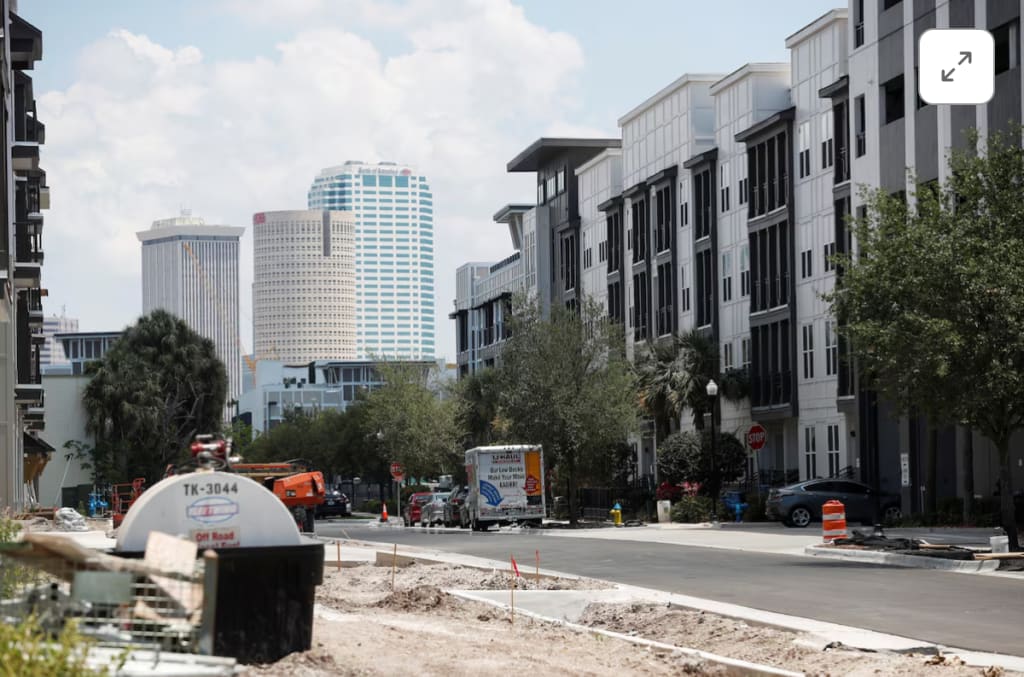
In a move signaling renewed focus on housing affordability, former President Donald Trump has signed an executive order intended to limit Wall Street investors’ ability to buy single-family homes. The announcement comes amid growing public concern over the role of large investment firms in driving up home prices and reducing access to affordable housing for everyday Americans. Advocates say the order could help restore balance to the housing market, while critics question whether the measure will be effective or face legal challenges.
The executive order reflects a broader political debate about the intersection of finance, housing, and social equity. By targeting institutional investors, the administration hopes to slow speculative purchases and make homes more accessible to individual buyers and families.
Wall Street’s Growing Role in the Housing Market
Over the past decade, private equity firms, hedge funds, and other institutional investors have increasingly purchased single-family homes, often in bulk. These firms then rent out the properties, sometimes at higher rates, reducing the number of homes available for traditional buyers. Critics argue that this practice has contributed to rising housing costs, particularly in high-demand regions, and has made homeownership increasingly out of reach for middle-class Americans.
Studies indicate that institutional investors have purchased hundreds of thousands of single-family homes across the United States in recent years. Their involvement has changed the dynamics of local housing markets, leading to competition that many first-time homebuyers cannot match. In response, policymakers have debated regulatory approaches to limit these purchases, balancing market efficiency with social equity.
Key Provisions of the Executive Order
While the full details of Trump’s order are still emerging, it is clear that the focus is on restricting large institutional purchases of single-family homes. Provisions may include:
Capping the number of homes a single investor can purchase in certain markets.
Increasing reporting and transparency requirements for institutional home purchases.
Prioritizing first-time homebuyers or owner-occupants in sales of residential properties.
The administration frames the order as a step toward “restoring fairness” in the housing market, arguing that homes should primarily serve as living spaces for families, not purely as investment vehicles.
Potential Impacts on Homebuyers
For ordinary homebuyers, the order could ease some of the competitive pressure created by large-scale investor purchases. In areas where investors have been dominant, limiting their ability to acquire homes may free up properties for families and first-time buyers. This could help stabilize prices in certain markets and improve access to affordable housing.
However, economists caution that the measure may have mixed effects. Institutional investors argue that they provide needed rental housing, and restricting them could reduce supply in some regions. For renters, the changes could affect rental availability and pricing, depending on how investors adjust their strategies.
Wall Street and Industry Reactions
The real estate and finance sectors have reacted cautiously to Trump’s order. Many institutional investors argue that limiting purchases could interfere with market efficiency and reduce liquidity in the housing sector. Some warn that the policy may lead to legal challenges, citing concerns about overreach or conflicts with existing property rights.
At the same time, advocacy groups and housing organizations have welcomed the move. They highlight that corporate ownership of single-family homes has exacerbated affordability issues in many communities and that regulatory intervention is necessary to protect ordinary homebuyers.
Broader Political Context
Trump’s executive order comes as housing affordability remains a critical issue for voters across the political spectrum. Rising home prices, combined with limited inventory, have made homeownership increasingly challenging, particularly for younger and lower-income Americans. By targeting Wall Street investors, the administration positions itself as addressing a tangible problem affecting everyday families.
Housing policy has long been a point of political debate, with Republicans and Democrats differing on the role of regulation, taxation, and federal support. This move signals a willingness to intervene in markets traditionally left to private investors, reflecting the growing political salience of housing inequality.
Possible Challenges and Limitations
While the order is symbolic and potentially influential, it is not a guaranteed solution to housing affordability. Challenges include:
Legal pushback from investors who may contest restrictions on property purchases.
Market adaptations, as firms may shift investments to other property types or rental markets.
Implementation hurdles, requiring coordination among federal, state, and local authorities.
Economists note that long-term solutions to housing affordability require broader approaches, including increasing supply, reforming zoning laws, and supporting first-time buyers.
Implications for the Housing Market
In the short term, the executive order could influence buyer behavior and investor strategies. Local markets that have experienced heavy investor activity may see a slowdown in bulk purchases, creating opportunities for individual buyers. Homeownership rates could improve modestly if restrictions are enforced effectively.
However, experts caution that the underlying drivers of high housing costs—such as limited inventory, rising construction costs, and population growth—will continue to exert upward pressure on prices. The order may alleviate some symptoms, but structural challenges in the housing market remain.
Conclusion: Balancing Investment and Affordability
Trump’s executive order to limit Wall Street investors in single-family housing reflects a growing recognition that housing markets need oversight to protect ordinary buyers. While the policy may not solve all affordability problems, it represents a step toward prioritizing families over speculative investment.
As the housing debate continues, policymakers, investors, and community leaders will need to collaborate on sustainable solutions that balance market efficiency with social equity. For American families striving to achieve homeownership, this measure offers a potential reprieve—but the broader challenge of affordable housing will require persistent attention and comprehensive action.
About the Creator
Muhammad Hassan
Muhammad Hassan | Content writer with 2 years of experience crafting engaging articles on world news, current affairs, and trending topics. I simplify complex stories to keep readers informed and connected.
Keep reading
More stories from Muhammad Hassan and writers in Earth and other communities.
Wall Street–Backed Landlords Become a Rare Target for Both Trump and Democrats
In an era of deep political polarization, agreement between Donald Trump and Democratic leaders is increasingly rare. Yet one issue has unexpectedly drawn criticism from both sides of the aisle: Wall Street–backed landlords. As housing affordability reaches crisis levels across the United States, large investment firms that own thousands of rental properties are facing growing political scrutiny—from conservatives and progressives alike.
By Muhammad Hassan2 months ago in Earth
The Last Forest: Witnessing the Destruction of the Amazon and What It Means for Human Survival
The first thing you notice when you stand at the edge of an area where rainforest has been recently cleared is the silence, an absence of sound so complete and unnatural that it seems to press against your eardrums like physical weight, because a healthy rainforest is never quiet, never still, but rather pulses with constant life, the calls of hundreds of bird species layering over insect buzzing and monkey vocalizations and the rustling of creatures moving through the canopy, a symphony of biodiversity that represents millions of years of evolution creating intricate webs of interdependence, and when that forest is cut down, when the chainsaws finish their work and the fires burn out, what remains is a silence that feels like death, because that is exactly what it is, the death of an ecosystem and all the countless beings who called it home. I have stood at that terrible edge dozens of times over the past decade working as an environmental journalist documenting the accelerating destruction of the Amazon rainforest, and each time the silence hits me with fresh force, a reminder of what we are losing, not in some distant future but right now, in this moment, at a pace that should terrify anyone who understands what the Amazon means for global climate stability, biodiversity preservation, and ultimately human survival on this planet.
By The Curious Writer2 days ago in Earth
A System That Isn’t Working Challenge Winners
Systems promise order. They organize behavior, distribute opportunity, and suggest that if everyone follows the rules, things will work. The entries in A System That Isn’t Working look closely at what happens when that promise begins to slip.
By Vocal Curation Team5 days ago in Resources



Comments
There are no comments for this story
Be the first to respond and start the conversation.