
Trump Keeps Posting Private Messages on Truth Social
A reminder that no work chat is ever truly private

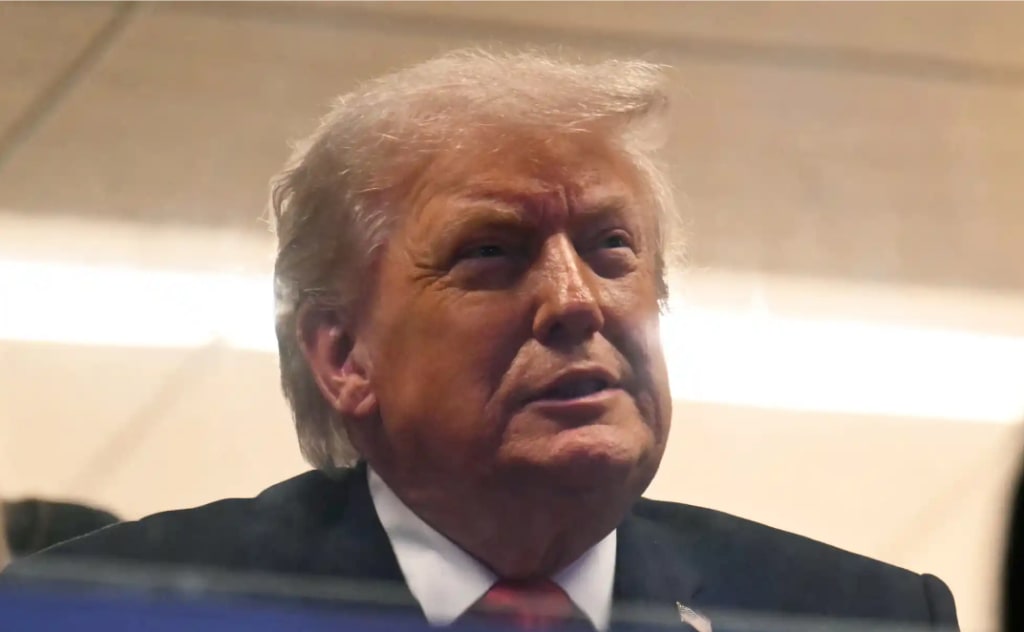
Former President Donald Trump has once again made headlines for an unusual reason: sharing private messages on Truth Social, the social media platform he founded. The posts, which reveal snippets of his personal and political communications, have sparked laughter, outrage, and renewed debates about the very nature of digital privacy. More importantly, this episode serves as a cautionary tale for everyone who uses work chats, messaging apps, or social platforms to communicate, proving that nothing online is truly private.
Whether it’s WhatsApp, Slack, Teams, or private DMs, millions of people around the world use these tools daily, often assuming their conversations are confidential. Trump’s latest posts show just how risky that assumption can be — even for a former president.
The Incident on Truth Social
Over the past several weeks, Trump has posted screenshots of private conversations on Truth Social, including discussions that were originally intended for his aides, advisors, or campaign team. These posts include messages about political strategies, responses to media coverage, and even personal grievances.
Observers quickly noticed that sharing these messages publicly exposes sensitive information that might otherwise have stayed private. While the former president’s followers seemed entertained or intrigued, the incident underscores an important principle: once a digital message exists, it can easily become public.
Why Work Chats Aren’t Private
Trump’s actions provide a high-profile example of a truth that affects everyone: work chats, even in corporate or political settings, are rarely private. Here’s why:
Platforms Can Be Hacked
No system is completely secure. Hackers can access private chats, whether on messaging apps, company networks, or social media platforms. Even messages thought to be encrypted can sometimes be breached.
Company Policies and Oversight
In many organizations, administrators have access to employee accounts, messages, and files. A “private” Slack or Teams conversation can often be monitored or archived for compliance purposes.
Screenshots and Forwarding
Even without technical hacks, messages can easily be shared with third parties. A single screenshot or forwarded text can turn a private conversation into public information in seconds.
Social Media Amplification
As Trump demonstrates, posting screenshots online spreads private content globally almost instantly. Once online, control over that information is lost.
In short, privacy is never guaranteed in digital communication — whether you’re a political figure, a corporate employee, or just chatting with friends.
Lessons From Trump’s Posts
Trump’s public sharing of private messages offers several lessons:
Assume everything can be seen: Even if a platform promises privacy, assume that your messages could eventually be exposed.
Be careful with sensitive content: Strategy discussions, confidential plans, and personal opinions should be communicated cautiously.
Understand platform limitations: Social media platforms are designed for sharing, not secrecy. Once you post or forward something, it’s out of your control.
These lessons apply to businesses, governments, and individuals alike. Organizations have learned the hard way that leaked internal communications can lead to public scandals, reputational damage, and legal complications.
Historical Context: Public Figures and Leaks
Trump is not the first public figure to accidentally or intentionally make private communications public. Political scandals over the past two decades — from leaked emails to exposed text messages — have consistently highlighted the risks of digital messaging.
For example:
Hillary Clinton’s emails in the 2016 election became a national controversy, showing how digital communications can be scrutinized intensely.
Corporate leaks, such as employee messages going viral, have damaged brands and led to resignations.
The lesson: if you want something to stay private, avoid sending it digitally, because there’s always a chance it will surface.
The Psychology Behind Sharing Private Messages
Why do people share private messages publicly? Trump’s posts illustrate several possible motivations:
Shaping the narrative: By posting private chats, he can highlight points that support his messaging or political agenda.
Entertainment value: Followers may enjoy the behind-the-scenes glimpse into personal or political communications.
Control over interpretation: Sharing messages allows the original sender to frame them in a way that aligns with their narrative.
However, these benefits come at a cost: exposing sensitive content, alienating colleagues, and undermining trust. In the workplace, similar actions could lead to disciplinary measures or legal consequences.
Digital Privacy in the Modern Era
Trump’s Truth Social posts serve as a high-profile reminder that digital privacy is fragile. For the average user, the implications are clear:
Use caution with work chat apps: Always assume your messages can be accessed or shared.
Separate personal and professional communications: Sensitive work discussions are best held in secure, controlled environments.
Limit screenshots and forwards: Once a message is captured, it can leave your control forever.
Organizations, meanwhile, should educate employees about digital security and implement policies to protect both data and privacy.
Conclusion: No Work Chat Is Truly Private
Trump’s recent activity on Truth Social illustrates a simple truth: digital messages, whether personal or professional, are never completely private. Screenshots, hacks, forwarding, or platform design flaws can make sensitive information public in an instant.
The lesson applies to everyone, from former presidents to corporate employees: treat digital communications as public by default, and be mindful of the content you share. In a world where private messages can become headlines, caution, discretion, and digital literacy are essential.
In the end, Trump’s posts are entertaining for some, worrying for others, but they reinforce an enduring reality: if you don’t want the world to see it, don’t send it digitally.
About the Creator
Muhammad Hassan
Muhammad Hassan | Content writer with 2 years of experience crafting engaging articles on world news, current affairs, and trending topics. I simplify complex stories to keep readers informed and connected.
Keep reading
More stories from Muhammad Hassan and writers in Earth and other communities.
Trade an Alliance for an Island? That’s a Bad Deal
In global politics, deals are often complex, involving trade-offs between economic benefits, security, and diplomacy. But some propositions are so controversial that they make analysts, policymakers, and citizens alike shake their heads. One such idea that has sparked debate is the notion of trading a military or political alliance for control over a strategic island. While it may seem tempting on the surface — after all, islands can provide resources, ports, or strategic leverage — experts warn that the costs almost always outweigh the benefits. Whether in the context of historical disputes or contemporary geopolitical maneuvers, the principle is clear: sacrificing alliances for short-term territorial gain is a recipe for long-term instability. The Strategic Value of Islands Islands have long held outsized importance in global strategy. Their locations can control shipping lanes, host military bases, or serve as hubs for surveillance and trade. Examples abound: Guam, a U.S. territory in the Pacific, serves as a crucial military outpost. Falkland Islands, a British overseas territory, have sparked wars over sovereignty. Taiwan, an island nation, sits at the center of a high-stakes geopolitical standoff. It’s no wonder that countries often covet islands. But there’s a critical question: does gaining an island justify undermining the alliances that guarantee your security? Alliances Are Hard to Replace Alliances are built on trust, shared interests, and mutual defense commitments. They are far more difficult to establish than an island is to claim. Trading an alliance for territorial gain may offer immediate leverage or prestige, but the risks are profound: Loss of Credibility – Nations that abandon allies for short-term gain quickly earn reputations as unreliable partners. Future negotiations become harder, as other countries question whether agreements will be honored. Security Gaps – Alliances often provide defense guarantees, intelligence sharing, and logistical support. Sacrificing them leaves a country vulnerable to external threats, particularly from rivals who may exploit the weakened network. Economic Costs – Alliances often underpin trade, investment, and joint infrastructure projects. Breaking them can lead to sanctions, lost markets, or reduced foreign investment. The lesson: while an island may offer strategic positioning, the network of alliances it might cost is far more valuable in the long run. Historical Lessons History provides cautionary tales. Consider these examples: World War II: Several countries prioritized short-term territorial gains over alliances, leading to devastating consequences. Nazi Germany initially signed non-aggression pacts with smaller neighbors, only to later invade them. The temporary territorial gains could not compensate for the loss of trust and the eventual collapse of strategic alliances. Cold War-era negotiations: Smaller countries were frequently courted with promises of land or aid in exchange for switching allegiances. Those who accepted often found themselves isolated once the larger powers shifted focus. Even today, analysts warn against decisions that sacrifice alliances for geographic gains, emphasizing that political isolation often outweighs any tactical advantage an island might provide. Modern Geopolitical Risks In today’s interconnected world, the stakes are even higher. Global powers rely on alliances for cybersecurity, intelligence sharing, and coordinated responses to crises. Trading away alliances for an island could: Increase regional instability, as neighboring states perceive opportunism and may respond aggressively. Undermine defense networks, reducing the effectiveness of coordinated military strategies. Trigger economic retaliation, such as sanctions, reduced foreign investment, or trade barriers. For example, in East Asia, speculation over islands in the South China Sea has shown that territorial claims can inflame tensions, disrupt shipping, and strain alliances. The international community’s response demonstrates that control over land rarely outweighs the benefits of strong regional partnerships. The Temptation of Short-Term Gains It’s easy to understand why some leaders might be tempted by the idea of trading alliances for islands. Islands offer tangible assets: ports, mineral resources, tourism opportunities, and symbolic prestige. In contrast, alliances are intangible, slow to show benefits, and require ongoing maintenance. But experts caution that these short-term gains are deceptive. Islands can become expensive liabilities, requiring military defense, infrastructure investment, and diplomatic management. Without the backing of reliable allies, these responsibilities can quickly overwhelm a nation’s capacity. Why Alliances Are the Better Investment Alliances, on the other hand, provide a foundation for long-term stability and prosperity. They: Strengthen deterrence against aggression. Enable resource sharing, from intelligence to humanitarian aid. Facilitate trade and economic integration. Enhance global influence, since countries with strong alliances carry more weight in negotiations. In short, while an island may give the appearance of strength, alliances provide real, multifaceted security. Nations that value lasting influence and resilience prioritize alliances over short-term territorial gains. Conclusion: Islands Are Not Worth Alliances In geopolitics, the lure of a small piece of land can be seductive. But as history and modern strategy show, alliances are the true currency of international power. Trading an alliance for an island may offer temporary prestige or leverage, but the long-term costs — security risks, economic consequences, and loss of credibility — are rarely worth it. Leaders seeking strategic advantage should remember that alliances, trust, and collaboration often outweigh any single piece of territory, no matter how strategically located or resource-rich. In the end, islands may be impressive on maps, but alliances shape the world in lasting, meaningful ways.
By Muhammad Hassan2 months ago in Earth
The Universe That Dreams Us
For centuries, humanity believed the universe was expanding. Galaxies drifting farther apart. Space stretching endlessly like an invisible fabric. The theory had been supported by decades of observations, especially from the famous Hubble Space Telescope, which showed distant galaxies moving away from Earth in every direction.
By Abubakar2204 days ago in Earth




Comments
There are no comments for this story
Be the first to respond and start the conversation.