
Trade war escalation over Trump’s tariffs sends stocks tumbling
Trade war escalation
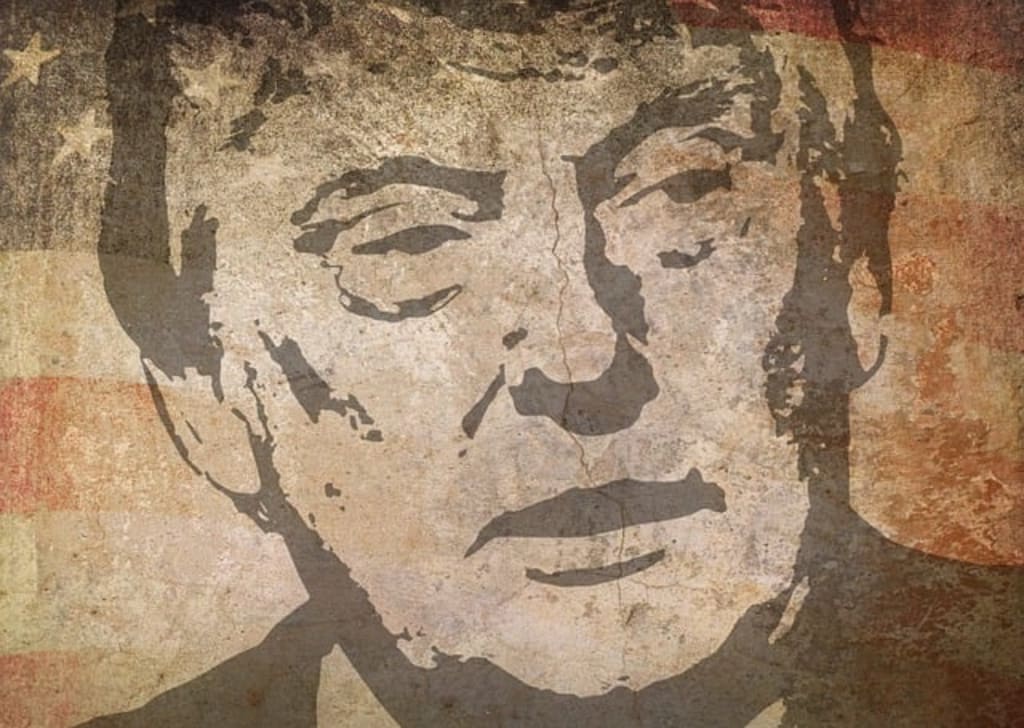
Global financial markets have been shaken by the escalating trade war between the United States and its major trading partners, particularly China. Trump's tariffs, which have sparked retaliatory actions and raised concerns of a prolonged economic standoff, are at the heart of this dispute. Stock markets around the world have plummeted as the trade war gets worse, indicating investor worry about the possible effects on global trade, economic growth, and corporate profits. The purpose of Trump's tariffs, which apply to a wide range of imported goods, is to safeguard American industries and lessen the trade deficit with other countries. However, critics contend that these measures are backfiring, causing consumers to pay more, causing supply chains to be disrupted, and undermining the very industries they were intended to protect. The uncertainty surrounding the trade war has also fueled market volatility, with stocks swinging wildly as investors grapple with each new development.
In this comprehensive article, we will explore the origins of the trade war, the impact of Trump’s tariffs on the stock market, and the broader economic and political implications of this escalating conflict. We will examine specific examples of affected industries, the responses from other countries, and what the future might hold for global trade and the U.S. economy. Backed by data and expert insights, this analysis aims to provide a balanced perspective on one of the most pressing economic issues of our time.
The Origins of the Trade War: Tariffs as a Tool of Economic Policy
What Are Tariffs and Why Were They Imposed?
Tariffs are taxes on goods that come from other countries. Usually, governments use them to protect domestic industries, raise money, or fix trade imbalances. Tariffs have emerged as a central component of President Trump's economic policy of "America First" in the context of his administration. Trump has argued that the United States has been exploited by its trading partners—most notably China—through practices such as intellectual property theft, currency manipulation, and state-subsidized industries that flood the U.S. market with cheap goods.
Shortly after taking office in 2017, Trump began imposing tariffs in response to these perceived injustices. The first significant move came in March 2018, when he announced tariffs of 25% on steel and 10% on aluminum imports from multiple countries, including China, Canada, and the European Union (EU). This was followed by a series of escalating measures targeting Chinese goods in particular. By mid-2019, the U.S. had imposed tariffs on $250 billion worth of Chinese imports, ranging from industrial machinery to consumer electronics and agricultural products.
Trump’s stated goals are clear: protect American jobs in industries like manufacturing and agriculture, which he claims have been devastated by foreign competition, and shrink the U.S. trade deficit, which reached $621 billion in 2018 according to the U.S. Census Bureau. He has presented the tariffs as a means of restoring economic sovereignty and bringing manufacturing back to the United States. The Escalation: From Steel to a Full-Blown Trade War
The initial tariffs on steel and aluminum were just the beginning. China quickly retaliated with tariffs on $3 billion worth of U.S. goods, including agricultural products like soybeans and pork. This tit-for-tat escalation continued throughout 2018 and 2019, with the U.S. imposing additional tariffs on Chinese goods and China responding with tariffs on $110 billion worth of American exports. By late 2019, the trade war had expanded to include threats of tariffs on automobiles, technology products, and even additional consumer goods like clothing and toys.
Other nations also got involved. The EU imposed tariffs on $3.2 billion worth of U.S. products, including Harley-Davidson motorcycles, bourbon whiskey, and Levi’s jeans. Canada and Mexico, affected by the steel and aluminum tariffs, retaliated with their own measures targeting American exports. What began as a targeted policy to address specific trade grievances had morphed into a global trade conflict with far-reaching implications.
Lessons from the Past in Historical Context Trump's tariff opponents frequently cite historical precedents to argue that such measures rarely accomplish their intended objectives. The Smoot-Hawley Tariff Act of 1930, for example, raised U.S. tariffs on over 20,000 imported goods in an attempt to protect American farmers and manufacturers during the Great Depression. Instead, it sparked tariffs in response from other nations, which led to a 66% drop in global trade between 1929 and 1934 and exacerbated the economic downturn. While the current trade war has not yet reached that level of severity, the parallels serve as a cautionary tale about the risks of protectionism.
Why Investors Are Worried About the Stock Market Reaction Volatility in the market and declining indices The escalation of the trade war has had an immediate and profound impact on global stock markets. During critical times of tension, major indices like the S&P 500, Dow Jones Industrial Average (DJIA), and Nasdaq have experienced sharp declines. For instance, after Trump announced additional tariffs on $300 billion worth of Chinese goods, the S&P 500 fell nearly 3% in August 2019. In a similar vein, markets plummeted in May 2019 when trade talks between the United States and China broke down, erasing gains that had been made for weeks. The manufacturing and technology industries have been particularly hard hit. Companies like Apple, Boeing, and Caterpillar—whose stock prices are often seen as bellwethers for the broader economy—have seen significant declines during periods of trade war escalation. The CBOE Volatility Index (VIX), often referred to as the "fear gauge," has spiked repeatedly as investors react to the latest developments.
Four Key Reasons for Stock Market Turmoil
There are a number of interconnected factors that contributed to the stock market impact of the trade war: Uncertainty: Financial markets thrive on predictability, but the trade war has brought a great deal of uncertainty to the situation. How far the tariffs will go, how other nations will react, and how the tariffs will ultimately affect corporate earnings and economic growth are all up in the air for investors. Volatility has been exacerbated by this lack of clarity, as stocks frequently respond strongly to Trump's tweets or statements from Chinese officials. Disruptions in the Supply Chain: A lot of businesses in the United States rely on global supply chains to get materials and make products. Tariffs increase the cost of imported components, forcing companies to either absorb the costs (hurting profits) or pass them on to consumers (reducing demand). For instance, Apple has expressed concern that imposing tariffs on Chinese imports could drive up the cost of iPhones, iPads, and MacBooks, thereby reducing sales in a market that is extremely competitive. Companies that import goods or raw materials face higher costs as a result of higher tariffs, which results in lower profits for these businesses. The Federal Reserve Bank of New York found in a 2019 study that tariffs imposed by the United States cost American businesses $40 billion annually. By making it more difficult for American businesses to export their goods, retaliatory tariffs imposed by other nations exacerbate the issue. For instance, Harley-Davidson reported a $100 million hit to its profits in 2018 due to EU tariffs, prompting the company to shift some production overseas.
Slowdown in the global economy: The effects of the trade war extend beyond China and the United States. Export-dependent economies like Germany, Japan, and South Korea have seen manufacturing activity decline as demand for their goods weakens. The trade war was the primary reason that the International Monetary Fund (IMF) downgraded its global growth forecast for 2019. Multinational corporations lose money as a result of a slowing global economy, which has a global effect on stock prices. Sector-Specific Impacts
Technology: Tech giants like Apple, Intel, and Qualcomm, which rely heavily on Chinese manufacturing and markets, have seen their stock prices fluctuate with each tariff announcement. The threat of tariffs on consumer electronics has raised concerns about shrinking profit margins and lost market share.
Manufacturing: Higher costs and fewer export opportunities have affected Caterpillar and Boeing, which rely on steel and aluminum as inputs. Boeing’s stock, for example, dropped 7% in a single week in 2018 after China threatened tariffs on U.S. aircraft.
Agriculture: While not directly tied to the stock market, the agricultural sector’s woes have indirect effects. U.S. farm exports have been reduced by China's retaliatory tariffs, which has hurt rural economies and agribusinesses like Archer-Daniels-Midland. Winners, losers, and the larger impact on the economy Protected Industries Are the Short-Term Winners Some U.S. industries have seen benefits from the tariffs. For instance, producers of steel and aluminum have benefited from less competition and higher prices. U.S. Steel Corporation reported a 37% increase in net income in 2018, attributing the gains to tariffs that allowed it to raise prices without losing market share. In a similar vein, imports at lower prices have made it easier for smaller manufacturers operating in niche markets to compete. Customers, farmers, and others are the losers. However, these gains come at a significant cost to other parts of the economy:
Higher Prices for Consumers: Businesses frequently pass these costs on to consumers as a result of tariffs, which act as a tax on imports. A 2019 study by the Peterson Institute for International Economics estimated that Trump’s tariffs were costing the average American household $831 per year. Washing machines, cars, and electronics—all of which have increased in price by 12 percent since 2018—have all become more expensive, reducing people's ability to buy things. Job Losses in Vulnerable Sectors: While tariffs may protect jobs in some industries, they threaten jobs in others. The U.S. In 2019, the Chamber of Commerce issued a warning that the trade war could result in the loss of one million jobs in industries that rely on imported materials by 2020. General Motors, for example, cut 14,000 jobs in 2018, citing rising steel and aluminum costs as a factor.
Agricultural Hardship: American farmers have been among the hardest hit. Exports decreased by 50% in 2018 as a result of China's retaliatory tariffs on soybeans, a $12 billion market for American farmers. The Trump administration responded with $28 billion in subsidies to offset losses, but many farmers argue this is a short-term fix that fails to address the loss of long-term markets.
Slowing Economic Growth: The broader economy is feeling the strain. The IMF projected that the trade war could reduce global GDP by 0.8% by 2020, with the U.S. bearing a significant share of the burden. The Federal Reserve cut interest rates three times in 2019 to counteract the slowdown, but economists warn that monetary policy alone may not be sufficient if the trade war persists.
The Debate: Protectionism vs. Free Trade
The long-running debate regarding the advantages of free trade versus protectionism has been reignited by the trade war. Trump's tariffs are argued to level the playing field, safeguard American workers from unfair competition, and encourage businesses to return manufacturing to the United States. However, opponents contend that tariffs sway markets, raise costs, and ultimately cause more harm than good to the economy. A 2019 report by the National Bureau of Economic Research found that U.S. consumers and businesses bore over 90% of the cost of the tariffs, with little evidence of significant job gains in protected industries.
Global Reactions: Retaliation and the Risk of a Full-Blown Trade War
Tit-for-Tat Tariffs
Using tariffs as a weapon is not limited to the United States alone. China has targeted U.S. exports like soybeans, automobiles, and liquefied natural gas, aiming to hit politically sensitive regions like the Midwest. The EU’s tariffs on American motorcycles and bourbon were strategically chosen to pressure lawmakers in states like Kentucky and Wisconsin. Similar to the United States, Canada and Mexico have retaliated by targeting agricultural and industrial goods. The Danger to International Trade The possibility of a full-blown global trade war in which escalating tariffs obstruct international commerce is raised by this cycle of retaliation. The World Trade Organization (WTO) reported that global trade growth decreased by 0.3 percent in 2019, which was the weakest performance since the financial crisis of 2008. If the conflict continues, experts warn of a scenario reminiscent of the 1930s, with higher prices, reduced trade volumes, and widespread economic stagnation.
Strained Alliances
The trade war has also strained diplomatic relations. Traditional U.S. allies like Canada, Germany, and Japan have expressed frustration with Trump’s unilateral approach, accusing him of undermining the rules-based international trading system. Trump, in turn, has criticized the WTO as biased against the U.S., threatening to withdraw from the organization if it does not reform. There have been calls for a more multilateral approach to trade disputes as a result of this tension, but no progress has been made. The Political Dimension: Tariffs and the 2020 Election
Trump's Agenda of "America First" The trade war is deeply intertwined with Trump’s political strategy. He has portrayed the tariffs as a bold stand against foreign exploitation, appealing to his base of working-class voters in Rust Belt states like Ohio and Pennsylvania. Supporters credit him with bringing attention to long-ignored trade imbalances and forcing countries like China to the negotiating table.
Internal Criticism and Electoral Risks
However, the Republican Party has not all supported the policy. Senator Chuck Grassley of Iowa, for example, is one legislator from an agricultural state who has expressed concerns regarding the impact on farmers. Organizations like the United States The National Association of Manufacturers and the Chamber of Commerce have expressed concern that the trade war could jeopardize the economic benefits of Trump's tax cuts and deregulation efforts. The trade war became a flashpoint as the 2020 election approached. Many Democratic candidates supported a tougher stance on China, reflecting bipartisan frustration with Beijing's trade practices, but they also criticized Trump's strategy as reckless, citing the costs to consumers and farmers. The election’s outcome hinged in part on whether voters viewed the trade war as a necessary sacrifice or a costly misstep.
Looking Ahead: Can the Trade War Be Resolved?
Signs of Progress
There have been glimmers of hope. In December 2019, the U.S. and China reached a "phase one" trade deal, which included a partial rollback of tariffs and commitments from China to buy $200 billion worth of U.S. goods over two years. The news sparked a rally in the markets, with the S&P 500 up 1.5% in a single day. However, core issues—intellectual property theft, technology transfers, and subsidies—remained unresolved, leaving the deal as more of a truce than a resolution.
Risks of Further Escalation
The trade conflict could still get worse. Trump has hinted at additional tariffs if China fails to meet its commitments, and political pressures ahead of the 2020 election may push him to double down on his hardline stance. Other countries, emboldened by the U.S. example, might also ramp up their own protectionist measures, further fragmenting global trade.
Strategies for Investing in an Uncertain World For investors, navigating the trade war requires caution. Portfolios should focus on domestic-focused industries like utilities and healthcare, which are less susceptible to disruptions in global trade, according to some analysts. Others, betting on an eventual resolution, see opportunities in oversold stocks, particularly in manufacturing and technology. The trade war has demonstrated the necessity of diversification and resilience in the face of geopolitical risks, regardless of the strategy. Conclusion: The High Stakes of the Trade War
The trade war over Trump’s tariffs has sent stocks tumbling and cast a shadow over the global economy. While certain industries have reaped short-term benefits, the broader costs—higher prices, disrupted supply chains, and slower growth—are mounting. Investors, businesses, and consumers alike are caught in the crossfire of a conflict that shows no clear end in sight.
There are significant stakes. A negotiated settlement could restore stability and confidence, paving the way for renewed economic growth. However, the resiliency of markets and economies already struggling with uncertainty could be put to the test if the trade war continues to escalate. In the end, the trade war is a stark reminder of the conflict between globalization and protectionism. The choices made today will shape the economic landscape for years to come as policymakers, businesses, and investors navigate this new era. The world is waiting for a solution to one of Trump's most significant challenges for the time being.
About the Creator
MD EMRUL KAYES
anything
Keep reading
More stories from MD EMRUL KAYES and writers in Earth and other communities.
The Sanda Lizard: Ecology, Culture, and Conservation in South Asia
The Sanda Lizard: Ecology, Culture, and Conservation in South Asia The sanda lizard, scientifically known as Saara hardwickii or Hardwicke’s spiny-tailed lizard, is a remarkable herbivorous reptile native to the arid landscapes of South Asia, particularly the Thar Desert, Kutch, and parts of Pakistan’s Sindh region. Locally called "sanda" or "sandho" in Bangladesh, India, and Pakistan, this burrow-dwelling creature has captured attention not only for its unique biology but also for its cultural, culinary, and medicinal significance. In recent years, the sanda has surged into the spotlight in Bangladesh due to viral social media trends, with memes and videos highlighting its consumption, particularly among expatriate workers in the Middle East. However, the species faces significant threats from poaching, illegal trade, and habitat loss, exacerbated by modernization and agricultural expansion. This article delves into the sanda lizard’s ecology, its role in South Asian culture, its consumption and trade dynamics, conservation challenges, and the broader regional context, including the impact of the India-Pakistan ceasefire of May 10, 2025, on trade routes that affect sanda-related markets.
By MD EMRUL KAYES10 months ago in Earth
Shamrock House Plants have benefits
Shamrock Season is here The shamrock is a small three-leaf plant associated with Ireland and popular during Spring. You begin to see them sold in stores in March, which is the beginning of their season. There is much more to this foliage than a ground covering or being worn on a leprechaun's hat.
By Cheryl E Preston7 days ago in Earth



Comments
There are no comments for this story
Be the first to respond and start the conversation.