
Shamrock House Plants have benefits
These three-leaf clovers are more than a Saint Patrick's Day staple.

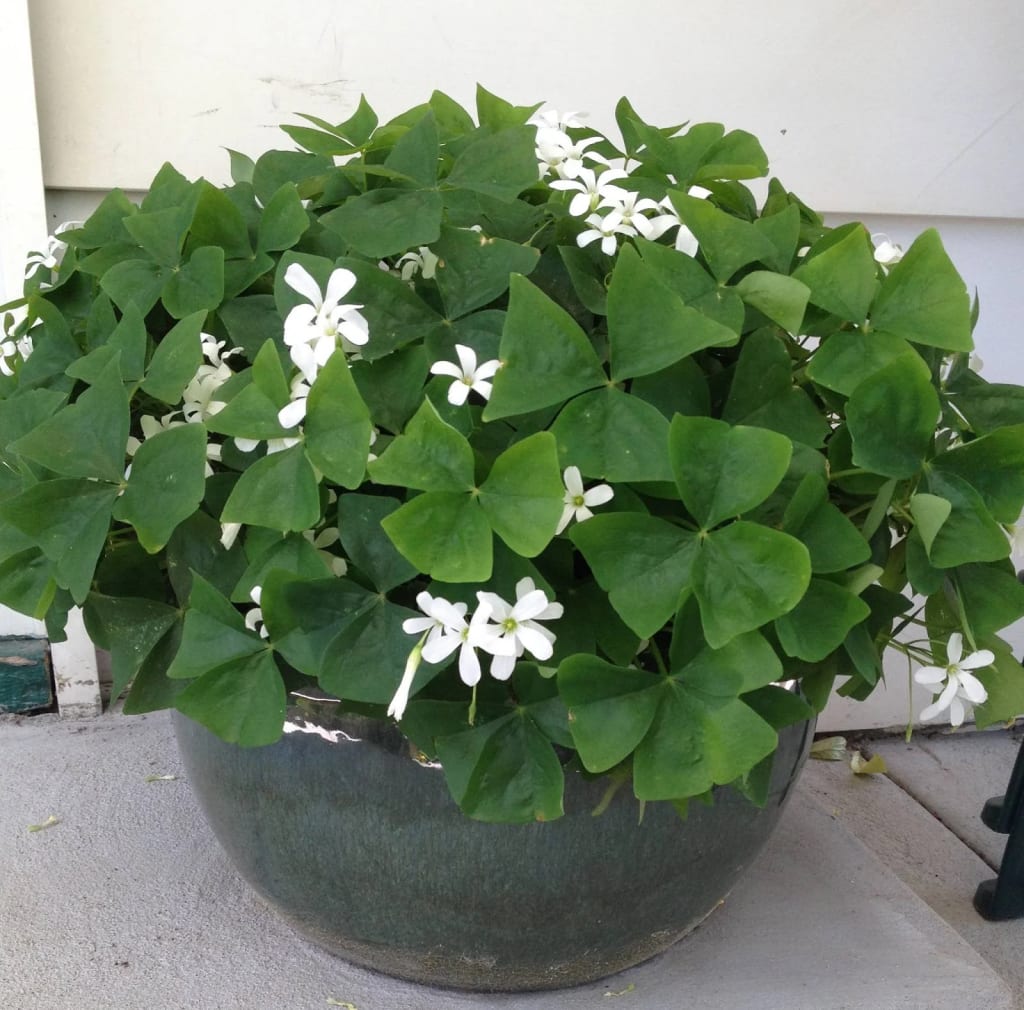
Shamrock Season is here
The shamrock is a small three-leaf plant associated with Ireland and popular during Spring. You begin to see them sold in stores in March, which is the beginning of their season. There is much more to this foliage than a ground covering or being worn on a leprechaun's hat.
The word shamrock comes from the Irish Gaelic word “seamróg,” which means “little clover.” This plant became famous through Saint Patrick, the 5th-century missionary who helped spread Christianity in Ireland, who is celebrated on March 17.
According to folklore, the patron saint of Ireland used the three leaves of the shamrock to explain the Christian belief of God in three persons, the Holy Trinity of Father, Son, and Holy Spirit. This is why the three-leaf clover became a symbol of Irish identity and faith.
The shamrock is believed to bring good luck and has become a national symbol of Ireland. It is worn by many, including Americans, on Saint Patrick's Day.
Shamrock purifies the air
The green and purple clover house plant oxalis, is said to have several benefits, including purifying the air. There is also a Shamrock spider plant that purifies air in the home by removing toxins. Shamrock is low-maintenance, resilient, and easily grown from small bulbs.
The unique foliage (photophilic), has leaves that open in the light and close on cloudy days or at night. This phenomenon is called nyctinasty. The long-lasting blooms produce delicate, dainty flowers that are pink or white, which complement the green, clover-like leaves. Additional benefits are as follows.

1. Medicinal and nutritional use
Some clover varieties have been used in traditional herbal remedies for things like coughs or skin conditions. Make sure the plant is safe before ingesting. I recently purchased a Shamrock plant, and the instructions said it was dangerous to eat. Clover blossoms that are safe are sometimes used in herbal teas.
White Clover is the traditional Edible Shamrock plant. The flowers are often used in herbal teas, and the dried blossoms are added to baked goods. The leaves can be eaten raw in salads or cooked with greens. The seeds can also be ground into flour and eaten.
2. Shamrock as a food source
Clover is also a source of nutrition. It is an important nectar source for bees and pollinators. It is also nutritious forage for livestock like sheep and cows.
3. Soil Improvement
Clover plants are a natural source of nitrogen for the soil, which improves fertility. Farmers sometimes plant shamrocks as a cover crop to enrich the land.
4. Clover as a fertilizer
Clover lawns need less fertilizer and less water than regular grass. I noticed this in my childhood home. The front yard was filled with clover, and it was greener than other lawns in the area.
As a teen, I found eight four-leaf clovers in the yard. They are supposed to be about 1 in 5,000, so I was pretty lucky. Clover also remains greener when the weather is dry. I noticed this about our lawn also.
Shamrock plant warnings
There are a few essentials to know if you desire your plant to live long and healthy. Shamrock plants require bright light during the day, but not too bright. They thrive at room temperature. They experience a dormant phase during the summer when some owners mistakenly believe they have died.
Don't overwater and make sure to drain the excess. If your plant begins to droop and you cannot get it to sunlight, consider artificial light. Shamrock is harmful to dogs and cats, so please keep it away from your house pets.
About the Creator
Cheryl E Preston
Cheryl enjoys writing about current events, soap spoilers and baby boomer nostalgia. Tips are greatly appreciated.
Keep reading
More stories from Cheryl E Preston and writers in Earth and other communities.
The Pleadies and Orion: Mythology, The Bible and History agree on their brilliance
Pleides: The Seven Star Cluster The Pleiades is a 7-star cluster in the heavens and is one of the most noticeable of all the star patterns. Without magnifying equipment, this cluster looks like a tiny, misty dipper of six little stars. The Pleiades are sometimes referred to as the Seven Sisters because, in Greek mythology, the Pleiades were the seven daughters of Atlas and Pleione.
By Cheryl E Preston4 months ago in Earth
Whales should be protected!
Carbon dioxide is one of the main gases responsible for global warming. When too much carbon dioxide builds up in the atmosphere, it traps heat from the sun and causes the Earth’s temperature to rise. If this problem continues without control, it could lead to serious environmental damage and may even make parts of the Earth difficult for humans and animals to live in. Therefore, it is important to find natural ways to reduce carbon dioxide levels. One surprising but very important solution is protecting whales, as they play a role in storing carbon in their bodies and supporting ocean ecosystems.
By *+*+*~Teja~*+*+*2 days ago in Earth


Comments
There are no comments for this story
Be the first to respond and start the conversation.