
Toasted in the wild?
13 Ways to Survive Wild Animal Attacks


Exploring the great outdoors can be a thrilling adventure, but encounters with wild animals can sometimes pose serious dangers. While these situations are rare, knowing how to respond can mean the difference between life and death. Here are 13 practical tips to help you survive encounters with some of the most dangerous animals on the planet.
1. Sharks: Stay Calm and Defend Yourself
Only a small percentage of the 150 known shark species pose any danger to humans. To reduce your risk, avoid entering the water if you’re bleeding or have an open wound, as sharks have an extraordinary sense of smell. If you do find yourself face-to-face with a shark, stay calm and avoid frantic movements. Do not turn your back on the shark, as this may trigger its instinct to attack. If an attack is imminent, defend yourself by aiming for the eyes or gills, which are the most sensitive areas.
2. Kangaroos: Use Gentle Sounds and Avoid Running
Kangaroos are unlikely attackers unless they feel cornered or threatened. To de-escalate the situation, cough softly. This communicates to the kangaroo that you are not a threat, as they interpret such sounds as signs of weakness. Slowly backing away without turning your back is key. Running is not advisable since kangaroos are powerful jumpers and could easily overtake you, mistaking your movement for aggression or an invitation to chase.
3. Lions: Stand Your Ground and Assert Dominance
If you encounter a lion, maintaining eye contact is essential. Lions interpret breaking eye contact as weakness, which might provoke an attack. Stand your ground and make yourself appear larger by raising your arms or spreading a jacket. At the same time, use a firm and loud voice to assert dominance. Lions are calculated hunters and will often back down if they perceive you as a strong and determined opponent.
4. Elephants: Watch for Warning Signs
Elephants, while majestic and often gentle, can become aggressive if they feel threatened or startled. Watch their body language carefully—curled trunks and ears pulled back are warning signs. If you notice these, do not run. Instead, calmly find a sturdy barrier such as a large tree or boulder to place between yourself and the elephant.
5. Rhinoceroses: Use Obstacles to Your Advantage
Rhinoceroses are easily startled, and their poor eyesight doesn’t help the situation. If a rhino charges, your best option is to run toward dense vegetation or use natural obstacles like trees to confuse them. Rhinos struggle to navigate around barriers, so this strategy can buy you valuable time to escape.
6. Hippopotamuses: Avoid Tall Grass and Climb High
Hippopotamuses, often perceived as docile, are among the most dangerous animals in Africa. During hot weather, they sometimes leave water bodies to hide in bushes, making them harder to spot. Avoid walking through tall grass near water sources. If a hippo pursues you, climb the nearest tree or steep hill and wait until it leaves the area.
7. Bulls: Movement, Not Color, Provokes Them
Bulls are notorious for their powerful charges, but they are not provoked by color as often believed. It is movement that catches their attention. If a bull charges, stay as still as possible. You can use an object, such as a hat or shirt, to distract the bull. Toss it to the side to redirect its focus, giving you time to move to safety.
8. Jellyfish: Treat Stings Quickly and Correctly
For jellyfish stings, the best immediate response is to rinse the affected area with saltwater. Freshwater can activate the stinging cells and worsen the pain. Use tweezers to remove any tentacle fragments stuck to your skin, then apply antihistamine ointment or seek medical help if symptoms persist.
9. Crocodiles: Escape Strategically
Crocodiles are stealthy predators with incredible strength. If you encounter one on land, running in a zigzag pattern can confuse them, as they are less agile outside water. Loud noises may also deter them. If in the water, avoid splashing or shouting, as these movements attract crocodiles. Swim quietly and steadily toward safety without panicking.
10. Snakes: Avoid Sudden Movements
Snakes often bite as a defensive measure, so your actions matter. If a snake is following you, stomp your feet to create vibrations that confuse and repel it. If you’re bitten, clean the wound with running water and seek immediate medical attention, avoiding any home remedies that might worsen the situation.
11. Bears: Remain Calm and Still
Encounters with bears require calm and deliberate action. Running from a bear will activate its predatory instincts, so stand your ground. If the bear attacks, curl into a tight ball and cover your neck with your hands. Playing dead often convinces the bear that you are not a threat, prompting it to leave.
12. Gorillas: Show Submission
When facing a gorilla, showing submission is critical. Avoid direct eye contact, as gorillas interpret this as a challenge. Instead, sit down and lower your body to signal that you are not a threat. Speak softly and curl into a ball if they approach. These behaviors reassure the gorilla that you mean no harm.
13. Bees: Avoid Swatting and Find Shelter
Bees are defensive creatures and will attack in groups to protect their hive. Wearing light-colored clothing helps, as dark colors can provoke them. If a swarm chases you, find shelter in a dark, enclosed area like a building or car. This confuses the bees, allowing you to escape their range.
Understanding how to behave around wild animals is crucial for staying safe during outdoor adventures. By staying calm and employing the right strategies, you can significantly improve your chances of surviving even the most dangerous encounters. Respect nature’s boundaries, and always prioritize safety when venturing into the wild.
About the Creator
Horace Wasland
Research analyst, writer & mystical healer. Exploring the edge where science meets mystery. From mystery/the mystical, to facts, news & psychology. Follow for weekly insights on all four and please leave a tip if you like what you read :)
Keep reading
More stories from Horace Wasland and writers in Earth and other communities.
Paris Olympics 2024
Welcome back to Horace's blog, where I deliver quick, digestible bites of information. Today, I am diving into 12 intriguing facts about the Paris 2024 Olympics. From historic firsts to exciting new events, here’s everything you need to know about the upcoming Games. Let’s jump right in!
By Horace Waslandabout a year ago in Earth
Trump’s Housing Plan Casts Wall Street as the Villain — But He’s Targeting the Wrong Culprit
The American housing crisis has become one of the most emotionally charged issues in modern politics. Homeownership, once seen as a cornerstone of the American Dream, now feels out of reach for millions. Against this backdrop, Donald Trump’s latest housing proposals aim to revive affordability — and they do so by placing Wall Street squarely in the role of villain. At first glance, this message resonates. Large investment firms buying single-family homes, rising rents, and speculative real estate practices have fueled public frustration. But while Wall Street certainly plays a role, Trump’s housing plan risks oversimplifying a complex problem — and by doing so, it may miss the real drivers of America’s housing shortage. What Trump’s Housing Plan Is Trying to Do Trump’s rhetoric on housing centers on a familiar populist theme: powerful financial elites are squeezing everyday Americans out of the market. His plan suggests limiting institutional investors’ influence, loosening regulations, and promoting homeownership through market-friendly reforms. The message is clear and politically effective. By casting Wall Street as the enemy, the plan appeals to working-class voters struggling with high rents and rising mortgage rates. It also fits neatly into Trump’s broader narrative of standing up to elites on behalf of “ordinary Americans.” However, housing affordability is not a single-villain story. It is the result of decades of policy choices, local governance failures, and economic pressures that go far beyond investment firms. Wall Street’s Role Is Real — But Limited There is no denying that large financial institutions have entered the housing market aggressively, especially after the 2008 financial crisis. With access to cheap capital, institutional investors bought distressed homes in bulk, converting many into rental properties. This practice reduced housing supply for individual buyers in certain markets and pushed prices higher in some regions. In cities like Atlanta, Phoenix, and parts of Texas, Wall Street-backed landlords now own a noticeable share of single-family rentals. Yet nationally, institutional investors still own a relatively small percentage of total housing stock. Their presence may amplify affordability problems in specific areas, but they are not the primary cause of the nationwide housing shortage. The Real Crisis: America Doesn’t Build Enough Homes The core problem in U.S. housing is painfully simple: supply has failed to keep up with demand. For decades, America has underbuilt housing. Local zoning laws restrict multi-family construction, height limits constrain density, and lengthy approval processes delay or kill new developments. In many cities, it is illegal to build anything other than single-family homes across vast residential areas. These restrictions are enforced not by Wall Street, but by local governments responding to political pressure from homeowners who oppose new development. This phenomenon, often called “NIMBYism” (Not In My Back Yard), has quietly become one of the biggest barriers to affordable housing. Without addressing zoning and land-use reform, no housing plan — conservative or progressive — can meaningfully lower prices. Interest Rates and Inflation Matter More Than Investors Another factor Trump’s plan largely sidesteps is the role of interest rates. Mortgage rates surged in recent years as the Federal Reserve raised rates to fight inflation. Higher rates dramatically reduce purchasing power, locking many buyers out of the market even when home prices stabilize. Inflation also raises construction costs, from labor to materials, making new housing more expensive to build. Developers, facing tighter margins, often choose luxury projects over affordable units. Blaming Wall Street may be politically convenient, but it does nothing to address these macroeconomic realities that shape housing affordability nationwide. Why Scapegoating Wall Street Misses the Mark Casting Wall Street as the primary villain risks leading policy in the wrong direction. Restricting institutional investors without expanding supply could actually worsen the crisis by discouraging investment in new housing construction. Moreover, focusing on financial elites allows politicians to avoid tougher conversations about local zoning reform, environmental review processes, and community resistance to development — issues that cut across party lines and anger powerful local constituencies. Housing is one of the rare policy areas where both left- and right-leaning economists broadly agree: more supply is essential. Without it, prices will remain high no matter who owns existing homes. A More Effective Housing Strategy If the goal is genuine affordability, a successful housing plan must prioritize: Zoning reform to allow duplexes, apartments, and mixed-use development Faster permitting processes to reduce construction delays Incentives for affordable housing development, not just luxury units Support for first-time homebuyers that does not inflate prices further Infrastructure investment to expand livable areas beyond major cities None of these solutions are politically easy. They require cooperation between federal, state, and local governments — and they lack the simplicity of blaming a single villain. Politics vs. Policy in the Housing Debate Trump’s housing rhetoric reflects a broader trend in American politics: emotionally satisfying narratives often outperform nuanced policy discussions. Wall Street makes for a compelling antagonist, especially in an era of economic anxiety and distrust of large institutions. But housing affordability is not a morality play. It is a structural problem rooted in decades of underbuilding, restrictive local policies, and economic shifts. Solving it requires uncomfortable reforms, not just powerful speeches. Conclusion: The Wrong Villain Won’t Fix the Right Problem Trump’s housing plan taps into real frustration, and it is not wrong to question the growing influence of large investors in residential real estate. However, by framing Wall Street as the central cause of the housing crisis, the plan risks distracting from deeper, more entrenched issues. America’s housing problem will not be solved by targeting a single group. It will only be solved by building more homes, reforming outdated policies, and confronting the political resistance that has long blocked meaningful change. Until then, the American Dream of homeownership will remain just that — a dream — for millions who are still waiting for leaders to address the real problem.
By Muhammad Hassan2 days ago in Earth
Homes in North Scotland Without Power as Arctic Weather Sweeps the UK
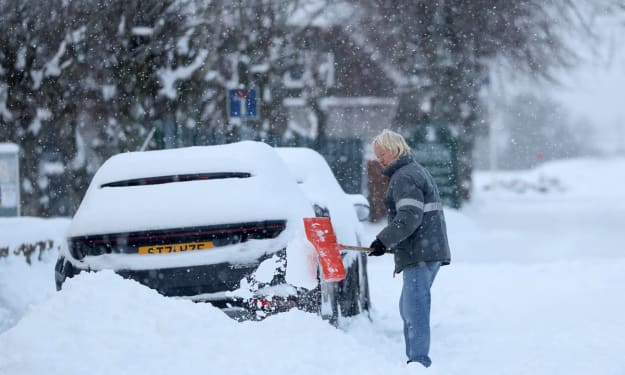
As Arctic air sweeps across the United Kingdom, communities in northern Scotland are bearing the brunt of one of the harshest winter spells in recent years. Sub-zero temperatures, heavy snowfall, and powerful winds have combined to knock out power supplies to thousands of homes, leaving residents facing prolonged outages amid dangerously cold conditions. The extreme weather has once again highlighted the vulnerability of infrastructure in remote regions and raised urgent questions about preparedness in an era of increasingly volatile winters. A Deep Freeze Grips the North The latest cold snap has been driven by an Arctic air mass plunging southwards, bringing temperatures well below freezing across much of the UK. In parts of the Highlands, temperatures have dropped to levels not seen for several winters, with wind chill making conditions feel even more severe. Heavy snow and ice have blanketed roads, while gusts strong enough to down power lines have created widespread disruption. Northern Scotland, known for its rugged terrain and dispersed communities, has been particularly affected. Rural villages and isolated households are often connected by long stretches of overhead power lines, which are highly susceptible to damage from ice buildup and falling trees. As snow accumulated and winds intensified, multiple faults occurred across the network, leaving homes without electricity for hours—and in some cases, days. Power Outages and Daily Life For residents, the loss of power during Arctic conditions is more than an inconvenience. Electricity is essential not only for lighting and communication but also for heating, cooking, and water supply in many modern homes. Without it, indoor temperatures can drop rapidly, posing serious risks to vulnerable groups such as the elderly, young children, and those with health conditions. Many households have had to rely on alternative heat sources such as fireplaces or portable gas heaters, while others sought refuge with relatives or in community shelters. Local authorities and volunteer groups have stepped in to provide support, distributing hot meals, blankets, and updates to those affected. However, the scale of the outages has stretched resources, particularly in remote areas where access is limited by snow-covered roads. Strain on Infrastructure The Arctic blast has once again exposed the fragility of power infrastructure in extreme weather. Much of Scotland’s electricity network, especially in rural areas, still relies on overhead lines rather than underground cables. While overhead systems are cheaper to install and maintain, they are far more vulnerable to storms, heavy snow, and ice. Energy companies have deployed repair crews around the clock, often working in treacherous conditions to restore supplies. Engineers have faced blocked roads, poor visibility, and freezing temperatures, slowing repair efforts. Despite these challenges, utility providers have emphasized that safety must come first, as repairing live lines in severe weather carries significant risks. Travel and Wider Disruption Power outages are only one part of the broader disruption caused by the Arctic weather. Snow and ice have forced road closures across the Highlands and islands, while rail services have been reduced or suspended in some areas. Schools have closed as a precaution, and health services have urged people to avoid non-essential travel. Airports in northern regions have also experienced delays and cancellations, as icy runways and poor visibility complicate operations. For businesses, particularly small enterprises in tourism and agriculture, the weather has delivered another economic blow during what is already a challenging winter period. Climate Change and Colder Extremes While cold snaps are a natural part of the UK’s climate, scientists warn that climate change may be making winter weather more unpredictable and extreme. A warming Arctic can disrupt atmospheric patterns, increasing the likelihood of sudden cold outbreaks like the one currently affecting Scotland. This paradox—where global warming can lead to more intense cold spells—adds complexity to planning and resilience efforts. The current outages have reignited debate about the need to modernize infrastructure to cope with these extremes. Calls are growing for greater investment in underground cabling, improved grid resilience, and community-level backup systems, particularly in regions that are repeatedly affected by severe weather. Community Resilience and the Road Ahead Despite the challenges, stories of resilience and solidarity have emerged from affected communities. Neighbors have checked on one another, shared generators, and opened their homes to those without heat. Local councils and charities have coordinated relief efforts, demonstrating the importance of community networks during crises. Looking ahead, experts argue that lessons must be learned from each severe weather event. Improving early warning systems, strengthening infrastructure, and ensuring clear communication between authorities and residents are all critical steps. For northern Scotland, where extreme weather is a fact of life, building resilience is not optional—it is essential. Conclusion The Arctic weather sweeping across the UK has left homes in northern Scotland without power, disrupting daily life and underscoring the challenges of maintaining essential services during extreme conditions. While emergency responses have helped mitigate the immediate impact, the situation highlights a broader issue: the need for long-term investment and adaptation in the face of a changing climate. As temperatures slowly recover and power supplies are restored, the experience serves as a stark reminder that winter extremes remain a serious threat. For policymakers, energy providers, and communities alike, the message is clear—preparing for harsher, more unpredictable winters must be a priority, not an afterthought.
By Fiazahmedbrohi 6 days ago in Earth



Comments
There are no comments for this story
Be the first to respond and start the conversation.