

THIS IS WHY NOON DUST IS SUCH A PROBLEM
Okay, so just like a car battery
This is our simulation of a lunar lander arriving at the moon.
Look, as you can tell, it's very, very crude, but there's one extremely accurate part, the dirt. This is lunar regolith stimulant or fake moon soil. It was made by a lab that's part of a small but growing cottage industry. It turns out that soil on the moon is nothing like its cousin here on earth. It's weird, unpredictable, and even dangerous. And as more missions aim for the moon,
Back to the moon and beyond,
Simulant is helping avoid some potentially catastrophic run-ins with the real stuff
That's little bit fly.
So these are samples of simulated lunar regolith, which experts will call lunar soil or dirt or dust. We got these samples by ordering them on the internet and the story of why it's so readily available is actually kind of fascinating. And it starts with this.
Yeah, we can see you coming down the ladder. Now.
The first samples taken of the moon during the Apollo programme confirmed that Luna Regolith is strange and nasty stuff. See, there's no real atmosphere on the moon. So meteorites have pounded its bedrock to a mix of sharp, jagged particles and lots of dust, and without wind or rain to weather that down the surface stays jagged and dusty forever. Meteorites also melt the soil on impact and create little shards of glassy material called agglutinate. And that soil is constantly being baked by solar wind causing chemical changes in the minerals themselves. It's an utterly alien material. And during the Apollo missions, it got everywhere it messed with instrument readings tore up, spacesuits, clogged equipment, irritated astronauts, eyes and lungs. Real bad news. NASA's solution was to make fake lunar soil here on earth to better prep their hardware before putting it to work on the moon. Now they've made and tested lots of stimulants over the years, and more recently have pulled in private businesses to help with large scale production. That was a smart move because these days we're in a bit of a moon boom.
NASA says it's opening a brand new chapter in lunar exploration,
Beijing's gold to put its own astronauts on the moon. By
2034 stage engines start
With Artemis and many other missions on the horizon. The stimulant business is brisk.
Our community does challenge us and they push us very hard cuz they're like, okay, um, you know, I need three kilogrammes. And we're like, here you go. And they're like, okay, um, can you give us like 50? And we're like, all right, gimme a little bit of time. We got this. And then they're like, all right, so now gimme 50 tonnes.
Exo Lift lab is one of NASA's primary suppliers of lunar stimulants, and they walked us through their process for making this stuff from scratch. It starts with a question, where on the moon do you wanna simulate?
So when you look at the moon, the lighter regions is what we call the highlands. And then the mare regions are the darker spots. So the mineral there is pretty different.
So let's consider this Highland sample based on studies of real lunar samples. The recipe from Exo is a bunch of anorthosite, a little basalt, and a smidge of mite Pyrex scene and aine. First, the team sources the raw materials from mines and other suppliers. Some of it arrives pre crushed, other samples not so much.
It's very much like a mining operation. Some of our materials come in big boulders. So what we do is we throw them in one crusher, then we throw them in another huge crusher. We also have to sive it out. A lot of the processing that we do on our materials through the crushing also helps 'em achieve that desired shape, that desired jaggedness that we're looking for.
Now for more of bespoke order is they can even mix in some simulated agglutinate. That's the strange glassy material. Finally, all the ingredients get mixed together in the proper ratio.
It's kind of like baking. What you do is you follow a recipe, um, you weigh out the different materials and then we let it mix for a while until it's nice and homogeneous.
Just like that. You've got moon dirt.
So what are folks actually doing with stimulants? Well, all kinds of things. They're figuring out how to dig into it, navigate rovers through it, grow plants in it, extract oxygen from it. All the things we need to do to spend more time on the moon. Now, no one stimulants is a perfect stand-in for all of those experiments. It's just too hard to make a replica that's perfect in every way. But different stimulants can get pretty close on individual features like the size and shape of particles or of the chemical composition. So researchers can order the right stimulants for the right test.
Rolling. This is gonna shake a
Long. Learning about all that work inspired us to do something with our samples. So we thought we'd look at a problem that could really jeopardise our long-term plans on the moon. It starts when you point a rocket engine and all that dusty, jagged regoli.
That was insane. Nice.
When you try to land a rocket on the moon, the rocket exhaust is coming out at thousands of metres per second.
Phil Mezger and his colleagues have spent 20 odd years studying what happens next, which looks roughly like this. When rocket exhaust hits the moon, it sends up a huge plume of high speed regolith like it would on earth if you were to land a rocket somewhere without a launch pad. But with low gravity and no real atmosphere that soil travels,
There is no distance on the moon that is far enough away to be safe from some particles hitting at that distance.
Meaning smaller particles from a single landing can shoot across the entire moon
And therefore anything that's exposed to that spray is gonna be hit by particles going thousands of metres per second. We
Actually even have an example of this in November, 1969, Apollo 12 touchdown near surveyor three, which is an uncured NASA craft that landed a couple years before
They landed 160 metres away, because at the time they thought that was far enough away so that the rocket exhaust wouldn't damage the surveyor. Turns out that was <laugh>, you know, a vast, vast under prediction of how far the ejector goes. So when they got the pieces back from surveyor three back to earth, they found out they were completely sandblasted. The coatings were worn off. The paint was completely penetrated and filled with lunar dust particles. It completely eroded the entire surface of the surveyor.
As the lunar economy heats up and the moon gets more crowded, these tiny little particles could cause bigger and bigger problems. Damage from regular plumes could cost a lot of money. Put future missions at risk, even cause geopolitical trouble
Because if one country lands on the moon and then sandblasts and damages the hardware of another country, then technically you're violating the outer space treaty because you're not allowed to do any harm to other countries assets in space. There's also a concern about countries claiming an excessively large blast zone, which could be a way to get around the outer space treaty and claim de facto territory on the moon.
Fortunately, there are lots of solutions on the table. You can standardise landing zones for everybody using the moon's, hills and valleys of shields, even building launch pads out of Regoli and Simulant is powering a lot of that r and d, NASA's busy testing, regolith based construction materials and doing much more thoughtful versions of our little experiment. There's still a lot more work to be done, but Phil says there's also been a lot more recognition of the issue than there used to be, which feels like a win.
If there was anything that I could consider to be my life's work, I think that would be it. But yeah, I feel really good about where we are and where it's been so far.
Of course, humanity has its sight set farther than the moon, and we have regolith for that too. I mean, here's some Mars regolith full of different minerals and properties. The point is the need for this stuff isn't going anywhere and there's a virtuous cycle to it too. I mean, the more stimulant that's available, the more gets used here on earth. And maybe the more missions happen out there,
The more that people have access to doing things like this kind of research with our stuff, um, the more it's gonna perpetuate that curiosity. So I do feel like being a part of it, um, as it's happening
And lift off of Artis
One and then also helping it become more available to everyone is gonna kind of make that happen even more rapidly.
So imagine being on a planet covered in this stuff sweeping forever. Don't screw up up the lunar lander, lunar rover, <laugh>, <laugh>.
About the Creator
Keep reading
More stories from writers in Earth and other communities.
Trump Calls UK’s Chagos Islands Sovereignty Decision an Act of ‘Great Stupidity’
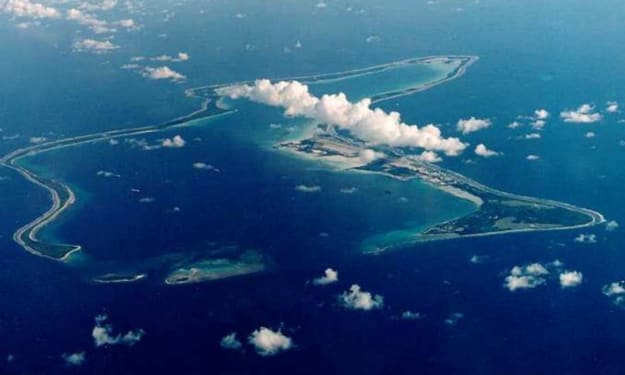
Former U.S. President Donald Trump has criticized the United Kingdom’s decision to hand over sovereignty of the Chagos Islands to Mauritius, calling it an act of “great stupidity.” This high-profile statement has reignited debates over colonial legacies, geopolitical alliances, and the rights of local communities. While the issue may seem distant to many, it carries significant implications for global politics, regional stability, and the affected communities. The Chagos Islands, a strategically located archipelago in the Indian Ocean, have long been a point of contention between the UK, Mauritius, and the United States, which maintains a military base on Diego Garcia, one of the largest islands. The latest political statements have highlighted not only international disagreements but also how decisions by governments can affect local populations and global perceptions. Why the UK Is Handing Over the Chagos Islands The UK’s decision to transfer sovereignty to Mauritius comes after years of legal challenges and international pressure. The United Nations has repeatedly called for the return of the islands to Mauritius, stating that the previous detachment in 1965 was illegal. The move aims to: Resolve a longstanding international dispute Acknowledge the rights of the Chagossian people, many of whom were forcibly removed from the islands decades ago Comply with international law and UN recommendations For many in Mauritius and the Chagossian diaspora, the transfer represents justice and recognition of their historical grievances. Trump’s Criticism and Its Context Trump described the UK’s decision as “an act of great stupidity,” emphasizing strategic and military concerns. The United States relies on Diego Garcia for one of its key military bases, crucial for operations in the Indian Ocean region and beyond. From Trump’s perspective, the sovereignty transfer could: Complicate U.S. military logistics Create uncertainty over strategic agreements Signal weakness in alliances with close partners like the UK However, critics argue that such statements overlook the rights of the displaced Chagossian communities and the importance of resolving colonial-era injustices. Impact on Local Communities The Chagos Islands have a unique human story. In the 1960s and 1970s, the indigenous Chagossian population was forcibly removed to make way for a U.S. military base. Families were relocated to Mauritius, the Seychelles, and other areas, often under harsh conditions. The sovereignty transfer could: Support efforts for Chagossians to return home Enable compensation and recognition of historical wrongs Promote cultural and community restoration Community advocates argue that international legal decisions should prioritize the welfare and rights of displaced populations, not just geopolitical or strategic interests. Geopolitical Implications The dispute is more than a bilateral issue between the UK and Mauritius. It has global political ramifications, including: U.S.-UK relations: While the UK maintains a strategic alliance with the U.S., the sovereignty decision may raise tensions over military operations. Indian Ocean stability: The islands are located in a key maritime region, affecting naval operations, trade routes, and regional security. International law precedent: Recognizing Mauritius’ claim reinforces UN rulings on decolonization and territorial sovereignty. For communities that follow global politics, these dynamics highlight how high-level political decisions impact both strategy and society. Media and Public Reaction Trump’s comments have dominated media coverage, sparking debate in international communities and online forums. Public opinion is divided: Supporters of Trump’s viewpoint cite national security concerns and strategic importance. Critics highlight colonial injustices and the need to respect the rights of indigenous populations. Social media discussions reveal growing interest in the balance between military strategy and human rights, showing that global decisions resonate with everyday communities. Legal and Ethical Considerations The transfer of the Chagos Islands raises several legal and ethical issues: Sovereignty and Self-Determination: The Chagossian people’s right to return and their cultural identity must be respected. Colonial History: Addressing past injustices is an ethical obligation for governments involved in colonial-era displacement. Military Agreements: Ensuring strategic stability while honoring international law is a complex balancing act. Legal scholars note that this case could set a precedent for other disputed territories, influencing how communities worldwide perceive justice, sovereignty, and rights. Why This Matters to Communities Even though the Chagos Islands are remote, the controversy touches on community awareness and engagement: Diaspora Communities: Chagossians and Mauritians see this as a historic moment affecting their families and heritage. Global Citizens: People interested in human rights and international law follow such cases to understand justice and accountability. Policy Advocates: NGOs and advocacy groups use this dispute to promote awareness of displacement, sovereignty, and ethical governance. In short, political decisions at the top level ripple down to real people, influencing lives, cultural identity, and community cohesion. Looking Ahead The future of the Chagos Islands will depend on: Implementation of sovereignty transfer: Ensuring legal and diplomatic arrangements are respected. U.S.-UK negotiations: Maintaining strategic interests while addressing human rights. Chagossian return programs: Supporting the restoration of communities affected by displacement. The controversy is a reminder that politics and community welfare are intertwined, and decisions made in boardrooms or government offices can have lasting effects on populations far from the center of power. The Takeaway Trump’s statement about the Chagos Islands sovereignty highlights the tension between geopolitical strategy and community justice. While international relations and military interests are important, the voices of the displaced Chagossian community cannot be ignored. For communities following global politics, the case demonstrates how: International decisions affect local populations Human rights and sovereignty are key considerations Awareness and advocacy by communities can influence global policy As debates continue, the story of the Chagos Islands serves as a reminder that political and strategic choices have human consequences, and that protecting community rights is as vital as maintaining alliances.
By Muhammad Hassan5 days ago in Earth
From Seal Meat to Ice Sheets: A Century of Reporting From Antarctica
Antarctica—the frozen southernmost continent—has long fascinated scientists, explorers, and journalists alike. From the earliest expeditions in the late 19th and early 20th centuries to modern climate research missions, journalists have chronicled Antarctica’s extremes, documenting both its human stories and its environmental mysteries. Over the past century, reporting from this remote and forbidding landscape has evolved dramatically, reflecting changing societal interests, technological advances, and growing concerns about climate change.
By Muhammad Hassan3 days ago in Earth
🅼🅸🅳🅽🅸🅶🅷🆃 🆂🅽🅰🅲🅺🆂
"It's 10 in Tuscon! We all know what that means... It's Time for Midnight Snacks with your man, Gerald Gee! Ready to spend the night together? Me too! I'm full of snacks and can't wait to regurgitate them all back into your hungry ears. Crack a brew! Pop some corn! Anything to get ready for one hell of a show where the talk maybe cheap but the words cut deep...
By Lamar Wiggins2 days ago in Fiction
Thoughts on Vocal and the way the world is
"Death cannot stop true love, only delay it." – Wesley in The Princess Bride. I decided to come back to Vocal on a very cold and dark night at the end of December. I had been, and still am, convalescing from a horrible staph infection that had gone misdiagnosed for months. This, paired with the increasing challenges of being healthy, making the best choices for my co-parented child, being a wife, and being a director at a new job, was a lot to manage.
By Jazzy 7 days ago in Confessions


Comments
There are no comments for this story
Be the first to respond and start the conversation.