
From Seal Meat to Ice Sheets: A Century of Reporting From Antarctica
How a Remote Continent Captured the World’s Imagination Through 100 Years of Journalism

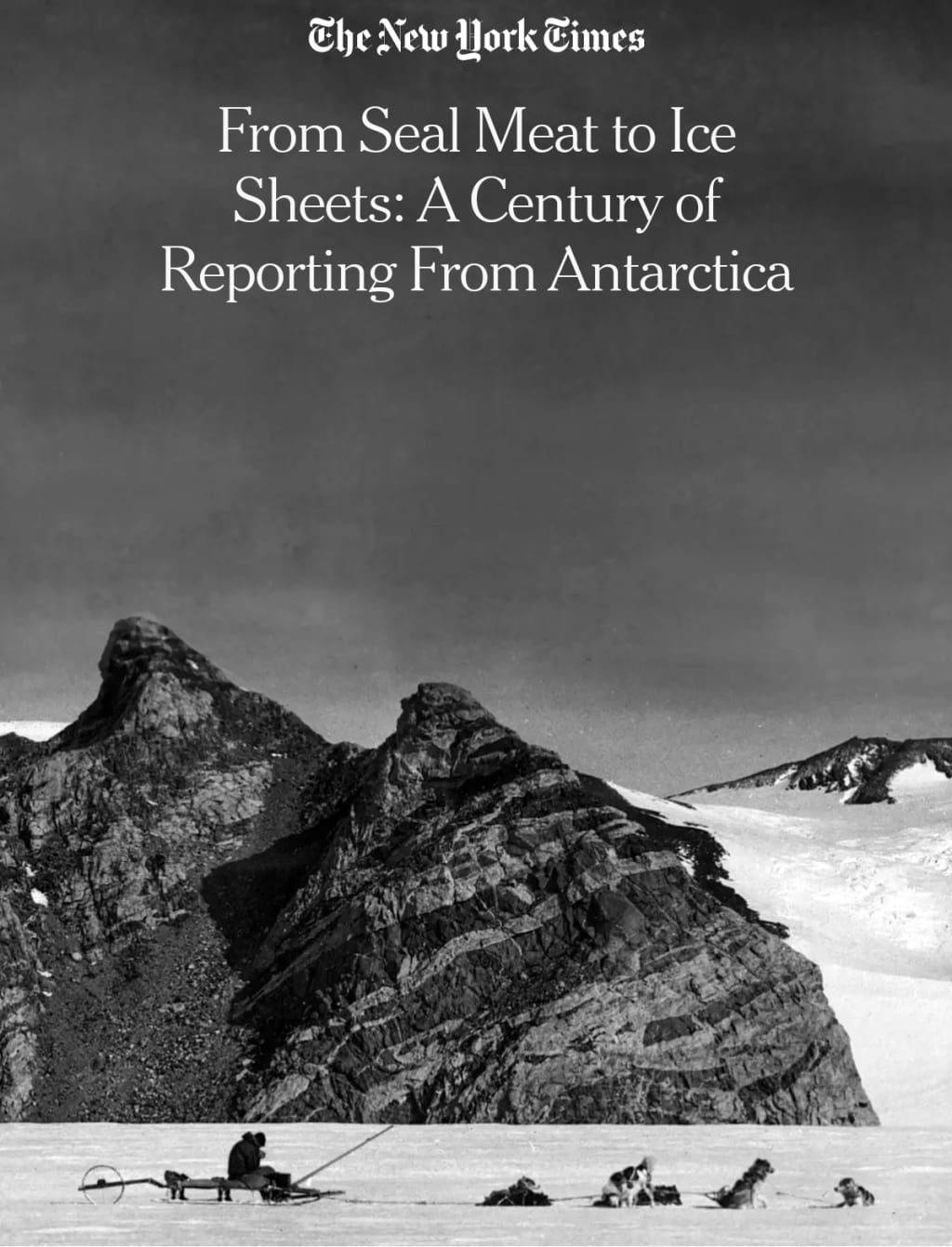
Antarctica—the frozen southernmost continent—has long fascinated scientists, explorers, and journalists alike. From the earliest expeditions in the late 19th and early 20th centuries to modern climate research missions, journalists have chronicled Antarctica’s extremes, documenting both its human stories and its environmental mysteries. Over the past century, reporting from this remote and forbidding landscape has evolved dramatically, reflecting changing societal interests, technological advances, and growing concerns about climate change.
Early Explorers and the First Reports
The first journalistic accounts of Antarctica came from explorers such as Roald Amundsen, Robert Falcon Scott, and Ernest Shackleton. These expeditions, often perilous and dramatic, captured public attention worldwide. Newspapers reported tales of survival, heroism, and tragedy, creating a sense of awe about the icy continent.
Early reporting often focused on human endurance and exploration, with vivid descriptions of treacherous journeys, blizzards, and encounters with wildlife. For instance, accounts of explorers hunting seals and penguins for food were common, highlighting the harsh realities of survival in extreme conditions. Readers were captivated by the idea that humans could navigate such an unyielding environment, and newspapers frequently printed serialized stories of expeditions, bringing Antarctica into living rooms far from its icy shores.
Mid-20th Century: Science Takes Center Stage
By the mid-20th century, the focus of Antarctic reporting began to shift. The International Geophysical Year (1957–1958) marked a turning point, as scientists from around the world established research stations on the continent. Reporting increasingly emphasized scientific discovery, rather than survival tales. Journalists began covering studies on glaciology, meteorology, and biology, providing the public with insights into Antarctica’s unique ecosystems and its role in global climate patterns.
This period also saw the rise of photojournalism. Images of vast ice sheets, towering glaciers, and isolated research stations allowed audiences to visualize a continent that most would never visit. Stories highlighted not only the scientific work being done but also the logistical challenges of living and working in such isolation.
Environmental Awareness and Climate Reporting
In recent decades, reporting from Antarctica has increasingly focused on environmental issues. As global awareness of climate change has grown, journalists have turned their attention to melting ice sheets, rising sea levels, and shifting ecosystems. Reports often include scientific data alongside narratives about the continent’s wildlife, emphasizing the urgent need to understand and protect this fragile environment.
For example, journalists covering Antarctica today report on glacial retreat, changes in penguin populations, and the impacts of human activity, such as research stations and tourism. Investigative pieces often explore the delicate balance between scientific exploration and environmental preservation, highlighting international treaties and conservation efforts. This modern focus reflects broader societal concerns and demonstrates how Antarctic reporting has evolved from survival stories to environmental advocacy.
Technology and Remote Reporting
Technological advances have dramatically changed how journalists cover Antarctica. In the past, correspondents relied on letters, telegrams, or delayed reports sent via ship or radio. Today, satellite communications, drones, and live streaming allow reporters to share real-time images and data with global audiences.
Modern reporting often combines traditional journalism with interactive media, including maps of ice sheet movements, time-lapse photography, and video diaries from scientists. These tools make the continent more accessible to readers and viewers, while also providing compelling evidence of environmental change. Digital platforms have also enabled citizen engagement, allowing audiences to follow Antarctic research projects, participate in discussions, and even contribute to crowdsourced scientific initiatives.
Human Stories Amidst the Ice
While much contemporary reporting emphasizes science and climate, human stories remain central. Journalists capture the experiences of researchers living in extreme isolation, the challenges of sustaining life in sub-zero temperatures, and the camaraderie and conflicts that arise in small, remote communities. These narratives humanize the continent, reminding audiences that Antarctica is not only a scientific frontier but also a place of personal and social struggle.
Historical reporting also highlighted the impact of human activity, such as whaling, seal hunting, and early exploration. Modern coverage often examines ethical questions about tourism, resource exploitation, and environmental stewardship, demonstrating a continued fascination with the human footprint in Antarctica.
A Century of Evolution in Coverage
Over the past 100 years, reporting from Antarctica has evolved alongside societal priorities and technological capabilities:
Early 20th Century: Focus on exploration, survival, and heroism.
Mid-20th Century: Scientific research and discovery take center stage.
Late 20th to 21st Century: Environmental and climate issues dominate, with multimedia storytelling enhancing public engagement.
Each era reflects not only the changing realities of Antarctic life but also broader global concerns—from imperial ambition to environmental sustainability.
The Future of Antarctic Journalism
As climate change accelerates and human activity in Antarctica continues, journalists are likely to play a key role in documenting these transformations. Future reporting may integrate real-time environmental monitoring, virtual reality experiences, and AI-driven data analysis, providing audiences with even more immersive and detailed insights into the continent’s conditions.
Moreover, Antarctic journalism will likely continue to explore ethical and geopolitical issues, including territorial claims, resource management, and international cooperation. By blending scientific accuracy with compelling storytelling, reporters will help ensure that global audiences remain informed and engaged with one of Earth’s most extreme and fragile environments.
Conclusion
From tales of explorers hunting seal meat to detailed analyses of ice sheet dynamics, Antarctic reporting has come a long way over the past century. Journalists have chronicled the continent’s extremes, human triumphs and struggles, and environmental transformations, providing the world with a window into a place few will ever see firsthand.
As Antarctica faces unprecedented changes, reporting from this frozen frontier will remain vital. By capturing both human and scientific stories, journalists continue to connect global audiences to a land defined by extremes, mystery, and profound environmental significance. A century of coverage has taught us that Antarctica is not just a distant continent—it is a mirror of our curiosity, resilience, and responsibility as stewards of the planet.
About the Creator
Muhammad Hassan
Muhammad Hassan | Content writer with 2 years of experience crafting engaging articles on world news, current affairs, and trending topics. I simplify complex stories to keep readers informed and connected.
Keep reading
More stories from Muhammad Hassan and writers in Earth and other communities.
Blue Origin Introduces TeraWave: A 6 Tbps Space-Based Network for Global Connectivity
Blue Origin, the space exploration company founded by Jeff Bezos, has unveiled its latest ambitious project: TeraWave, a space-based network designed to deliver ultra-fast internet connectivity around the globe. With a staggering capacity of 6 terabits per second (Tbps), TeraWave promises to redefine how people and businesses connect, particularly in remote and underserved areas. The announcement marks a significant step forward in the growing competition among private space companies to provide global satellite internet.
By Muhammad Hassanabout 8 hours ago in Earth
Chameleon: Nature’s Master of Disguise
Few creatures in the animal kingdom capture the imagination quite like the chameleon. Known for its ability to change color, its slow, deliberate movements, and its incredible eyes that move independently, the chameleon is one of nature’s most extraordinary reptiles. These small but remarkable creatures have inspired scientists, photographers, and animal lovers for centuries.
By Aarif Lashari3 days ago in Earth
Oil Well Abandonment Services: Responsible Closure for Long-Term Environmental Safety
Oil and gas production is only one chapter in the life of a well. When extraction ends, what happens next is just as important as the energy once produced. Oil well abandonment services ensure that inactive wells are closed in a safe, controlled, and permanent manner, preventing environmental damage and protecting surrounding land for future use. 🌍
By andersenintus3 days ago in Earth
How to Succeed at the Benson Directory®
Congratulations and welcome to the Benson Directory® employee #22391! As our newest call handler, you will have the privilege of speaking with dozens of unique and interesting people on a daily basis as well as the opportunity to earn bonuses for high performance. Contained within this handbook you will find a set of ease to follow instructions designed to help you settle in to your new role and begin paving the way to success.
By S. A. Crawford5 days ago in Fiction




Comments
There are no comments for this story
Be the first to respond and start the conversation.