
This is a danger signal! Siberian animal carcasses reappear, Arctic ecology on the brink
Siberian animal carcasses reappear, Arctic ecology on the brink

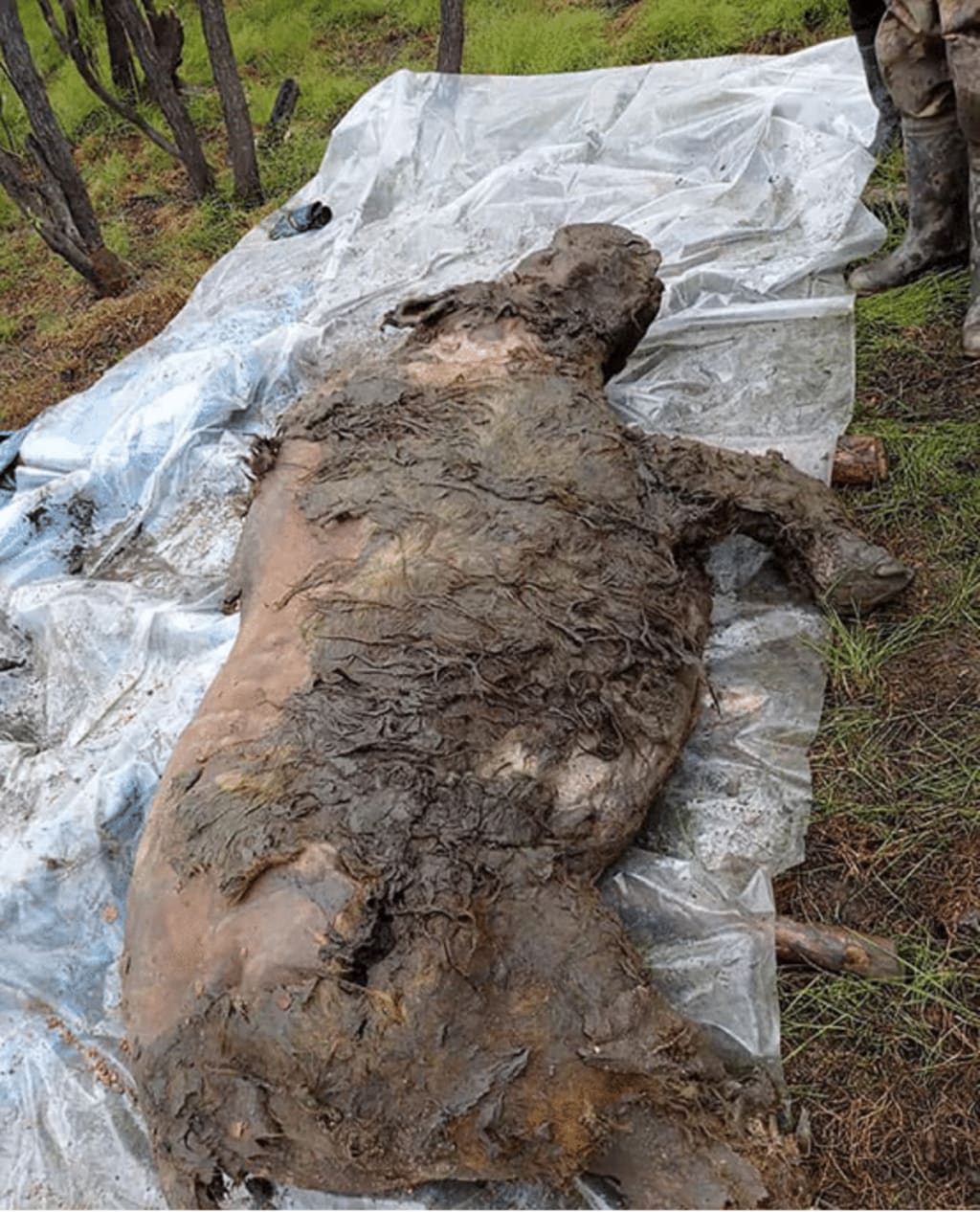
Late last year, Current Biology published a paper that featured the carcass of a gray wolf, which is 57,000 years old now. To the surprise of scientists, the carcass was preserved intact, and it has great scientific value, which may give us clues to study the evolutionary history of ancient creatures.
But on the other hand, scientists are also worried about this phenomenon. It is reasonable to say that the carcass of the gray wolf is buried under the permafrost, and people can't see it. And now, the carcass is exposed to the public, which means that part of the permafrost layer has melted, which gives this carcass a chance to meet with everyone.
Following this line of thought, what does the melting of the permafrost layer suggest? It suggests changes in the Earth's temperature, climate, and even the Earth's ecology. It is no coincidence that there is new news from the Arctic region, the research team found another animal carcass. The carcass was identified as an ancient creature, the cloaked rhinoceros, which was also unbanned only a short time ago.
What are the other phenomena behind the frequent appearance of ancient animal carcasses that we have not paid attention to?
The appearance of ancient animal carcasses is telling people that the permafrost has melted in some areas. The most direct reason for the thawing of permafrost is the rising temperature in the Arctic. The information shows that in the town of Verkhoyansk in the Siberian region, the temperature last summer was as high as 38 degrees Celsius, and people can play naked in the water, which is not all the scenes in the Arctic region should appear.
Such high temperatures in the equatorial region may not be a big deal, but for the Arctic region is a fatal blow. High temperatures can cause the permafrost to melt faster in the summer, and when the permafrost freezes faster in the winter than it can melt in the summer, the ground will tend to sink.
More importantly, the Arctic region is different from the Antarctic region. While the Antarctic is off the beaten track, the Arctic is inhabited by many countries, many of which have their infrastructure built on top of the permafrost. If the permafrost melts, it will be a big blow to the people who live here.
This is not alarming, last summer, by the impact of thawing permafrost, Russia built on top of the permafrost a fuel tank damaged, which stored 20,000 tons of diesel fuel flowed down the river to many areas, and the downstream river was seriously polluted, the residents of water were seriously affected.
The Batagayka pit, known as the "Gates of Hell", is also associated with the melting of the permafrost. Originally, it was only a small pit with a depth of about 3 meters, but with the cooperation of humans and temperature, it has now become a huge pit with a length of more than 3 kilometers and a depth of about 100 meters and resembles a tadpole. More unexpectedly, with the expansion of the scale, the pit also ushered in prehistoric musk ox, mammoth, and other rare guests.
Can humans read the cues of ancient creatures?
In addition to pits and pollution, animals living in ancient times are also sending hints to humans. We should be alert to this and think about whether the Arctic climate is about to reach a climate tipping point and what we can do to remedy it. Also, are the frequent sightings of ancient creatures a reminder that extreme weather conditions are emerging in the Arctic? What precautions can we take to minimize damage before extreme weather occurs?
According to the published pictures, the pied rhinoceros and the gray wolf are well preserved, the body of the pied rhinoceros is covered with brown hair, its body length is between 3.5 meters and 4 meters, its weight is maybe 4 tons and its age should be between 3 and 4 years old, it lived 20,000 years ago to 50,000 years ago.
Scientists say the pied rhinoceros is an extinct animal that was strong and survived extremely well, having survived the Ice Age and persevered before finally becoming extinct in the Stone Age. Its appearance is of great significance to our study of this species.
The appearance of the cloaked rhinoceros does have its surprises and excitement, but scientists are more concerned. There is no doubt that its appearance is a dangerous signal that it is alerting humanity that there is a problem with the climate in the Arctic. Scientific testing data shows that as global warming intensifies, the Arctic region is warming about twice as fast as other regions, and in 2020 the Arctic appeared 38 degrees hot, the Arctic is feverish. Although there is the help of the La Niña phenomenon, global cooling is not very likely, the Arctic cooling will be very small.
What are the effects of a warming Arctic?
The effects of a warming Arctic have been mentioned in the previous article. First of all, rising temperatures will cause the permafrost to melt, and once it melts, it will affect the facilities above it. Also, the melting of the permafrost layer will hurt the local landscape. Secondly, melting permafrost means that more ancient organisms will be exposed to the ice, and humans will have no knowledge of the microorganisms and viruses they carry.
In 2014, French scientists resurrected a virus that had been lurking in the Siberian permafrost for about 30,000 years, and it was infectious. If a large number of such viruses are resurrected, it will have a serious impact on the safety of human life.
The virus that was resurrected in 2014 is not the first primitive virus to which humans have been exposed. As early as 2003, scientists discovered viruses called "Mimivirus" and "Pandoraviruses". These data and phenomena tell us that permafrost is more than just a place of extreme cold; it is also a potentially huge reservoir of viruses. If a large number of viruses are released, the situation for human beings will be even more difficult than when the New Crown epidemic was dominated.
In addition, the release of methane from the permafrost after the release of animal carcasses will be a huge challenge for humans. Chemically, methane is several times more potent than carbon dioxide in terms of its greenhouse effect. Today, humans are exhausted by the untold amount of carbon dioxide in the environment, and the incoming methane could suffocate them.
When the permafrost melts massively, it means that there is a huge amount of methane being unblocked, and they are scrambling to say hello to humans and everything around them, which will lead to an even worse warming effect on the planet, which could send it straight into a runaway state. Then, the next thing you know, the Earth will enter a terrible vicious cycle: methane outbreak - global warming - methane continues to be released - the Earth warms even more. At that point, the Earth may no longer be the Earth, but a giant furnace.
About the Creator
Keep reading
More stories from Kalmi kovova and writers in Earth and other communities.
How do the eels that are "father" and "mother" reproduce?
The eel is an interesting fish, especially in the matter of reproduction, because all male eels were once females, but they completed a magnificent transformation after reproduction, which means that the eel has to go through a lifetime of "mothering" and "fathering" two This means that eels have to go through two processes: "motherhood" and "fatherhood". So, how do eels reproduce? And how do they change? Let's find out.
By Kalmi kovova3 years ago in Earth
Birds with Wild Hairdos
Cockatoos are known for their expressive crests, which they raise or lower depending on their mood. The crests can be white, yellow, or pink. These charismatic birds are native to the Australian continent, the islands of the Indo-Australian archipelago, and parts of New Guinea. There are 21 different species of cockatoo, varying in size from the diminutive Galah to the imposing Sulphur-crested Cockatoo. Most cockatoo species are highly social birds, forming strong pair bonds that often last a lifetime. Cockatoos are primarily herbivores, with a diet consisting of seeds, nuts, fruits, roots, and occasionally insects and larvae.
By Rasma Raisters5 days ago in Earth
Global Aerosol Paints Market Forecast 2025–2033
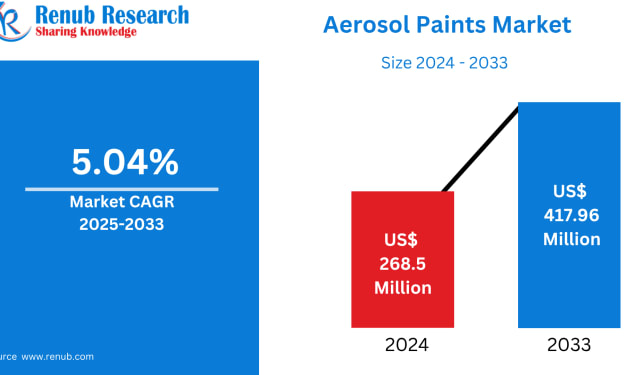
Introduction The global aerosol paints market is steadily transforming from a niche convenience product into a mainstream coating solution used across industries, homes, and creative spaces. In 2024, the market was valued at USD 268.5 million, and it is projected to reach USD 417.96 million by 2033, expanding at a CAGR of 5.04% during 2025–2033, according to Renub Research. This growth is driven by the convergence of DIY culture, automotive customization, construction activity, and industrial maintenance needs, alongside innovation in eco-friendly formulations and application technologies.
By Aaina Oberoiabout 6 hours ago in Earth



Comments
There are no comments for this story
Be the first to respond and start the conversation.