
How do the eels that are "father" and "mother" reproduce?
How eels reproduce

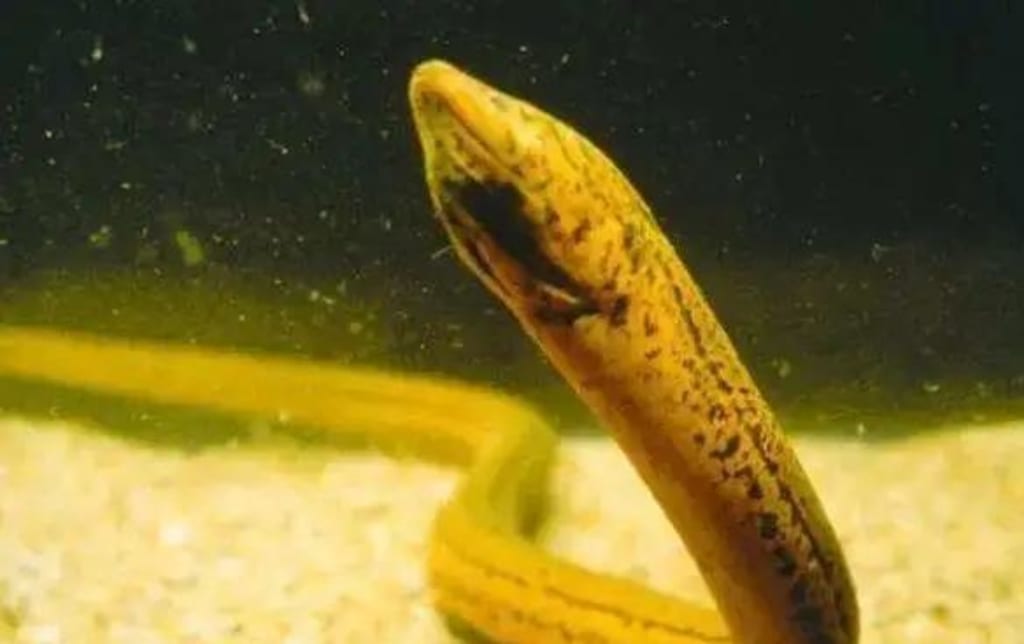
The eel is an interesting fish, especially in the matter of reproduction, because all male eels were once females, but they completed a magnificent transformation after reproduction, which means that the eel has to go through a lifetime of "mothering" and "fathering" two This means that eels have to go through two processes: "motherhood" and "fatherhood". So, how do eels reproduce? And how do they change? Let's find out.
About eels
The eel is commonly known as eel, yes, don't see it looks a bit like a snake, but it is a kind of fish, that belongs to the genus Eel of the family Syngillidae. Fish in the family Syngillidae have healed gill covers, highly degenerated dorsal and anal fins, and disappeared pectoral and ventral fins, plus they have long and slender bodies, so they look like a water snakes.
All fish in this family are burrowing fish, and eels are no exception. They are very good at digging holes, so once there are eels in the rice fields, inevitably, they often run away from the water.
However, putting aside this factor, eels are still beneficial to people, after all, as a fish without small thorns, tender meat, and more quantity, it used to provide high-quality protein at a stage when people's standard of living was relatively low, and catching eels is also a fond memory of many children, under the eel cage, fishing eels are its fun entertainment.
In addition, eels are carnivorous fish, they mainly feed on crustaceans, worms, and small fish in the water, and some worms are pests in the rice fields, so they are also considered to be good at removing worms.
The eels have a strong survival ability, they can survive well in low-oxygen water, because their gills are highly degraded, breathing mainly by the skin folds in the mouth, plus the eels have a diurnal habit, in the summer evening, they have the behavior of sticking their heads to the water surface to breathe, which is the origin of the "moon eel".
However, although the eel is delicious, because its body without scales, the whole body is covered with slippery mucus, so the eel in death, especially in hot weather, the meat decay very fast, and the appearance is not visible, but once eaten such eels are very easy to trigger food poisoning.
The ability of eels to "change sex"?
Most fish have their sex determined from the moment of hatching and will not change, but eels are an exception, all eels are female after hatching from eggs, this process will continue until the eel grows to a body length of 24 cm, more than 24 cm, the eel will begin to change sex, at this time they begin to change from female to male.
Of course, the sexing of eels is not instantaneous but requires a process until they reach a length of 40 cm or more, when all female eels that meet the length become male, and between 24-40 cm there are female and male eels, most of which are "both male and female" individuals.
This process is called "sex reversal", which is because eels have two sets of gonads in their bodies, but for a long time after hatching, the level of estrogen secretion is at a high level, so the female gonads will keep developing while the male gonads remain almost unchanged.
However, after sexual maturity and ovulation, the level of estrogen decreases, and the level of androgen gradually increases, which means that the female gonads gradually degenerate and the male gonads gradually start to develop. However, the sex reversal of eels is only once, which means that males cannot change back to females again.
In general, eels reach sexual maturity when they are more than 20 cm long, and then they are ready to reproduce, like other fish, eels are also fertilized in vitro, but they have their unique features.
First of all, the breeding period of eels is concentrated from June to August every year. Once they find a suitable individual for breeding, they will soon establish a relationship, and then the male and female eels will find a position near their cave and start spitting bubbles, using the bubbles to gather some debris on the water surface to form a nest before laying their eggs on top of the bubbles, which is very similar to the breeding habit of blackfish.
The advantage of this breeding habit is that it can fix their eggs in one piece, and the bubble can also play a certain hidden role, which is conducive to improving the survival rate of eggs, and the hatching rate of eggs in the bubble on the surface of the study should be above 85.2% on average.
Secondly, most fish leave after laying eggs, but eels are different, they will have egg guarding habits, however, egg guarding is not a couple of eels, but one of them, according to scientific research found that 61.3% of the eels guarding eggs are male, 38.7% are part-time male, which is different from our common perception of "mother guarding child This is different from the common perception that "mothers guard their children".
To figure out the benefits of eels guarding their eggs, scientists did an experiment in which the adult eels were taken away after the eggs hatched (the eels were still guarding their young) and compared with those that were not taken away and found that the survival rate of the young with eel protection was as high as 64%, while the survival rate of the young without eel protection was only 14%.
Therefore, although the eels from June to August are the most fertile, from a scientific point of view, these months are not suitable for catching eels, because going to excessive fishing during this period will not only make the eels' reproduction smaller (which happens to be the breeding period), but also greatly reduce the hatching rate and survival rate of eggs and young because the parents are taken away artificially, which is not conducive to sustainable development, and this is also the reason why there are a lot fewer eels today than before One of the important reasons.
In the end
Among the fish, eels are the "most responsible" because they not only build nests for their eggs but also guard their eggs and young, which greatly improves the survival rate of their offspring, which is why they are one of the most common fish.
However, because of the use of pesticides and excessive fishing, the number of eels is now much lower than before, and the growth rate of eels is relatively slow, in the wild environment, it takes at least 5-6 years to grow to 1 kg, so the large eels are very rare today.
About the Creator
Keep reading
More stories from Kalmi kovova and writers in Earth and other communities.
Two extreme regions on Earth, one has not rained for 400 years, and the other is even more amazing
Due to differences in latitudinal position, land and sea location, and topography, the climate varies in many parts of the planet. Some regions have a year-round arid climate with little rain, while others have a year-round warm and rainy climate. The life nurtured by different climates increases natural biodiversity. But some areas of the planet have extreme climates, either extremely dry or extremely wet, making it impossible for many organisms to survive in such environments.
By Kalmi kovova3 years ago in Earth
Temperatures Tomorrow Thursday Drop to Minus 15 Below Zero
Temperatures Tomorrow Thursday Drop to Minus 15 Below Zero Extreme winter conditions are expected tomorrow, Thursday, as temperatures fall to minus 15 below zero. This level of cold is considered severe and can disrupt daily life, transportation, and personal safety. When temperatures reach this extreme, preparation becomes essential, not optional. Understanding the impact of such cold weather helps people make better decisions and stay safe.
By America today about 20 hours ago in Earth
Nature’s Hidden Gems: Discovering the Rarest Flowers on Earth
Introduction: When Beauty Meets Rarity Nature is filled with wonders, but few are as captivating—and as elusive—as the rarest flowers on Earth. From enormous parasitic blooms to delicate orchids that appear only under precise conditions, these plants challenge our understanding of survival, evolution, and beauty.
By Ahmed aldeabella7 days ago in Earth
Rachel Reviews: The Spiral Archive by Pieter Hendrik
It's difficult for me to know where to start with a review of this book as it was, for me, an entirely unique experience and one that I'll probably never have again. I don't want that to be interpreted as unenjoyable but it has left me scratching my head a little and ruminating on its content, its themes and its characters.
By Rachel Deeming4 days ago in BookClub



Comments
There are no comments for this story
Be the first to respond and start the conversation.