
There are all kinds of strange stars in the universe, one is bigger than the other, is there an upper limit?
Strange stars in the universe

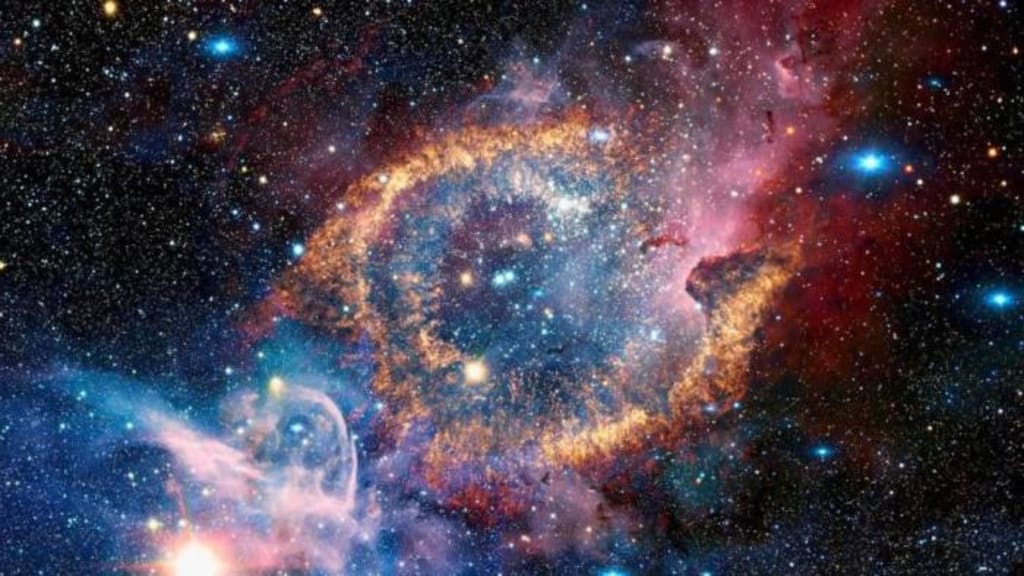
There are all kinds of strange stars in the universe, one is bigger than the other, is there an upper limit?
Leibniz, who created calculus independently of Newton, once said: "You can't find two identical leaves on the earth." From one aspect, it can be understood that Leibniz recognized the diversity of the world sex. Not only the creatures on earth have this characteristic, but when looking at the solar system, the Milky Way, and the universe, there are always subtle differences when looking at the solar system, the Milky Way, and the universe.
From the perspective of the planets in the solar system, the quality, magnetic field, orbit, rotation inclination, speed, atmosphere, natural environment, etc. are different, and even the appearance, color, and sound can distinguish them. If it is said that the universe was really created by God according to the laws of mathematics, how many permutations and combinations did the old man use?
The universe is vast. It is estimated that there are 400 billion stars in the Milky Way, and there are at least 2 trillion galaxies in the observable universe. The universe, like the cells in our body, is also metabolizing. The complexity and variety of stars in every corner It has surpassed human imagination. Below we will only search for some representative star systems that astronomers have observed.
According to the mainstream view, the universe was born 13.8 billion years ago, and the sun was born 5 billion years ago. The elements behind iron came from the supernova explosions of massive stars, so the material enough to form the solar system must also come from stars that died 5 billion years ago. , then the stars seen in the sky may be the first generation, the second generation, and the third generation.
The mass of the first generation of stars in the universe is generally large, and there may be no planets around, because the heavy elements have not yet formed, and the second and third generation of stars may be formed around them.
oldest star
Larger stars have shorter lifespans, and smaller stars have longer lifespans. This is related to the convection inside stars. Low-mass stars have extremely high fuel utilization rates, so their lifespans are extremely long! Many of the first generation of massive stars collapsed directly into neutron stars or black holes. At present, the oldest star SM0313, with an age of 13.6 billion years, is simply a "living fossil" in the star.
most massive star
Astronomers divide the stars in the sky into several grades according to their brightness. We are not professionals, so we don’t need to study this in depth. But as a modern person, in a networked society with open information and knowledge, we must understand the frontier exploration of human beings in all aspects, because everyone is the inheritor of the earth's civilization, not just...
From the side of color, the characteristics of stars can also be reflected. Blue, blue-white, and white are all massive stars, and their surface temperature and brightness are relatively high.
The most massive star, R136a1, is also the brightest. It is located in the Tarantula Nebula of the Large Magellanic, with a diameter of 35 times the sun and a mass of 256 times. Its surface is blue and its temperature exceeds 50,000 degrees. The energy released in 5 seconds is equivalent to the sum of the energy released by the sun in a year.
The discovery of R136a1 has allowed scientists to raise the Eddington limit to 300 times the mass of the sun, which was previously thought to be unstable beyond 150 times the mass of the sun. Personally, I think that the stability of things in the universe is a concept of time, and a moment may also be eternity. Time is just a relative concept, or it may not really exist.
Sirius is the brightest star seen by the naked eye. Like Cowherd and Vega, it is a white star with a surface temperature of about 7700-11500 degrees. The sun is a yellow star with a surface temperature of around 5000-6000 degrees.
When it comes to the brightness of stars, sci-fi fans always think that there is a loophole in this measurement method. What if it is covered by a Dyson sphere by a higher civilization? Ha ha!
largest star
The sun can hold 1.3 million Earths, while the "Stevenson 2-18" can hold 10 billion suns. The diameter of "Stevenson 2-18" is about 2158 times the diameter of the sun, and there are also "VY Canis Major", "MY Cepheus", "WY Sailing" and so on close to it. The "Voyager 1" probe has a flying speed of 61,452 kilometers per hour, and it takes more than ten years to run around these big guys. In theory, there should also be stars larger than this, and their existence may be shorter.
UY Scuti was once considered to be the largest star, but now many have surpassed it. "Stevenson 2-18" is 6 times larger than it.
Don't look at these big guys are very scary, that is they are in the "near dusk" red giant stage, not too far from the supernova explosion. I have never understood that there was a Korean group that took this name before. Is the brokerage company afraid of being popular for too long?
fastest moving star
SDSS J090745.0+24507 can reach a speed of 670km/s, which is the fastest moving star. The speed of the sun in the Milky Way is 240km/s. It's leaving the Milky Way and becoming a "wandering star."
closest star to the sun
The mass of red dwarfs is between 8 and 50% of the sun, and is greater than 105 Jupiter masses. The temperature and pressure inside them are just enough to initiate hydrogen nuclear fusion, and their surface is only 2500-5000 degrees. 80% of the stars in the Milky Way belong to red dwarf stars, and the nearest star to the solar system is a red dwarf star.
As I wrote in the previous article, Voyager 1 is the furthest probe that humans have flown, and it will take more than 70,000 years to fly to the nearest star, Proxima Centauri.
The coldest 'star'
The main components of brown dwarfs are also hydrogen and helium. Some scientists believe that if the mass of Jupiter is less than 80, it can also produce deuterium fusion with a mass higher than 13 times and become a brown dwarf. However, the nuclear fusion of deuterium, which emits very little heat, will last no more than 100 million years in total.
Brown dwarfs are called "failed stars", and Jupiter can only be regarded as a failed brown dwarf. WISE0855-0714, 40 light-years from the sun, has a surface temperature below zero, and many people call it the coldest "star".
Have something to say? If I can't say it, I have to say: "The upper and lower limits of various physical quantities may only limit human beings."
The sun is an absolute heavyweight in the solar system. Its mass accounts for 99.8% of the solar system. In fact, such single star systems in the universe are only a minority, and multi-star systems account for the majority.
Sirius is a binary star system
The discovery of gravitational waves indicates that black holes will merge, and binary star systems that are too close should also merge. Is this the reason for the uniquely shaped Thorne-Zytkow stellar object?
The nearest centaur to us is a triple star system, which can be regarded as a "three-body", but the "three-body" in the novel should come from a farther place. However, the destination of humans in "The Wandering Earth" is Proxima Centauri, the nearest star to us.
So far, astronomers have discovered seven star systems, such as Key Close in the constellation Scorpio; and XIV in Cassiopeia.
In which universe are there more than seven star systems? You can go and interrogate this man Houyi!
About the Creator
sondra mallen
Share a little bit of science every day
Keep reading
More stories from sondra mallen and writers in Earth and other communities.
How do black holes eat stars? Scientists show the whole process of phagocytosis time and time again
Black holes are the most mysterious celestial bodies in the universe. Scientists have been trying to solve the mystery of black holes since the last century. Due to the strong gravity of black holes, even light cannot escape, so people cannot directly observe the true situation of black holes. The glowing material accretion disk around the black hole is used to observe the black hole. Usually, the accretion disk around the black hole is composed of torn stellar debris. However, the process of the black hole swallowing the star has always been only in the theoretical stage.
By sondra mallen3 years ago in Earth
The Dryads Are Calling
Deep within the heart of ancient forests, where sunlight filters through towering canopies and the air hums with life, there exists a world few humans truly understand. It is a world of dryads, the mythical tree spirits of folklore, silently observing, nurturing, and sometimes guiding the creatures that dwell among the trees. Today, their legend continues to captivate the imagination, blending myth, nature, and a touch of magic.
By Aarif Lashariabout 23 hours ago in Earth
Inside Trump's $11 Billion Health Plan to Replace “Neo-Colonial” USAID
In the landscape of global health aid, few proposals have stirred as much debate as former President Donald Trump’s ambitious plan to restructure American assistance abroad. Dubbed an $11 billion health initiative aimed at replacing USAID’s current framework, the plan seeks to pivot away from what Trump and his allies have criticized as the “neo-colonial” approach of U.S. foreign aid. While the plan promises greater efficiency and impact, experts are split on whether it is a practical solution or a politically driven gamble. Trump’s Critique of USAID The United States Agency for International Development (USAID) has long been a central pillar of American foreign assistance, distributing billions in aid annually to address health crises, food insecurity, and development challenges worldwide. However, Trump’s administration and its supporters have often described USAID’s approach as bureaucratic, inefficient, and reflective of a “neo-colonial” mindset. In public statements, Trump argued that the U.S. was spending taxpayer dollars on programs that benefited foreign governments or contractors more than the intended local communities. Critics of the plan say that while USAID has flaws—as any large bureaucracy does—its extensive networks and decades of experience provide an unmatched capacity to deliver aid efficiently and safely. The Core of the $11 Billion Proposal At the heart of Trump’s proposal is an $11 billion fund designed to consolidate, modernize, and streamline U.S. health aid. Unlike the traditional USAID model, which relies heavily on long-term partnerships with governments and NGOs, the new plan emphasizes: Direct Impact Funding: Allocating resources to frontline health workers and local initiatives rather than intermediaries. Data-Driven Investments: Using real-time health data to target outbreaks and crises more efficiently. Private Sector Partnerships: Leveraging U.S. pharmaceutical companies, tech firms, and healthcare startups to deliver vaccines, treatments, and medical infrastructure. Shorter Program Cycles: Moving away from multi-year funding commitments in favor of more flexible, results-oriented programs. Proponents argue that this approach could reduce bureaucratic overhead and ensure U.S. aid reaches communities faster. By “cutting out the middlemen,” Trump supporters claim, America can avoid the pitfalls of slow-moving aid programs that sometimes fail to adapt to crises. Reactions from the Global Health Community Global health experts, however, have expressed concern about both the logistics and philosophy of the plan. Dr. Melissa Ortega, a senior researcher at the Global Health Policy Institute, explained, “The idea of bypassing established structures like USAID may sound appealing on paper, but in practice, it risks undermining decades of institutional knowledge. Health systems are complex, and short-term projects cannot replace long-term capacity building.” Some critics have also questioned the characterization of USAID as “neo-colonial.” While U.S. foreign aid has historically been tied to geopolitical interests, many programs today are designed collaboratively with recipient countries and local organizations. Reducing oversight could unintentionally increase the risk of misuse, corruption, or health inequities. On the other hand, supporters of Trump’s plan point to examples of inefficiency in USAID programs, citing cases where aid was delayed or mismanaged. By introducing more direct funding models, they argue, U.S. taxpayer dollars could achieve a higher “return on health outcomes.” Political Implications Trump’s health aid overhaul proposal is not just about international development—it is also deeply political. Framing USAID as a “neo-colonial” institution resonates with a populist narrative that America should prioritize its own citizens and assert greater control over how taxpayer money is spent abroad. Domestically, the $11 billion plan faces scrutiny from Congress. Lawmakers from both parties have questioned whether dismantling USAID’s systems could destabilize ongoing health programs in countries where the U.S. has long-term commitments. The potential impact on global health security—including the fight against pandemics like COVID-19—adds another layer of concern. Internationally, U.S. allies and partner nations are watching closely. Sudden shifts in aid delivery could disrupt health programs in low- and middle-income countries, many of which rely on predictable funding cycles to maintain vaccination campaigns, maternal health services, and disease surveillance. Possible Benefits and Risks If executed carefully, the Trump-backed model could bring several benefits: Faster Response Times: Direct funding could accelerate delivery of vaccines, treatments, and emergency support. Innovation Boost: By partnering with private sector companies, the plan could accelerate development of new health technologies. Accountability: With performance-based metrics, the plan may better measure the impact of U.S. aid. However, the risks are equally significant: Disruption of Existing Programs: Abrupt changes could destabilize ongoing health projects. Loss of Expertise: USAID’s decades of experience in navigating local governance, supply chains, and community engagement may be hard to replace. Geopolitical Fallout: Allies accustomed to collaborating with USAID might see the move as destabilizing, reducing cooperation on global health initiatives. Looking Ahead As Trump and his allies continue to advocate for this $11 billion overhaul, the debate over the future of U.S. health aid is intensifying. Proponents view it as a necessary modernization of an outdated system, while critics fear it could undercut decades of carefully built infrastructure and global partnerships. Ultimately, the success of this plan will hinge on its ability to balance efficiency with stability, innovation with oversight, and political objectives with humanitarian needs. For now, the proposal remains controversial, representing a dramatic departure from traditional approaches to U.S. foreign aid. Whether it will reshape global health for the better—or simply create more uncertainty—remains to be seen. In the end, the Trump health plan is as much about ideology as it is about dollars. It challenges the conventional wisdom of international development and asks whether a more streamlined, results-focused approach can truly replace a system built over decades. As the world watches, the stakes could not be higher: the future of U.S. global health aid—and the lives it touches—hangs in the balance.
By Muhammad Hassan6 days ago in Earth


Comments
There are no comments for this story
Be the first to respond and start the conversation.