
"The Wonders of Bioluminescence: Illuminating Nature's Extraordinary Glow"
"Unveiling the Mysteries and Beauty of Bioluminescent Organisms"
Introduction:
In the depths of the ocean, the darkest caves, and even within the hidden corners of the forest, a stunning phenomenon occurs—bioluminescence. Join us as we embark on an awe-inspiring journey to explore the mysteries and beauty of bioluminescent organisms. From microscopic marine creatures to enchanting fireflies, we delve into the extraordinary world of bioluminescence and uncover the secrets behind nature's luminous spectacle.
Section 1: The Science Behind the Glow
Bioluminescence, the ability of living organisms to produce their own light, is a captivating natural phenomenon. Through a process involving specialized chemicals, called luciferins, organisms such as bacteria, fungi, insects, fish, and even some plants can create their ethereal glow. The light is generated through a chemical reaction catalyzed by enzymes known as luciferases. This fascinating mechanism allows these organisms to emit light, illuminating their surroundings in the most enchanting ways.
Section 2: Illuminating Ecosystems
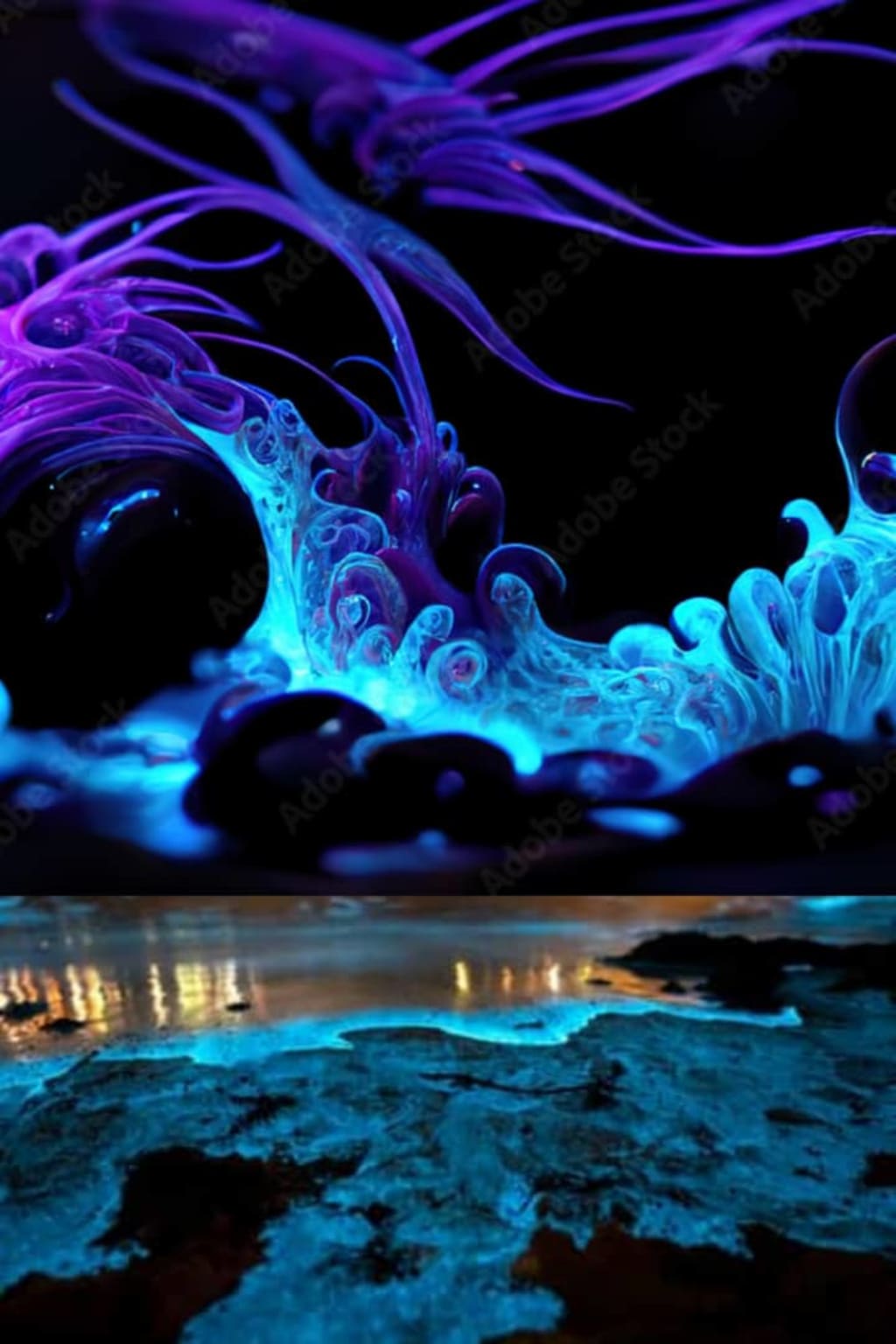
Bioluminescence is found in various ecosystems, showcasing its remarkable diversity and adaptability. One of the most mesmerizing displays occurs in bioluminescent bays, where countless microscopic organisms, known as dinoflagellates, create enchanting blue glows in the water. With each movement, these tiny organisms leave trails of sparkling light, transforming the bay into a magical, otherworldly spectacle. In the depths of the ocean, deep-sea organisms utilize bioluminescence to attract prey, communicate, and navigate their pitch-black environment. Their bioluminescent displays, ranging from bursts of light to intricate patterns, are reminiscent of a cosmic light show. On land, fireflies gracefully dance through the night, their rhythmic flashes enchanting summer evenings with their unique patterns of bioluminescence.
Section 3: Evolutionary Wonders
Bioluminescence has evolved as a remarkable survival strategy for many organisms. Some species use their radiant glow to attract mates, creating stunning courtship displays. Others employ bioluminescence to lure prey or even communicate with members of their own species in the darkness. These captivating adaptations have arisen over millions of years, highlighting the ingenuity and complexity of nature's evolutionary processes. Bioluminescence has become a remarkable tool for these organisms, allowing them to thrive in their respective environments.
Section 4: Human Interaction and Inspiration
Tof the ocean, the darkest caves, and even within the hidden corners of the forest, a stunning phenomenon occurs—bioluminescence. Join us as we embark on an awe-inspiring journey to explore the mysteries and beauty of bioluminescent organisms. From microscopic marine creatures to enchanting fireflies, we delve into the extraordinary world of bioluminescence and uncover the secrets behind nature's luminous spectacle.
Section 1: The Science Behind the Glow
Bioluminescence, the ability of living organisms to produce their own light, is a captivating natural phenomenon. Through a process involving specialized chemicals, called luciferins, organisms such as bacteria, fungi, insects, fish, and even some plants can create their ethereal glow. The light is generated through a chemical reaction catalyzed by enzymes known as luciferases. This fascinating mechanism allows these organisms to emit light, illuminating their surroundings in the most enchanting ways.
Section 2: Illuminating Ecosystems
Bioluminescence is found in various ecosystems, showcasing its remarkable diversity and adaptability. One of the most mesmerizing displays occurs in bioluminescent bays, where countless microscopic organisms, known as dinoflagellates, create enchanting blue glows in the water. With each movement, these tiny organisms leave trails of sparkling light, transforming the bay into a magical, otherworldly spectacle. In the depths of the ocean, deep-sea organisms utilize bioluminescence to attract prey, communicate, and navigate their pitch-black environment. Their bioluminescent displays, ranging from bursts of light to intricate patterns, are reminiscent of a cosmic light show. On land, fireflies gracefully dance through the night, their rhythmic flashes enchanting summer evenings with their unique patterns of bioluminescence.
Section 3: Evolutionary Wonders
Bioluminescence has evolved as a remarkable survival strategy for many organisms. Some species use their radiant glow to attract mates, creating stunning courtship displays. Others employ bioluminescence to lure prey or even communicate with members of their own species in the darkness. These captivating adaptations have arisen over millions of years, highlighting the ingenuity and complexity of nature's evolutionary processes. Bioluminescence has become a remarkable tool for these organisms, allowing them to thrive in their respective environments.
Section 4: Human Interaction and Conservation Efforts
The allure of bioluminescence has not only fascinated humans but has also sparked a desire to understand and protect these remarkable organisms and their ecosystems. Scientists, conservationists, and organizations around the world are actively engaged in studying and preserving bioluminescent species.
Understanding the ecological roles of bioluminescence is crucial for conservation efforts. By unraveling the intricate relationships between bioluminescent organisms and their habitats, researchers can develop strategies to protect these fragile ecosystems. The delicate balance of factors, such as water quality, temperature, and light pollution, can significantly impact the survival of bioluminescent organisms. Conservation initiatives aim to minimize human activities that may disturb or harm these organisms, ensuring their continued existence.
Bioluminescent bays, which are particularly vulnerable to human impact, have received special attention in conservation efforts. Strict regulations and guidelines have been implemented to safeguard these unique ecosystems. Sustainable tourism practices, such as limiting visitor numbers and providing education about the fragility of these environments, help to preserve the bioluminescent bays for future generations to experience and appreciate.
Furthermore, ongoing research seeks to understand the potential applications of bioluminescence in various industries, including lighting, energy, and medicine. By harnessing the principles of bioluminescence, scientists are exploring ways to develop sustainable lighting solutions, inspired by the efficiency and beauty of natural bioluminescent systems. This research may lead to advancements in energy-efficient lighting technologies and reduce our reliance on conventional sources.
In the field of medicine, the study of bioluminescence has opened doors to innovative applications. Bioluminescent imaging techniques allow scientists to track and monitor biological processes within living organisms. This non-invasive approach has the potential to revolutionize diagnostics, drug development, and the understanding of diseases. Researchers are also investigating the use of bioluminescence in targeted therapies and drug delivery systems, exploiting the precise and controllable nature of bioluminescent reactions.
Conclusion:
Bioluminescence is a mesmerizing and awe-inspiring phenomenon that illuminates our understanding of the natural world. From the depths of the ocean to terrestrial landscapes, bioluminescent organisms captivate our senses and inspire us to explore and protect the diversity of life on Earth.
Through scientific inquiry, conservation efforts, and interdisciplinary collaborations, we continue to unravel the mysteries of bioluminescence and its potential applications. By preserving the habitats of bioluminescent organisms and minimizing our impact on their delicate ecosystems, we can ensure the survival of these extraordinary creatures and the ethereal beauty they bring to our planet.
Let us embrace the wonders of bioluminescence, celebrate its unique role in nature, and cultivate a deep sense of stewardship for the enchanting organisms that light up the darkness. Together, we can preserve these radiant wonders for future generations, fostering a harmonious coexistence between humans and the mesmerizing glow of bioluminescence.
About the Creator
Keep reading
More stories from writers in Earth and other communities.
Why Fruit Shell Biomass Is Perfect for Charcoal Making: A Property Analysis
When it comes to sustainable charcoal production, not all biomass materials are created equal. Among the various options—from wood chips to agricultural residues—fruit shell biomass (such as walnut shells, coconut shells, peanut shells, and almond shells) stands out as an ideal candidate. Its unique physical and chemical properties not only make the charcoal making process more efficient but also result in high-quality charcoal with versatile applications. In this post, we’ll break down the key properties that make fruit shell biomass a top choice for charcoal production, and touch on how these properties interact with charcoal making equipment to optimize outcomes.
By Bestonpyrolysis4 days ago in Earth
Five-Year-Old Liam Ramos and His Father Released From Texas Detention Center
The release of five-year-old Liam Ramos and his father from a Texas detention center has sparked renewed discussion about immigration detention policies, family separations, and humanitarian treatment standards. The case has attracted attention from advocacy groups, legal experts, and community organizations, highlighting the complex balance between border enforcement and human rights considerations.
By Aarif Lashari7 days ago in Earth
Our Song
Evening has given way to night. Gently, I settle next to you on the comfortable, old love seat and reach for your hand. You snatch it away, again. It cuts me to the quick, but I hide the pain, understanding that the reaction is but part of your demented state. Since the accident, your presence here in our cozy home has been clouded by a haze I can't see. Nevertheless, I feel the frigidity of your expressions and it serves as an excruciating reminder of the immeasurable distance between us.
By Dana Crandell4 days ago in Fiction



Comments (1)
Thanks