
The Wisdom and Beauty of Nature’s Most Majestic Force: Water in Classical Literature
The Element of Life, Transformation, and Reflection in Classical Literature


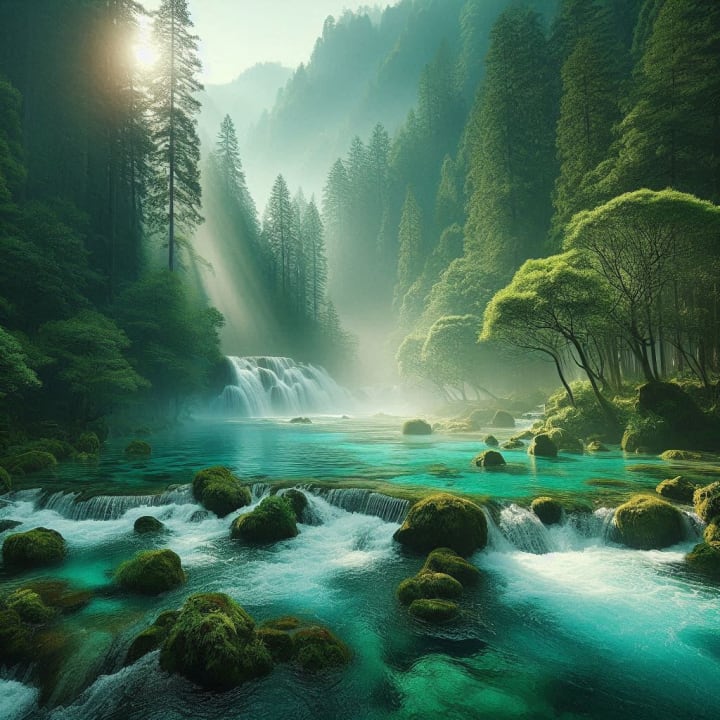
Water, the lifeblood of our planet, has long been celebrated in classical literature as a symbol of life, purity, and relentless power. Its dual nature—calm yet destructive, nurturing yet eroding—has inspired poets, philosophers, and writers throughout history to explore its mysteries and marvel at its beauty. In classical literature, water is not merely a natural element; it is a powerful force imbued with wisdom, often reflecting the complexities of the human experience.
Water as the Source of Life and Renewal
One of the earliest literary works highlighting water's life-giving essence is the ancient Epic of Gilgamesh. In this Mesopotamian epic, the sacred rivers Euphrates and Tigris are more than geographical entities; they are the veins of the earth, nourishing the land and its people. Water here symbolizes the flow of life, offering sustenance and the promise of renewal. Similarly, water plays a crucial role in the Bible, from the creation story where “the Spirit of God moved upon the face of the waters” to the parting of the Red Sea. Water is portrayed as a divine force capable of giving life and delivering salvation.
The Greek philosopher Heraclitus famously said, “You cannot step into the same river twice,” capturing water’s ever-changing, dynamic nature. For Heraclitus, the river symbolizes the constant flow of time and existence—an endless process of becoming. This idea resonates with the concept of renewal, where water is not static but a continuous cycle of transformation, reflecting the impermanence of life and the inevitability of change.
The Beauty of Water’s Serene and Reflective Nature
Water’s beauty and tranquility are often depicted in classical poetry, where it serves as a mirror to the soul. William Wordsworth, a central figure in the Romantic movement, frequently wrote about water in his poetry. In his famous poem, "Lines Written a Few Miles Above Tintern Abbey," Wordsworth describes the River Wye as a source of profound peace and inspiration. With its gentle flow and reflective surface, the river becomes a metaphor for the poet’s inner journey, offering solace and a deeper connection to nature.
Similarly, in his work Walden, Henry David Thoreau praises the stillness of Walden Pond, describing it as “a mirror which no stone can crack, whose quicksilver will never wear off.” The pond represents purity and clarity for Thoreau, an unspoiled reflection of nature’s perfection. In its calmness, water invites introspection, offering a space for contemplation and self-discovery.
Water as a Majestic and Destructive Force
While water’s nurturing qualities are celebrated, its destructive power is equally acknowledged in classical literature. The ancient Greeks personified water in the form of gods and goddesses like Poseidon, the god of the sea, whose wrath could cause earthquakes and tsunamis. Homer’s Odyssey vividly portrays the perilous journey of Odysseus, whose fate is at the mercy of the sea’s unpredictable and often violent temperament. The sea in the Odyssey is a vast, uncontrollable force, symbolizing the challenges and uncertainties of life.
In Shakespeare’s The Tempest, the opening scene features a shipwreck caused by a powerful storm at sea. Here, water is a force of chaos and transformation, setting the stage for the play’s themes of forgiveness, redemption, and the restoration of order. The tempestuous sea reflects the tumultuous emotions of the characters, illustrating how water can both destroy and purify.
The Symbolism of Water in the Cycle of Life and Death
Water’s role in the cycle of life and death is another recurring theme in classical literature. In Dante’s Divine Comedy, the river Lethe in Purgatory is the river of forgetfulness, where souls cleanse themselves of the memories of their sins before ascending to Heaven. Water here symbolizes purification and the erasure of past transgressions, allowing for spiritual rebirth.
In Samuel Taylor Coleridge’s The Rime of the Ancient Mariner, water is central to the mariner’s ordeal and eventual redemption. The ocean, initially a source of beauty and wonder, becomes a vast, desolate wasteland as the mariner faces the consequences of his actions. Yet, through water—through rain and the sight of sea creatures—he ultimately finds forgiveness and salvation. In this sense, water is a vehicle for both suffering and deliverance, embodying the dual nature of life and death.
The Timeless Majesty of Water
Throughout classical literature, water is depicted as one of nature’s most majestic forces, embodying the full spectrum of human experience. From its role as the giver of life and symbol of purity to its embodiment of power, chaos, and transformation, water reflects the complexities of the world around us. Its presence in literature reminds us of nature’s wisdom and beauty, urging us to respect and revere this essential, life-sustaining force.
In the words of Lao Tzu, the ancient Chinese philosopher, “Water is fluid, soft, and yielding. But water will wear away rock, which is rigid and cannot yield. As a rule, whatever is fluid, soft, and yielding will overcome whatever is rigid and hard.” This profound observation encapsulates the timeless wisdom of water—a force that, despite its gentleness, possesses the power to shape and transform the world.
About the Creator
Anthony Michael
A Student of History, an Aspiring Writer (Still Learning), & Likes to Collect Vintage Items. Currently, spending some time learning and studying online income methods.
Keep reading
More stories from Anthony Michael and writers in Earth and other communities.
Whispers of the Wind: A Tale of Nature's Secrets
The wind is a force of nature that is both powerful and mysterious. It is a reminder of the impermanence of life, the constant ebb, and flow of existence. For centuries, poets, artists, and writers have sought to capture the essence of the wind in their works, to understand its secrets and mysteries. From the pen of Gabriel Garcia Marquez to the brush of Vincent van Gogh, the wind has inspired many, including myself.
By Anthony Michael3 years ago in Earth
Dolphins and Orcas Can’t Evolve Back to Land, Scientists Say
For decades, scientists and enthusiasts have speculated about the possibility of dolphins, orcas, and other cetaceans evolving back onto land. After all, these marine mammals originated from land-dwelling ancestors millions of years ago. However, recent research confirms what many evolutionary biologists suspected: dolphins and orcas cannot evolve back to live on land.
By Aarif Lasharia day ago in Earth
China Sets a New Benchmark: 22.13-Kilometer Highway Tunnel Breaks World Record
China has once again captured global attention by pushing the limits of civil engineering with the completion of a 22.13-kilometer highway tunnel. This extraordinary feat has not only set a new world record but also highlights China’s relentless drive to expand and modernize its transportation network. The tunnel, which threads through challenging mountainous terrain, promises to revolutionize travel efficiency, boost regional connectivity, and further cement China’s reputation as a global leader in mega infrastructure projects.
By Muhammad Hassanabout 2 hours ago in Earth



Comments
There are no comments for this story
Be the first to respond and start the conversation.