
The Weather Tomorrow Feels More Personal Than Ever
On how checking the forecast has turned from a practical habit into an emotional ritual about uncertainty, change, and hope in an age of climatic unpredictability.

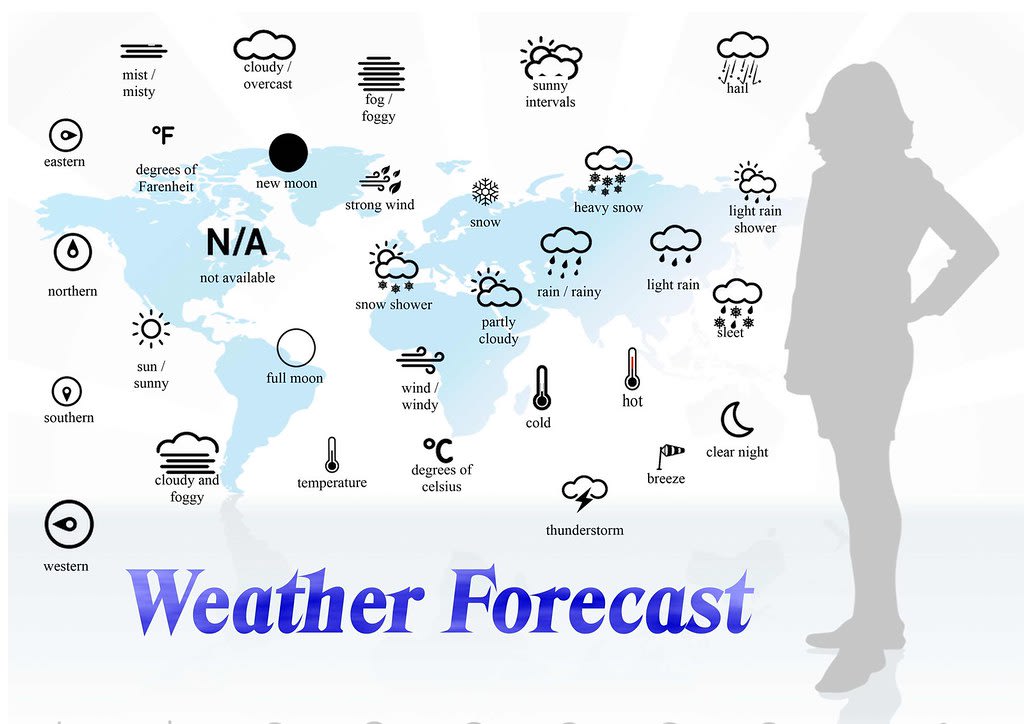
Every night before going to bed, I check the weather for tomorrow. It used to be a small, mechanical act — like setting an alarm or brushing my teeth. Now it feels almost existential. I tap into the forecast app and stare at those color-coded icons as though they’re tarot cards trying to tell me something about what kind of day I’ll wake up to.
The forecast for tomorrow says it’ll be cloudy with a 60% chance of rain here in upstate New York. That could mean anything now. Twenty years ago, those were numbers you trusted. You made plans around them. You believed science would hold its end of the bargain. But lately, I’ve noticed the weather has stopped behaving the way the numbers suggest. Rain comes earlier than predicted, snow melts faster than it should, and the wind carries a strange new edge I can’t quite describe.
Weather used to be the background of life — part of the small talk that filled elevator rides and waiting rooms. Now, it’s the headline. Every season seems to arrive with a hint of alarm. I remember a time when the phrase “record-breaking temperatures” meant something rare. Now it’s routine. It’s odd to think how the phrase “the weather tomorrow” once sounded boringly practical. Today, it lands like an open question about how much the world has already changed without us realizing.
I’ve grown oddly emotional about my local meteorologist. It’s not that I trust her more than anyone else, but there’s something intimate about her role now. She stands there on TV, pointing to swirling digital clouds and warm fronts, trying to make sense of chaos. It feels less like prediction and more like translation. She’s interpreting a language that’s shifting faster than we can learn it. Sometimes I imagine her frustration: no matter how precise the radar, nature keeps rewriting the rules.
Checking tomorrow’s weather also forces me to reckon with scale. I think about how my little patch of climate fits into the wider web — how the rain on my window might be threaded to drought somewhere else, or to a hurricane halfway around the globe. We’ve all become reluctant students of the planet’s restlessness. And yet, even in the midst of that awareness, I still plan my day around whether to wear boots or sneakers. There’s something deeply human about that contradiction: aware of the vast systems moving around me, yet grounded in the banal need to stay dry.
Maybe that’s why the forecast hits harder now. Every symbol carries a trace of memory. A sunny day reminds me of summers that used to last longer. A cold front feels personal, as though it’s aimed right at my bones. I’ve started noticing how every temperature shift echoes in my own mood. There’s no longer a tidy boundary between “the weather” and “me.” I respond to the gray sky like it’s an old friend who’s suddenly grown distant.
Sometimes, scrolling through the forecast, I feel a quiet kind of nostalgia — for a time when tomorrow’s weather didn’t seem so symbolic. But that nostalgia is tinged with guilt. After all, the unpredictability we’re witnessing isn’t fate; it’s the result of choices made by people, corporations, governments — by all of us, in some way. So when the forecast says “unusually warm for January,” it’s less a courtesy than a subtle moral reminder.
Still, there’s a strange comfort in the ritual itself. Checking the weather tomorrow gives me a frame — something small enough to anticipate, plan for, even argue with. I can’t fix global systems overnight, but I can decide whether to leave ten minutes early in case of rain. Maybe the act of checking the forecast isn’t really about control; it’s a way to practice humility. My screen tells me what might come, and I quietly acknowledge how little I can do to change it.
I’ve come to realize that forecasting isn’t just about data. It’s about storytelling. Each radar image, each hourly prediction, builds a narrative that connects our personal days to planetary rhythms. We’re all part of that story now, however reluctantly. Whether I’m standing in line for coffee or walking to my car, I can feel how much weather has become emotional infrastructure — the rhythm underlying how we live, hope, and prepare.
Tomorrow it might rain. Or it might not. I’ll wake up, open the blinds, and see for myself — the oldest human act in the world. And I’ll probably check the app again anyway, not because I expect it to be right, but because it helps me feel less powerless. The weather used to be what happened to us. Now it’s what happens inside of.
About the Creator
Trend Vantage
Covering the latest trends across business, tech, and culture. From finance to futuristic innovations, delivering insights that keep you ahead of the curve. Stay tuned for what’s next!
Keep reading
More stories from Trend Vantage and writers in Earth and other communities.
How Extreme Cold Is Rewriting the Economy of Daily Life
Extreme cold used to be a seasonal inconvenience. Today, it’s a systemic disruptor—and one that’s increasingly shaping how economies, supply chains, and households operate. The Arctic blast sweeping through much of North America this winter isn’t just an atmospheric anomaly; it’s a signal of a climate regime defined by extremes rather than averages. This shift forces governments, corporations, and consumers to rethink what “normal weather” even means—and how to plan for a world where volatility itself is the baseline.
By Trend Vantagea day ago in Earth
The AI Boom Will Increase U.S. Carbon Emissions—But It Doesn’t Have to
Artificial intelligence is reshaping the U.S. economy at a breathtaking pace. From generative AI tools and cloud computing to data-driven healthcare and finance, the AI boom promises productivity gains, innovation, and economic growth. But beneath this technological optimism lies a growing concern: AI is energy-hungry, and without intervention, it could significantly increase U.S. carbon emissions.
By Muhammad Hassan2 days ago in Earth
Do Not Touch the Roses
There is a quiet power in the phrase “Do Not Touch the Roses.” It sounds like a warning, but it feels like an invitation — one that asks us to pause, admire, and respect something without claiming it. Roses have long symbolized love, beauty, and passion, yet they are also guarded by thorns. That contradiction makes them the perfect metaphor for many of life’s most meaningful things.
By Aarif Lashari5 days ago in Earth


Comments
There are no comments for this story
Be the first to respond and start the conversation.