
The Veil of Resistance: Iran's Compulsory Hijab and the Wave of Protests
Women's Rights and Human Rights Injustices in Iran

In the rapidly evolving world where the call for equality and justice is louder than ever, there are regions where the struggle for these fundamental rights is an everyday battle. Iran presents a unique case in this regard, with its deeply rooted issues of women's rights and wider human rights injustices.
Iran has, for many years, been a complex canvas of human rights struggles, with the fight for women's rights at the forefront. Iran stands at a crossroad of tradition and modernity, religious beliefs, and calls for personal freedom. A focal point of this clash is the compulsory hijab law - a rule that mandates Iranian women to cover their hair in public. This law, symbolizing the intersection of politics, religion, and gender rights, has given rise to a wave of resistance and protest that has rippled across the country and captured international attention.
The Scale of Legal Disparity
One of the most profound legal disparities in Iran is in the realm of family law. A woman's testimony in court is considered half that of a man's, and women have limited rights in matters of divorce, child custody, and inheritance. The legal age for marriage for girls is alarmingly low - just 13, and with family consent, girls can be married off even younger. These laws contribute to a cycle of poverty, lack of education, and health issues among women.
Moreover, women's freedom of movement is also heavily restricted. They require permission from their husbands or fathers to travel abroad, hampering their opportunities to study, work, or experience life beyond Iran's borders.
The Hijab: A Symbol of Faith or Forced Compliance?
For many Muslim women around the world, wearing the hijab is a personal and religious choice, a manifestation of their faith and devotion. However, in Iran, the decision to wear a hijab isn't a matter of choice - it's the law. The compulsory hijab, mandated since the Islamic Revolution of 1979, has been increasingly viewed as an embodiment of the state's control over women's bodies and their personal freedoms.
Resistance and Protest: A Battle for Choice
Over the years, the compulsory hijab has been met with increasing resistance. An embodiment of this resistance is the "White Wednesdays" campaign, a movement started by women who dared to remove their headscarves in public, defying the compulsory hijab rule. Female students are given disciplinary ‘hearings’, suspended from classes and threatened with ‘zero grades’ for defying head covering law.
This peaceful act of protest sparked a widespread wave of resistance, with women across Iran – and indeed, around the world – expressing solidarity. However, this movement also unveiled the brutal reality of the regime's response to dissent.
State's Response: Suppression and Violence
Iran's patriarchal societal structure and legal systems, based largely on 'Sharia' or Islamic law, have created an environment of systemic inequalities and injustices, specifically targeted towards women placing them in a position of reduced rights and opportunities.
The Iranian government's reaction to these protests has been far from lenient. Many of these women have been arrested, detained, and faced lengthy prison sentences. Their peaceful act of protest was deemed as 'inciting corruption and prostitution', illustrating the regime's intolerance towards dissent and the oppressive measures it takes to silence voices of resistance.
Sadly, the state's response hasn't stopped at detentions and imprisonment. In the November 2019 protests, which were broader in scope and criticized the Iranian regime on various fronts, including the compulsory hijab, the response was deadly. Amnesty International reported that at least 304 people were killed during the unrest, and thousands were arrested.
The victims were of all ages and walks of life, and they all had one thing in common – the courage to speak out against a regime that they felt had suppressed them for too long.
A Call for Change and International Response
While the fight for the right to choose whether to wear a hijab continues within Iran, it's crucial for the international community to lend their support. The United Nations, human rights organizations, and countries around the world need to stand in solidarity with these Iranian women, apply diplomatic pressure on the Iranian government to respect freedom of choice, and hold them accountable for any human rights abuses.
Courage Amidst Repression
The story of the compulsory hijab and the protests against it is a testament to the resilience and courage of Iranian women. In the face of extreme adversity and state-sanctioned violence, they continue to fight for their rights, their freedom of expression, and their autonomy.
Their struggle is a stark reminder of the ongoing global battle for women's rights, individual liberties, and equality. As we look ahead, we hope for a day when all Iranian women have the right to make personal choices without fear of reprisal, and we remember those who have paid the ultimate price in this relentless quest for freedom.
About the Creator
Keep reading
More stories from Mira Ratcliff and writers in Earth and other communities.
Saudi Arabia's Reputation Reconstruction: A Closer Look at the LIV-PGA Mergere
In a world that boasts tremendous progress and technological advancements, it is disheartening to acknowledge the injustices that still persist. From the depths of systemic discrimination to the oppression of marginalized communities, countless violations of human rights occur daily, often concealed by the noise of our fast-paced lives.
By Mira Ratcliff3 years ago in Earth
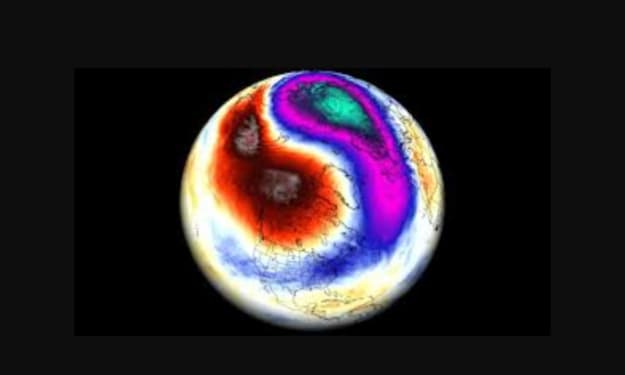
Polar Vortex Collapse Forecast: What It Means and Why It Matters
As winter progresses in the Northern Hemisphere, scientists are closely monitoring forecasts suggesting a potential polar vortex collapse. The term “polar vortex” has entered mainstream conversations in recent years, often associated with extreme cold snaps in North America, Europe, and parts of Asia. But what exactly is a polar vortex collapse, why does it happen, and why should people care? Understanding this phenomenon is crucial, not just for weather enthusiasts, but for anyone concerned about climate change, energy infrastructure, and global weather patterns. What Is the Polar Vortex? The polar vortex is a large area of low pressure and extremely cold air surrounding both of Earth’s poles, contained by a fast-moving band of winds known as the polar jet stream. In the Northern Hemisphere, it sits over the Arctic, spinning in a counterclockwise direction. Under normal conditions, the vortex keeps the Arctic air largely contained. However, fluctuations in atmospheric pressure and temperature can cause the vortex to weaken, shift, or even split, allowing frigid air to escape southward into populated regions. This is often what leads to extreme winter weather events in the United States, Canada, Europe, and Asia. What Does a Polar Vortex Collapse Mean? A “polar vortex collapse” refers to a significant weakening or breakdown of the vortex, often caused by sudden stratospheric warming events high in the atmosphere. When the polar vortex collapses: Arctic air can spill into mid-latitudes, leading to extreme cold in regions unaccustomed to such temperatures. Weather patterns become more erratic, causing longer-lasting cold spells or shifts in precipitation. Jet streams weaken or meander, which can contribute to storms, heavy snowfall, or unusual weather events across continents. The term “collapse” doesn’t mean the vortex disappears entirely — it is still present — but its structural integrity is compromised, allowing Arctic air to move into areas that typically enjoy milder winter conditions. Why Scientists Are Concerned Meteorologists and climate scientists pay close attention to the polar vortex because its behavior has far-reaching implications: Energy Demand: Sudden cold snaps increase heating demand, which can strain power grids and fuel supply chains. Agriculture: Extreme cold can damage crops, delay planting, and reduce yields for sensitive crops like winter wheat. Transportation: Snowstorms and icy conditions disrupt travel, affecting both local commuting and international logistics. Global Weather Links: A collapsed polar vortex can influence weather far beyond North America, including unusual rainfall patterns, storms, and temperature anomalies in Europe and Asia. Recent studies suggest that climate change may be making the polar vortex more unpredictable, with warmer Arctic temperatures affecting the jet stream’s stability. This could lead to more frequent or intense cold waves in regions far from the pole. Historical Examples of Polar Vortex Events The polar vortex has been linked to some of the most memorable winter events in recent decades: January 2014 (United States): Millions faced record-breaking cold as Arctic air plunged southward, with temperatures in the Midwest dropping to -30°F (-34°C) in some areas. February 2021 (North America): A weakened polar vortex contributed to extreme cold across Texas and the central U.S., causing widespread power outages and water supply disruptions. Europe 2018–2019: Fluctuations in the Arctic vortex led to extended cold spells across parts of northern and eastern Europe. Each of these events illustrates how disruptions in the Arctic atmosphere can quickly translate into severe conditions thousands of miles away. Why a Polar Vortex Collapse Matters Globally Although the polar vortex is centered over the Arctic, its collapse affects global weather in multiple ways: Economic Impacts: Cold snaps can halt industrial activity, increase heating costs, and strain insurance systems due to property damage. Climate Feedback Loops: Extreme Arctic events can accelerate ice melt, altering sea levels and global weather patterns. Human Health: Extended periods of extreme cold increase risks of hypothermia, frostbite, and other health emergencies, particularly for vulnerable populations. Ecosystem Effects: Wildlife adapted to stable seasonal patterns may struggle to survive sudden temperature fluctuations, affecting biodiversity in affected regions. The interconnectedness of global systems means that an Arctic event can ripple across continents, affecting agriculture, energy, and even food security. What Can People Do to Prepare? While individuals cannot control atmospheric phenomena, there are practical steps to prepare for polar vortex-related extreme cold: Home Safety: Insulate homes, check heating systems, and prepare emergency kits with blankets, food, and water. Travel Caution: Monitor forecasts before traveling and have contingency plans for snow or ice-related disruptions. Community Awareness: Check on neighbors, especially the elderly or vulnerable, during prolonged cold events. Government Preparedness: Authorities often increase readiness of power grids, emergency services, and transportation systems ahead of forecasted events. Being informed and proactive can reduce the human and economic impact of a polar vortex collapse. Looking Ahead: Climate Change and the Polar Vortex Scientists warn that the Arctic is warming faster than the rest of the planet, which may make the polar vortex more unstable. As the vortex weakens, the frequency of extreme cold events in mid-latitudes may rise, even while the planet as a whole becomes warmer. This paradox — colder extremes amid global warming — can be confusing but is consistent with climate models. It emphasizes the need for global cooperation in climate mitigation, adaptation, and disaster preparedness. Final Thoughts The forecast of a potential polar vortex collapse is a reminder that Earth’s climate system is complex and interconnected. What happens in the Arctic does not stay in the Arctic; it has tangible consequences for energy, health, ecosystems, and economies across the Northern Hemisphere. Understanding these dynamics, staying informed, and taking proactive steps can help societies mitigate risks and adapt to a changing climate. Whether you’re a casual weather watcher or a climate enthusiast, the polar vortex collapse is a phenomenon worth following — because its reach extends far beyond the Arctic Circle.
By Muhammad Hassan7 days ago in Earth
Sea Levels Are Rising Across the World. But in Greenland, Scientists Say They’re About to Fall
When it comes to climate change, one of the clearest signs has been rising sea levels worldwide. From the melting ice sheets of Antarctica to flooding in coastal cities, the narrative has been straightforward: global temperatures rise, ice melts, and oceans expand.
By Aarif Lashari3 days ago in Earth



Comments
There are no comments for this story
Be the first to respond and start the conversation.