
Polar Vortex Collapse Forecast: What It Means and Why It Matters
Understanding the Science Behind the Polar Vortex and Its Global Impact

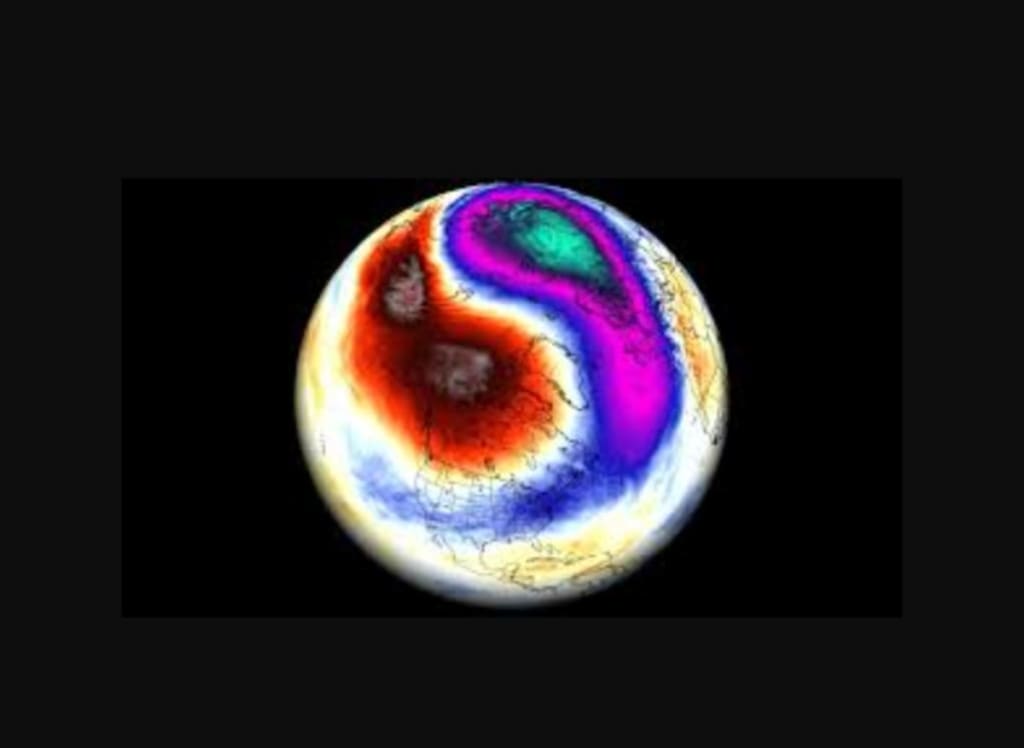
As winter progresses in the Northern Hemisphere, scientists are closely monitoring forecasts suggesting a potential polar vortex collapse. The term “polar vortex” has entered mainstream conversations in recent years, often associated with extreme cold snaps in North America, Europe, and parts of Asia. But what exactly is a polar vortex collapse, why does it happen, and why should people care?
Understanding this phenomenon is crucial, not just for weather enthusiasts, but for anyone concerned about climate change, energy infrastructure, and global weather patterns.
What Is the Polar Vortex?
The polar vortex is a large area of low pressure and extremely cold air surrounding both of Earth’s poles, contained by a fast-moving band of winds known as the polar jet stream. In the Northern Hemisphere, it sits over the Arctic, spinning in a counterclockwise direction.
Under normal conditions, the vortex keeps the Arctic air largely contained. However, fluctuations in atmospheric pressure and temperature can cause the vortex to weaken, shift, or even split, allowing frigid air to escape southward into populated regions. This is often what leads to extreme winter weather events in the United States, Canada, Europe, and Asia.
What Does a Polar Vortex Collapse Mean?
A “polar vortex collapse” refers to a significant weakening or breakdown of the vortex, often caused by sudden stratospheric warming events high in the atmosphere. When the polar vortex collapses:
Arctic air can spill into mid-latitudes, leading to extreme cold in regions unaccustomed to such temperatures.
Weather patterns become more erratic, causing longer-lasting cold spells or shifts in precipitation.
Jet streams weaken or meander, which can contribute to storms, heavy snowfall, or unusual weather events across continents.
The term “collapse” doesn’t mean the vortex disappears entirely — it is still present — but its structural integrity is compromised, allowing Arctic air to move into areas that typically enjoy milder winter conditions.
Why Scientists Are Concerned
Meteorologists and climate scientists pay close attention to the polar vortex because its behavior has far-reaching implications:
Energy Demand: Sudden cold snaps increase heating demand, which can strain power grids and fuel supply chains.
Agriculture: Extreme cold can damage crops, delay planting, and reduce yields for sensitive crops like winter wheat.
Transportation: Snowstorms and icy conditions disrupt travel, affecting both local commuting and international logistics.
Global Weather Links: A collapsed polar vortex can influence weather far beyond North America, including unusual rainfall patterns, storms, and temperature anomalies in Europe and Asia.
Recent studies suggest that climate change may be making the polar vortex more unpredictable, with warmer Arctic temperatures affecting the jet stream’s stability. This could lead to more frequent or intense cold waves in regions far from the pole.
Historical Examples of Polar Vortex Events
The polar vortex has been linked to some of the most memorable winter events in recent decades:
January 2014 (United States): Millions faced record-breaking cold as Arctic air plunged southward, with temperatures in the Midwest dropping to -30°F (-34°C) in some areas.
February 2021 (North America): A weakened polar vortex contributed to extreme cold across Texas and the central U.S., causing widespread power outages and water supply disruptions.
Europe 2018–2019: Fluctuations in the Arctic vortex led to extended cold spells across parts of northern and eastern Europe.
Each of these events illustrates how disruptions in the Arctic atmosphere can quickly translate into severe conditions thousands of miles away.
Why a Polar Vortex Collapse Matters Globally
Although the polar vortex is centered over the Arctic, its collapse affects global weather in multiple ways:
Economic Impacts: Cold snaps can halt industrial activity, increase heating costs, and strain insurance systems due to property damage.
Climate Feedback Loops: Extreme Arctic events can accelerate ice melt, altering sea levels and global weather patterns.
Human Health: Extended periods of extreme cold increase risks of hypothermia, frostbite, and other health emergencies, particularly for vulnerable populations.
Ecosystem Effects: Wildlife adapted to stable seasonal patterns may struggle to survive sudden temperature fluctuations, affecting biodiversity in affected regions.
The interconnectedness of global systems means that an Arctic event can ripple across continents, affecting agriculture, energy, and even food security.
What Can People Do to Prepare?
While individuals cannot control atmospheric phenomena, there are practical steps to prepare for polar vortex-related extreme cold:
Home Safety: Insulate homes, check heating systems, and prepare emergency kits with blankets, food, and water.
Travel Caution: Monitor forecasts before traveling and have contingency plans for snow or ice-related disruptions.
Community Awareness: Check on neighbors, especially the elderly or vulnerable, during prolonged cold events.
Government Preparedness: Authorities often increase readiness of power grids, emergency services, and transportation systems ahead of forecasted events.
Being informed and proactive can reduce the human and economic impact of a polar vortex collapse.
Looking Ahead: Climate Change and the Polar Vortex
Scientists warn that the Arctic is warming faster than the rest of the planet, which may make the polar vortex more unstable. As the vortex weakens, the frequency of extreme cold events in mid-latitudes may rise, even while the planet as a whole becomes warmer.
This paradox — colder extremes amid global warming — can be confusing but is consistent with climate models. It emphasizes the need for global cooperation in climate mitigation, adaptation, and disaster preparedness.
Final Thoughts
The forecast of a potential polar vortex collapse is a reminder that Earth’s climate system is complex and interconnected. What happens in the Arctic does not stay in the Arctic; it has tangible consequences for energy, health, ecosystems, and economies across the Northern Hemisphere.
Understanding these dynamics, staying informed, and taking proactive steps can help societies mitigate risks and adapt to a changing climate. Whether you’re a casual weather watcher or a climate enthusiast, the polar vortex collapse is a phenomenon worth following — because its reach extends far beyond the Arctic Circle.
About the Creator
Muhammad Hassan
Muhammad Hassan | Content writer with 2 years of experience crafting engaging articles on world news, current affairs, and trending topics. I simplify complex stories to keep readers informed and connected.
Keep reading
More stories from Muhammad Hassan and writers in Earth and other communities.
Trump, 79, Revives Greenland Fantasy With Absurd AI Post
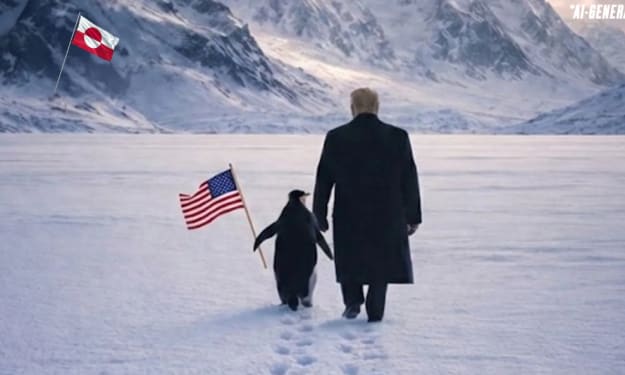
In early 2026, a seemingly strange social media post reignited a discussion that many had hoped was behind us: Donald Trump, now 79, posted an AI-generated image referencing Greenland. The image went viral, sparking laughter, criticism, and a flurry of international commentary. While the post appeared absurd on the surface, it also highlighted deeper issues about political messaging, digital media, and the ongoing fascination some U.S. leaders have with Greenland. The AI-generated post showed Trump marching toward Greenland, holding an American flag, accompanied by a penguin — an animal that, scientifically speaking, has no connection to Greenland. The bizarre imagery immediately caught the public’s attention. Many observers viewed the penguin as a humorous metaphor for the mismatch between the symbolic post and geopolitical reality. Critics questioned whether the post was a serious attempt at commentary, an intentional meme, or a sign of how AI is being used in modern political communication. The Social Media Storm The post, captioned “Embrace the penguin”, appeared on the official White House X account. Within hours, it became the subject of viral memes, news reports, and expert analyses. Internet users were quick to point out the geographic error — penguins live in the Southern Hemisphere, nowhere near Greenland. While the comedic aspect dominated social media, analysts noted that the post reflected a long-standing pattern of Trump using bold or unconventional messaging to capture public attention. The use of AI-generated imagery represents a new layer in this strategy, blending political content with internet culture. Many critics argued that this approach, while attention-grabbing, risks confusing the public and undermining the credibility of official communication. Trump and Greenland: A Longstanding Obsession Trump’s fascination with Greenland is not new. In 2019, he proposed that the United States could purchase Greenland from Denmark, an idea that was widely ridiculed and rejected by Danish leaders. Despite the public backlash, the notion persisted in Trump’s rhetoric and continued to appear in informal discussions about U.S. strategic priorities. Greenland holds significant geopolitical value: it is rich in minerals, occupies a strategic Arctic location, and is home to vast natural resources. For Trump, the island has long symbolized a geopolitical prize — a potential point of influence for the U.S. in the Arctic region. The AI post, absurd as it was, reignited global attention to these strategic questions, reminding the world that some leaders still see Greenland as a focal point of American ambition. AI and Politics: A Strange Combination The viral AI image is part of a broader trend of using artificial intelligence to create content for political messaging. AI allows leaders and communicators to produce highly visual, shareable content at scale. However, it also introduces challenges: Accuracy: AI can generate visually striking content that may be factually incorrect, as with the penguin in Greenland. Interpretation: Viewers may misinterpret AI-generated imagery, assuming it represents reality or policy intent. Credibility: Official use of memes and AI art can blur the line between serious communication and entertainment, potentially undermining authority. In Trump’s case, the AI post highlighted both the power and pitfalls of digital media in politics. It reached millions of people worldwide, but the absurdity of the imagery also drew ridicule and raised questions about the seriousness of the message. The International Response European leaders and diplomats responded cautiously, recognizing the post as part humorous, part symbolic. Danish officials, who oversee Greenland’s defense and foreign policy, reiterated that the island is not for sale. Some analysts suggested that while Trump’s AI post is unlikely to affect formal negotiations, it does shape public perception and keeps Greenland in the spotlight as a topic of U.S. interest. The global reaction underscores the influence of social media on diplomacy. In an era where viral content spreads instantly, even symbolic or absurd posts can have real-world implications, influencing discussions, media coverage, and public opinion. Why the Penguins Matter While the image of Trump marching alongside a penguin seems nonsensical, many commentators see it as a metaphor for the disconnect between digital imagery and practical geopolitics. Penguins, being out of place in Greenland, symbolize the absurdity of claiming influence over a sovereign region through symbolic gestures. The penguin also illustrates how modern politics blends serious issues with entertainment and internet culture. Leaders are increasingly aware of the viral potential of online content, and AI-generated visuals provide a new way to capture attention — for better or worse. The Role of AI in Political Communication Trump’s AI post demonstrates both the potential and limits of artificial intelligence in politics: Engagement: AI-generated visuals can capture attention and create shareable moments. Creativity: AI allows for imaginative ways to communicate ideas, blending humor and symbolism. Risk: Misrepresentation or absurdity can undermine credibility and invite international criticism. As AI tools become more common in politics, officials will need to carefully weigh creativity against clarity, ensuring that symbolic content does not overshadow substantive policy discussions. What This Means for the Future The Greenland AI post is more than a viral meme; it reflects trends in modern political messaging: Leaders increasingly use AI and digital media to communicate directly with the public. Absurd or humorous content can attract attention, but may blur the line between entertainment and diplomacy. Symbolic posts can reignite interest in longstanding geopolitical debates, even when they seem playful. For observers, the post offers a lens into how social media, AI, and politics intersect — a mix of strategy, humor, and unintended consequences that will likely shape political communication for years to come. Final Thoughts Donald Trump’s AI-generated Greenland post is absurd, humorous, and viral — but it also underscores the enduring fascination some political figures have with strategic regions like Greenland. Beyond the comedy, it illustrates the power of AI in shaping political narratives, the challenges of modern digital diplomacy, and the importance of understanding how viral content influences public perception. Whether one laughs at the penguin or ponders the implications, the post reminds the world that politics today is as much about perception and digital storytelling as it is about policy. In Trump’s case, a single AI-generated image can revive decades-old geopolitical fantasies, spark global discussion, and turn a playful meme into a moment of serious reflection.
By Muhammad Hassanabout 4 hours ago in Earth
Europe Amniotic Membrane Market Size & Forecast 2025–2033
Europe Amniotic Membrane Market Outlook The Europe Amniotic Membrane Market is undergoing a significant transformation as regenerative medicine gains momentum across clinical disciplines. According to Renub Research, the market is projected to grow from US$ 788.42 million in 2024 to US$ 1,892.79 million by 2033, expanding at a CAGR of 10.22% during 2025–2033.
By jaiklin Fanandish5 days ago in Earth


Comments
There are no comments for this story
Be the first to respond and start the conversation.