
The Truth About Putin's Easter Truce in Ukraine: Broken Promises on Holy Ground Subtitle: Despite the Ceasefire Announcement, Fighting Rages On — Exposing the Realities Behind Russia’s Tactical Pause
The Truth About Putin's Easter Truce in Ukraine: Broken Promises on Holy Ground Subtitle: Despite the Ceasefire Announcement, Fighting Rages On — Exposing the Realities Behind Russia’s Tactical Pause

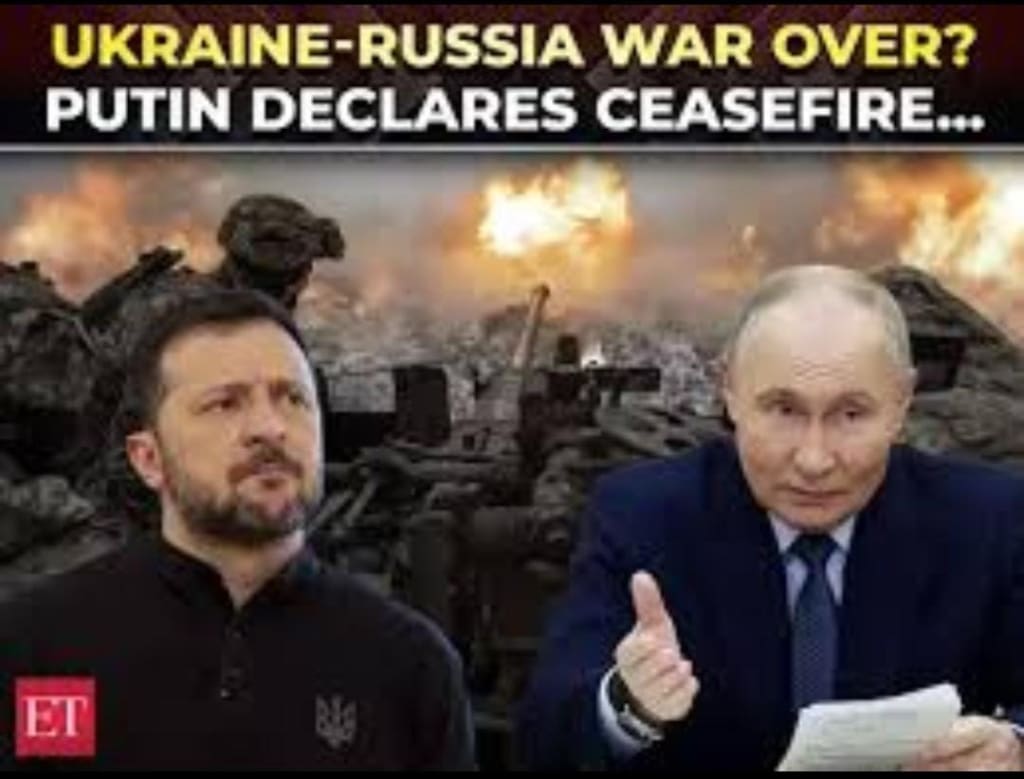
On April 19, 2025, Russian President Vladimir Putin made the announcement of a 30-hour ceasefire for Orthodox Easter, which seemed to be a sign of peace. The ceasefire was supposed to begin at 6 p.m. on Saturday and end at midnight on Sunday. However, the announcement was swiftly denounced as dishonest by Ukrainian defense officials and President Volodymyr Zelenskyy, who stated that Russia continued to launch attacks throughout the truce window. The use of religious symbolism in war, Russia's intentions, and the wider geopolitical ramifications are all critically questioned in light of this incident. More importantly, it forces the world to face a sobering truth: in modern warfare, even religious holidays can be exploited tactically. ---
The Nonsense "Ceasefire" Putin's proposal for a truce claimed to be humanitarian and intended to permit religious observance and aid to civilians. However, reports from Ukrainian military sources described continued shelling, drone strikes, and ground assaults in a number of oblasts, including Donetsk, Luhansk, and Kherson, from the time the ceasefire was supposed to begin. In his address to the nation, President Zelenskyy said that Moscow was using the truce as a "cover-up to regroup and deceive." During the ceasefire window, he reported 59 separate incidents of shelling. Civilians were killed and injured in these attacks, which also damaged hospitals, churches, and homes. For Ukrainian citizens celebrating Easter under threat of air raids, the so-called “truce” offered no reprieve — only more fear.
---
Pause for strategy or propaganda? Military analysts contend that in asymmetric warfare, ceasefires declared by aggressor nations frequently serve as instruments for influencing both international opinion and battlefield conditions. This ceasefire, according to the Institute for the Study of War (ISW), is in line with Russia's previous tactics, which prioritized resupply, redeployment, or higher troop morale over pursuing peace. Experts contend that Putin's ceasefire may have been driven more by political appearances than genuine concern for humanitarian issues. According to Dr., an Eastern European conflict analyst, "Declaring a ceasefire during Easter sounds noble, but it masks military necessity with religious righteousness." Mikhail Andrei Furthermore, Ukraine was put under pressure by the ceasefire announcement. Russia might have gained a strategic advantage if Zelenskyy had fully repaid the truce. On the other hand, Russia was able to accuse Ukraine of war crimes while also breaking the truce by refusing to do so. ---
Cautious condemnation is the global reaction. The ceasefire was met with measured skepticism by the international community. Russia was urged in statements by Western allies, including members of the European Union and the United States, to demonstrate its commitment to peace through verifiable actions rather than merely words. Previous U.S. “Ceasefires don't mean anything if the bombs don't stop,” said President Donald Trump, who is currently serving as a special envoy in peace negotiations. We need to act, not just talk. Human rights groups like Amnesty International and Human Rights Watch have called for an independent investigation into possible war crimes. Throughout the ceasefire window, they have documented ongoing civilian casualties. The political use of holy days has been condemned by Orthodox Christian religious leaders from all over the world. ---
Pattern from the Past: Russia's Record of Ceasefire Russia has previously declared a ceasefire but failed to observe it. Russia issued a similar unilateral ceasefire declaration in January 2023, during Orthodox Christmas, which was also met with violations. At the time, Ukrainian forces dismissed it as propaganda designed to portray peace while continuing military aggression. Russia has historically utilized ceasefires as a military strategy frequently. Russia temporarily halted fighting in Syria during the Aleppo siege to portray itself as a peace broker while pursuing its goals with minimal interruption. Ukraine and Russia have developed a great deal of mistrust as a result of these recurrent patterns, making genuine peace negotiations increasingly challenging. ---
False Promises and Their Human Costs These political ploys result in real suffering for civilians caught in the crossfire. During the ceasefire that was supposed to take place in Odesa, one of the maternity wards was damaged. A drone strike struck a church in Zaporizhzhia as it was getting ready for Easter Mass, injuring worshippers. They made a one-day promise of peace. In 2022, an elderly woman who had survived the beginning of the war in Lviv stated, "We lit candles in fear." "No longer is God's day safe." During the Easter holiday, ceasefire violations impacted over 500 civilians, many of whom were children and elderly, according to the UN High Commissioner for Human Rights. ---
The Symbolic and Religious Undercurrents One of the holiest holidays on the Eastern Christian calendar, Orthodox Easter traditionally represents new beginnings, optimism, and resurrection. In the context of war, these values have acquired a greater significance for many Ukrainians. Under the threat of missiles, churches in Kyiv rang their bells, and families celebrated the holiday with prayer and bread in underground shelters. Political regimes have been manipulating religion for a long time. However, theologians and global religious leaders have criticized Putin's use of Orthodox Christianity as a justification for military actions, including the false narrative of "protecting Russian Orthodoxy." The head of the Orthodox Church in Ukraine, Metropolitan Epiphanius, said, "This is a mockery of faith." "You can't talk about peace and bomb people at the same time." ---
Conclusion: Is There a Way Ahead? The bleak reality that words of peace don't mean much if they aren't backed up by action is made clearer by the events of the Easter truce in 2025, or rather, the breach of it. Ukraine is still resilient, but cautious. Russia must demonstrate genuine commitment as negotiations continue and world leaders demand de-escalation. Peace is more than just not having bombs. It's the presence of trust, fairness, and accountability—none of which Russia's Easter gesture displayed.
About the Creator
SAIFONOVA
YOUR VISION MY MISSION
‘We Are Heartbroken’: The Traitors Winner Rachel Duffy Announces the Death of Her Mum
A Heartbreaking Announcement Rachel Duffy, the recent winner of The Traitors, has announced the death of her mother, sharing the deeply personal news with fans in an emotional statement. Known for her resilience, intelligence, and warmth on the hit TV show, Duffy revealed that her family is “heartbroken” as they grieve a profound loss.
By Aarif Lashari3 days ago in Earth
China Lagging in AI Is a ‘Fairy Tale,’ Mistral CEO Says
For years, a familiar narrative has circulated in Western tech circles: China is falling behind in artificial intelligence, constrained by sanctions, limited access to advanced chips, and a supposedly weaker innovation ecosystem. But according to the CEO of Mistral AI, one of Europe’s most prominent AI startups, that story is nothing more than a “fairy tale.”
By Muhammad Hassan7 days ago in Earth



Comments
There are no comments for this story
Be the first to respond and start the conversation.