
China Lagging in AI Is a ‘Fairy Tale,’ Mistral CEO Says
Why the Global AI Race Is Far More Competitive Than Silicon Valley Admits

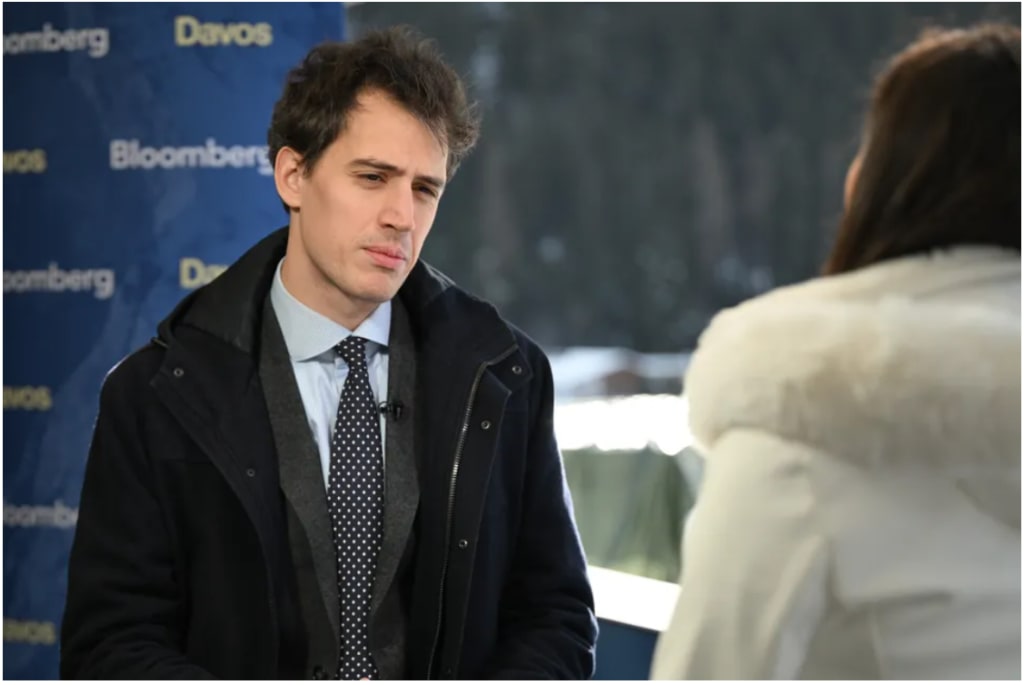
For years, a familiar narrative has circulated in Western tech circles: China is falling behind in artificial intelligence, constrained by sanctions, limited access to advanced chips, and a supposedly weaker innovation ecosystem. But according to the CEO of Mistral AI, one of Europe’s most prominent AI startups, that story is nothing more than a “fairy tale.”
The blunt assessment has reignited debate about the true state of the global AI race. Far from lagging, China is advancing rapidly across multiple AI domains — from large language models to surveillance systems and industrial automation. The claim that China is behind, Mistral’s leadership argues, is not just inaccurate but dangerously misleading for policymakers and companies alike.
Challenging a Comfortable Western Narrative
The idea that China is losing ground in artificial intelligence has become a comforting belief in parts of Europe and the United States. It suggests that export controls, semiconductor restrictions, and regulatory pressure are working exactly as intended.
However, the Mistral CEO warns that this confidence may be strategic self-deception.
China, he argues, is not merely catching up — it is innovating along parallel paths. While U.S. and European firms dominate headlines with consumer-facing AI tools, Chinese companies are embedding AI deeply into manufacturing, logistics, finance, healthcare, and state infrastructure.
In other words, progress is happening — just not always in ways that Western observers prioritize or recognize.
China’s AI Strengths Often Go Unnoticed
One reason the “China is lagging” narrative persists is that much of China’s AI development is less visible internationally. Many Chinese models are trained and deployed domestically, in Mandarin, and within tightly regulated ecosystems that don’t always seek global adoption.
Yet behind the scenes, China benefits from several structural advantages:
Massive data availability through population scale and digital platforms
Strong government coordination between research institutions and industry
Rapid deployment cycles, especially in real-world applications
A focus on efficiency, optimizing models to run on less advanced hardware
These factors allow Chinese AI firms to remain competitive even when access to cutting-edge Western chips is restricted.
Sanctions Haven’t Slowed Innovation — They’ve Redirected It
Export controls on advanced semiconductors were designed to slow China’s AI momentum. Instead, they appear to have accelerated domestic innovation.
Chinese firms are increasingly focused on:
Developing alternative chip architectures
Optimizing software to require fewer computational resources
Training smaller, specialized models rather than massive general-purpose ones
The Mistral CEO points out that efficiency may become more important than brute-force computing power in the long run. If that happens, China’s adaptive approach could prove highly effective.
Europe’s Position: Caught Between Two Giants
Mistral’s perspective is especially interesting because it comes from Europe — a region trying to assert technological sovereignty while competing with both the U.S. and China.
From this vantage point, exaggerating China’s weakness can be risky. If European policymakers assume the AI race is already decided, they may underinvest in research, talent, and infrastructure.
The CEO’s warning is clear: underestimating competitors has consequences.
Europe, he argues, must focus less on narratives and more on building:
Open but competitive AI ecosystems
Strong research-to-market pipelines
Clear rules that protect innovation without smothering it
The Global AI Race Is Not a Sprint
One of the most important points raised by the Mistral CEO is that AI leadership is not about who wins first. It is about who sustains innovation over decades.
China’s long-term planning culture, combined with state-backed investment, positions it well for endurance. While Western companies often focus on quarterly results and hype-driven launches, Chinese institutions tend to prioritize gradual but persistent progress.
This difference in strategy makes direct comparisons misleading — and reinforces why claims of China “falling behind” are oversimplified.
Why the ‘Fairy Tale’ Persists
So why does the idea remain so popular?
Partly because it aligns with political goals. Declaring sanctions successful makes them easier to justify. It also reassures domestic audiences that technological leadership is secure.
But as the Mistral CEO notes, confidence based on illusion is fragile. Real leadership requires honest assessments — even when they are uncomfortable.
Implications for the Future of AI
If China is not lagging, the implications are profound:
The AI world is moving toward multipolar leadership, not dominance by a single country
Standards, ethics, and governance will increasingly diverge
Competition will intensify in areas like defense, productivity, and automation
For businesses, this means global AI strategies must account for multiple innovation centers, not just Silicon Valley.
For governments, it means cooperation and competition will coexist — and misreading rivals could b
About the Creator
Muhammad Hassan
Muhammad Hassan | Content writer with 2 years of experience crafting engaging articles on world news, current affairs, and trending topics. I simplify complex stories to keep readers informed and connected.
Keep reading
More stories from Muhammad Hassan and writers in Earth and other communities.
Queen Elizabeth II Memorial Statue to Stand Tall
The announcement of a memorial statue honoring Queen Elizabeth II has stirred deep emotions across the United Kingdom and beyond. More than a tribute to Britain’s longest-reigning monarch, the statue is intended to stand as a powerful symbol of continuity, national identity, and collective memory in a country navigating change at home and uncertainty abroad. For many, Queen Elizabeth II represented stability in a rapidly evolving world. Her image was woven into daily life — from coins and stamps to historic speeches during moments of crisis. As plans for her memorial statue move forward, the project reflects not just remembrance, but a broader conversation about what the monarchy has meant, and continues to mean, to modern Britain. Remembering a Monarch Who Defined an Era Queen Elizabeth II ascended the throne in 1952, inheriting a post-war nation still rebuilding from devastation. Over the next seven decades, she witnessed profound transformations: the end of empire, the Cold War, the digital revolution, and dramatic political shifts both within the UK and across the Commonwealth. Unlike many public figures, her influence was subtle rather than outspoken. She reigned, but did not rule — offering a constant presence while governments, prime ministers, and global alliances rose and fell. That quiet endurance is precisely what many supporters hope the memorial statue will capture. The statue is envisioned as a dignified and timeless representation, emphasizing service over spectacle. Organizers say the aim is not grandeur for its own sake, but respect rooted in restraint, echoing the Queen’s own approach to public life. A Memorial Beyond Stone and Bronze Public memorials often say as much about the present as they do about the past. In this case, the Queen Elizabeth II memorial statue is arriving at a moment when questions of identity, unity, and tradition are being actively debated across British society. Supporters argue that the statue will serve as a shared national reference point, offering a space for reflection that transcends politics. In a fragmented media environment and polarized public sphere, symbols that bring people together are increasingly rare. The memorial is also expected to attract visitors from around the world. As a figure recognized globally, Queen Elizabeth II remains one of the most familiar faces of the 20th and early 21st centuries. For tourists and citizens alike, the statue may become a focal point for understanding Britain’s constitutional monarchy and its evolving role. Design, Location, and Symbolism While final design details are still under consideration, early proposals suggest a statue that emphasizes calm authority rather than dramatic posture. Sculptors and planners involved in the project have spoken about portraying the Queen during a defining period of her reign, reflecting dignity, duty, and composure. The location of the statue is equally significant. Placing it within a historic or civic space would embed the memorial into the everyday rhythm of national life. Rather than isolating it as a distant monument, planners aim for accessibility — a place where people can pause, gather, and reflect. Symbolism will play a crucial role. From the Queen’s attire to her stance, every detail will communicate values she embodied: service, continuity, and responsibility. Even subtle elements — such as surrounding landscaping or inscriptions — are expected to reinforce themes of unity and legacy. Public Opinion and Debate As with any national memorial, the project has sparked discussion. While many welcome the statue as a fitting tribute, others question how the monarchy should be represented in the 21st century. Critics argue that Britain must balance respect for tradition with an honest reflection on history, including the complexities of empire and colonialism. These debates are not unique to this memorial. Across the world, societies are reassessing monuments and public symbols, weighing historical significance against contemporary values. In that context, the Queen Elizabeth II statue becomes part of a wider cultural conversation about remembrance and representation. Supporters counter that acknowledging complexity does not negate the importance of honoring service. They point out that Queen Elizabeth II herself navigated these evolving conversations with caution and sensitivity, often adapting royal traditions to changing expectations. A Legacy Passed to the Future Perhaps the most powerful aspect of the memorial lies in its long-term purpose. For future generations who never witnessed Queen Elizabeth II’s reign firsthand, the statue will serve as an entry point into history. Children growing up decades from now may learn about her not through headlines or broadcasts, but through school trips, family visits, and moments of quiet curiosity. In that sense, the memorial is not only about looking back — it is about preserving memory forward. As Britain continues to redefine its place in the world, symbols of continuity take on renewed importance. The Queen Elizabeth II memorial statue is expected to stand as a reminder that institutions endure not through power alone, but through trust, service, and shared values. Conclusion The planned Queen Elizabeth II memorial statue is more than a physical structure. It is a statement about remembrance, respect, and national identity at a pivotal moment in British history. By honoring a monarch whose reign spanned generations, the memorial seeks to bridge past and present, tradition and change. Whether viewed as a tribute, a tourist landmark, or a place of reflection, the statue will stand tall as a reminder of a life devoted to service — and of a nation’s ongoing relationship with its history.
By Muhammad Hassanabout 8 hours ago in Earth
Half of World’s CO2 Emissions Come From Just 32 Fossil Fuel Firms, Study Shows
A groundbreaking new study has revealed that 32 fossil fuel companies are responsible for half of global carbon dioxide emissions since the industrial era began. The findings highlight the outsized influence of major oil, gas, and coal producers on climate change, and raise urgent questions about accountability, regulation, and the transition to cleaner energy.
By Aarif Lashari2 days ago in Earth
Plans Lodged for Assembly Rooms Replacement
Plans have been officially lodged for the replacement of the iconic Assembly Rooms, marking a major step in the transformation of one of the city’s most cherished cultural and social landmarks. The move aims to preserve the legacy of the site while creating a modern, versatile venue capable of hosting contemporary events, conferences, and community gatherings.
By Aarif Lashari3 days ago in Earth


Comments
There are no comments for this story
Be the first to respond and start the conversation.