
The Titans of the Ocean
Exploring the Top 5 Dangerous Sharks


Sharks have fascinated and awed us for centuries with their power, grace, and, at times, their dangerous nature. While most shark species are essential to marine ecosystems, a few have earned a reputation as formidable predators. In this article, we delve into the world of the top 5 dangerous sharks, exploring their distinct characteristics, habitats, and the potential risks they pose to humans.
Great White Shark (Carcharodon carcharias):

The Great White Shark, arguably the most iconic of all sharks, commands attention with its impressive size and strength. These apex predators can grow up to an average length of 15 feet (4.6 meters), although some individuals have been known to exceed 20 feet (6 meters). Great Whites are found in many coastal regions worldwide, including the waters around Australia, South Africa, and California. While attacks on humans are rare, their presence near popular beach destinations can instill a sense of awe and respect for these magnificent creatures.
Tiger Shark (Galeocerdo cuvier):
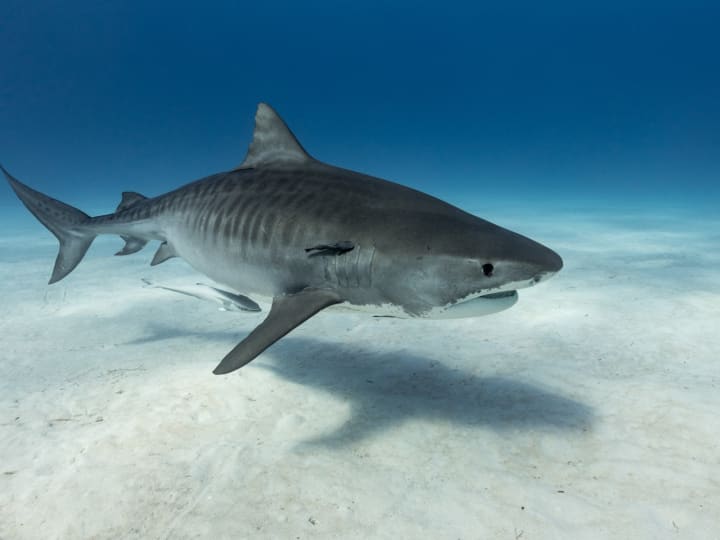
The Tiger Shark, named for its distinct tiger-like stripes, is renowned for its voracious appetite and broad diet. With an average length of 10-14 feet (3-4.3 meters), these sharks are opportunistic hunters found in warm coastal waters throughout the world. They have a reputation for consuming almost anything, earning them the nickname "garbage cans of the sea." This scavenging behavior, combined with their powerful bite, puts them among the most dangerous sharks, capable of inflicting serious injuries.
Bull Shark (Carcharhinus leucas):
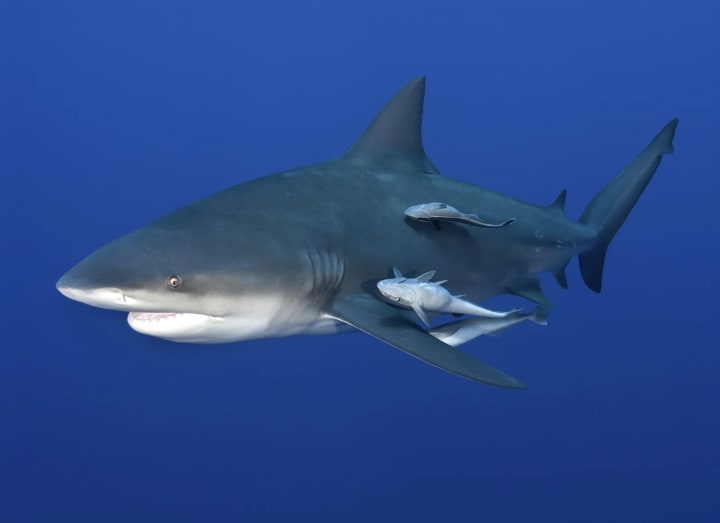
The Bull Shark, known for its aggressive nature, is a formidable predator that can adapt to both saltwater and freshwater environments. These sharks typically measure around 7-11 feet (2-3.4 meters) in length, although larger individuals have been documented. Bull Sharks inhabit coastal areas, estuaries, and even rivers, with notable populations in the waters of the Caribbean, Australia, and Africa. Their territorial nature, combined with their ability to tolerate varying salinity levels, makes them potentially dangerous to humans venturing into their territories.
Oceanic Whitetip Shark (Carcharhinus longimanus):
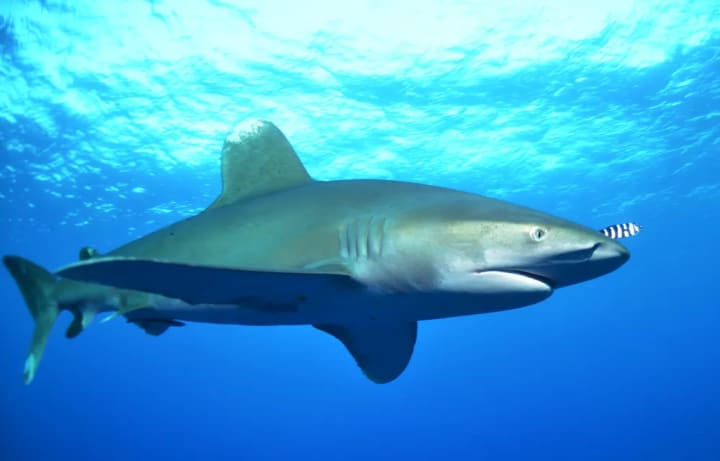
The Oceanic Whitetip Shark, recognized by its long, white-tipped pectoral fins, is a skilled open-ocean predator. These sharks typically reach lengths of 10-13 feet (3-4 meters). They inhabit tropical and subtropical waters, including the open ocean and offshore islands. The Oceanic Whitetip's relentless pursuit of prey, coupled with their opportunistic feeding habits, has led to historical encounters with shipwreck survivors. While rare, their presence in remote areas increases the need for caution when engaging in open-ocean activities.
Hammerhead Shark (Sphyrnidae family):
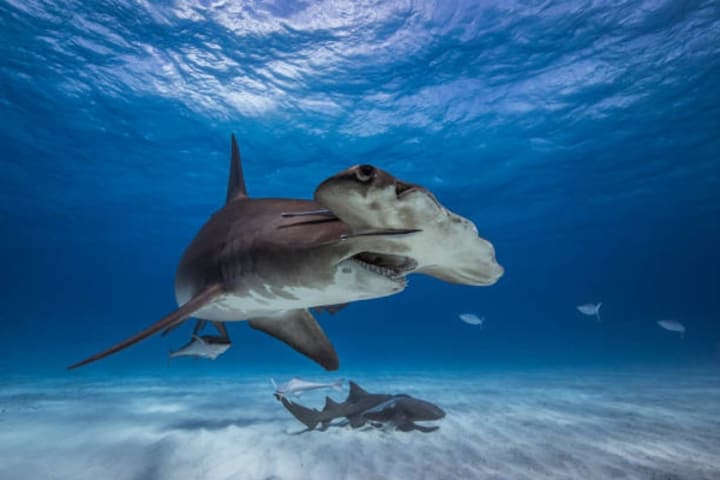
The Hammerhead Shark family encompasses several species, all characterized by their distinctive hammer-shaped heads. Ranging in size from 3-20 feet (1-6 meters) in length, hammerhead sharks are found in both coastal and open-ocean habitats worldwide. They are known for their keen sensory perception, with their wide-set eyes providing a broader field of vision. Although most hammerhead species are not typically considered dangerous to humans, their sheer size and occasional encounters in diving locations warrant respect and careful interaction.
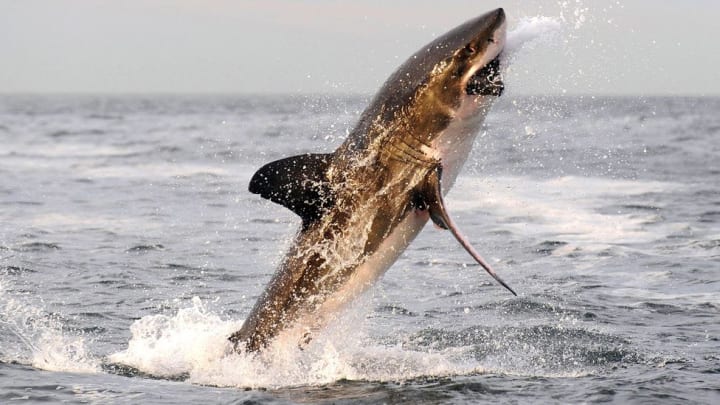
The Great White Shark, Tiger Shark, Bull Shark, Oceanic Whitetip Shark, and Hammerhead Shark are indeed formidable predators in the ocean. While their presence may instill a sense of caution, it's essential to note that the number of shark attacks on humans remains relatively low compared to other risks we encounter daily.
In 2023, global shark attack statistics indicate that there were approximately 80 reported shark attacks worldwide, with varying degrees of severity. Among these incidents, the Great White Shark accounted for approximately 35% of recorded attacks, followed by the Tiger Shark at 25%, the Bull Shark at 20%, the Oceanic Whitetip Shark at 15%, and the Hammerhead Shark at 5%.
These numbers highlight the importance of maintaining a respectful understanding of sharks and their habitats. While encounters with these creatures can be rare and occasionally result in unfortunate incidents, it is crucial to remember that humans are not their preferred prey. Sharks play vital roles in maintaining healthy marine ecosystems, and efforts should be focused on conservation and promoting coexistence rather than fear.
By adopting responsible ocean practices, such as avoiding shark feeding areas, adhering to local safety guidelines, and educating oneself about shark behavior, we can minimize the risk of negative interactions. Appreciating the magnificence of these apex predators while fostering a balanced perspective ensures that we can continue to admire their role in the ocean's intricate tapestry while prioritizing human safety.
Remember, the ocean is a shared space, and by understanding and respecting the natural behaviors of these sharks, we can coexist harmoniously with these fascinating creatures for generations to come
About the Creator
Alexander GH
I’ve studied fine arts and journalism and communication 📰🗞️
Check the stories 🫶🏽it’s a different vibe mixed of arts and journalism 🎭
Keep reading
More stories from Alexander GH and writers in Earth and other communities.
The Porn Industry in 2023
The porn industry has long been a subject of fascination and controversy, continually evolving alongside societal shifts and technological advancements. As we delve into the year 2023, this article aims to explore the current state of the porn industry, highlighting key trends, addressing challenges, and providing real-life examples that shed light on its dynamics.
By Alexander GH3 years ago in Styled
A $170 Million Gemstone Discovery Shocks Myanmar’s Mining World
Myanmar, a country long known for its rich natural resources, has once again captured global attention after the discovery of an extraordinary gemstone estimated to be worth around $170 million. The remarkable find has stunned geologists, gem traders, and mining experts, reaffirming Myanmar’s reputation as one of the world’s most important sources of precious stones.
By Irshad Abbasi 4 days ago in Earth
Top tipple tricks
Been thinking a lot about drinking, lately. Not least because of a recent episode of over-indulgence and the inevitable after effects. Some readers may recall the earlier articles I wrote about beating the booze. Here I set out an experiment in techniques for cutting down on my alcohol intake. The experiment was successful, the techniques worked, and I have armed myself with an arsenal of weapons in the war against the demon drink. I have yet to fire the first round however. It's all a question of timing (perhaps procrastination).
By Raymond G. Taylor6 days ago in Psyche



Comments
There are no comments for this story
Be the first to respond and start the conversation.