
The Titanic submersible
New update news on The submersible
What are submersibles?
Submersibles are small, limited range watercrafts designed for a set mission that are built to allow them to operate in a specific environment, according to maritime historian Salvatore Mercogliano. These vessels are typically able to be fully submerged into water and cruise using their own power supply and air renewal system.
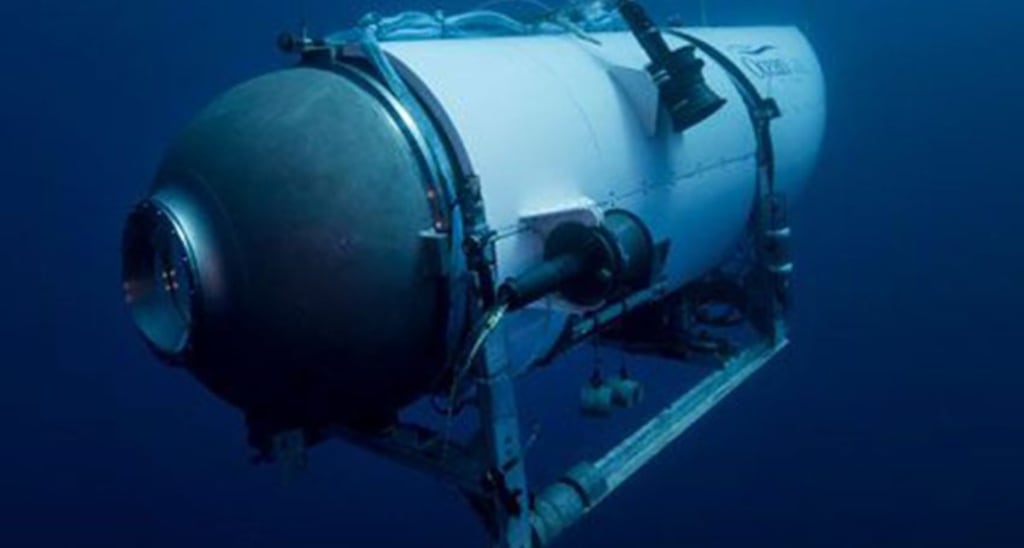
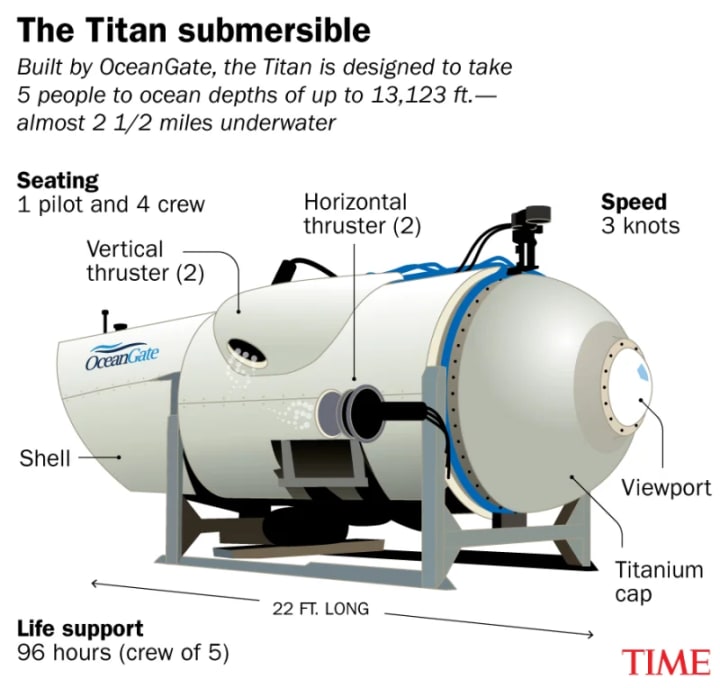
While some submersibles are remotely-operated—essentially manually controlled or programmed robots—these usually operate unmanned. Vessels like the missing Titan are known as human-occupied vehicles. The Titan was designed to transport five people to depths of around 2.4 miles in order to reach the Titanic shipwreck. It weighs around 11.5 tons and can also take on speeds of about 3 knots, or 3.4 miles per hour.
“It doesn’t have a lot of propulsion so it can’t sail great distances but it has just enough propulsion to sail and operate in and around the wreck and then come back to the surface,” Mercogliano told TIME.
What are the safety regulations in place for submersibles?
Typically, marine operators must seek to have vessels “classed” by an independent body. The process would involve examining the vessel according to stringent standards and ensuring that the designs are safe. However, the Titan has not been classed in this way. OceanGate said in a blog post in 2019 that it did not seek to class the Titan because the process “does not address the operational risks.”
Instead, the company claims that “no other submersible currently utilizes real-time monitoring to monitor hull heath during a dive,” and therefore the integrity of the hull is guaranteed on each dive. It is also regarded as an experimental vessel that Mercogliano says is not bound to any particular regulations.
“Since this vessel doesn’t operate in coastal waters, it’s actually out in international waters, so there’s literally no rules and regulations that are governing it,” he says. In a 2019 profile interview for Smithsonian magazine, Rush, OceanGate’s CEO, said that there had been no injuries in the commercial submersible field for decades. “It’s obscenely safe because they have all these regulations. But it also hasn’t innovated or grown—because they have all these regulations,” he said.
AD
But Mercogliano notes that any rules Rush may have been referring to would only apply if the vessel was in U.S. waters. “The submersible does not fly a flag, and it is not registered in any state or nation,” he said.
According to the New York Times, OceanGate was warned several times about potentially fatal outcomes of the expedition as early as January 2018, when experts became concerned about safety. The company’s own director of marine operations, David Lochridge, formulated a report that emphasized the “the potential dangers to passengers of the Titan as the submersible reached extreme depths.”
Additionally, as many as three dozen industry figures wrote a letter to Rush in March 2018, to voice their apprehension at the “experimental” approach OceanGate was using. The letter warned that the trip “could result in negative outcomes (from minor to catastrophic) that would have serious consequences for everyone in the industry.”What are the safety regulations in place for submersibles?
Typically, marine operators must seek to have vessels “classed” by an independent body. The process would involve examining the vessel according to stringent standards and ensuring that the designs are safe. However, the Titan has not been classed in this way. OceanGate said in a blog post in 2019 that it did not seek to class the Titan because the process “does not address the operational risks.”
Instead, the company claims that “no other submersible currently utilizes real-time monitoring to monitor hull heath during a dive,” and therefore the integrity of the hull is guaranteed on each dive. It is also regarded as an experimental vessel that Mercogliano says is not bound to any particular regulations.
“Since this vessel doesn’t operate in coastal waters, it’s actually out in international waters, so there’s literally no rules and regulations that are governing it,” he says. In a 2019 profile interview for Smithsonian magazine, Rush, OceanGate’s CEO, said that there had been no injuries in the commercial submersible field for decades. “It’s obscenely safe because they have all these regulations. But it also hasn’t innovated or grown—because they have all these regulations,” he said.
AD
But Mercogliano notes that any rules Rush may have been referring to would only apply if the vessel was in U.S. waters. “The submersible does not fly a flag, and it is not registered in any state or nation,” he said.
According to the New York Times, OceanGate was warned several times about potentially fatal outcomes of the expedition as early as January 2018, when experts became concerned about safety. The company’s own director of marine operations, David Lochridge, formulated a report that emphasized the “the potential dangers to passengers of the Titan as the submersible reached extreme depths.”
Additionally, as many as three dozen industry figures wrote a letter to Rush in March 2018, to voice their apprehension at the “experimental” approach OceanGate was using. The letter warned that the trip “could result in negative outcomes (from minor to catastrophic) that would have serious consequences for everyone in the industry.”
Finally according to the latest news the sumbersible was blevied to have been struck by alightning or hogh water wave deep from the atlantic ocean.
The USA coast guard say all the participants are dead
About the Creator
Keep reading
More stories from MoaDecho Deme and writers in Earth and other communities.
Private school vs Public school
Education is fundamental in today’s society. It has become a sought after medium for attaining success. Many careers have set specific educational requirements for a person to even be considered for employment. The education that one receives can be achieved through different types of institutes. Many parents face the conundrum of sending their children to the right institution that will aid in their child’s future success. The choices seem to be in abundance but many people find themselves limited to a short list of obtainable institutions. The parents have a great deal of things that need to be thought through. This may require factors that have to be considered. Some of the factors include the following: curriculum, class sizes, cost and school’s quality but these are some questions that stand out. Does the type of school really help performance? Are there factors that hinder one type of institution from thriving? These decisions are crucial and, for the most part, will determine the type of institution the child will receive his or hers knowledge from.
By MoaDecho Deme3 years ago in Education
Archaeologists Are Lifting 70- to 80-Ton Stones from the Legendary Lighthouse of Alexandria, and the Most Intriguing Part Is That Some Pieces Appear to Be Part of a Long-Lost Monumental Doorway
Introduction: A Wonder Rising from the Sea More than 2,000 years after it collapsed into the Mediterranean Sea, the legendary Lighthouse of Alexandria—also known as the Pharos of Alexandria—is revealing new secrets. Archaeologists working off the coast of Egypt have begun lifting enormous stone blocks weighing between 70 and 80 tons from the seabed. These stones once formed part of one of the most famous structures in human history.
By Sajida Sikandar3 days ago in Earth
Violent Winds Could Strike Without Warning — Officials Urge Extreme Caution*
**Violent Winds Could Strike Without Warning — Officials Urge Extreme Caution** Meteorologists have issued an urgent warning as violent winds are expected to develop rapidly, posing a serious threat to public safety. Weather experts say conditions are becoming increasingly unstable, with sudden gusts capable of causing damage within minutes. Unlike typical windy days, this event is marked by unpredictability, making it especially dangerous for residents, travelers, and outdoor workers.
By America today 7 days ago in Earth


Comments
There are no comments for this story
Be the first to respond and start the conversation.