
The Summer the Streets Melted
Surviving Europe’s deadliest heatwave and what it means for our future

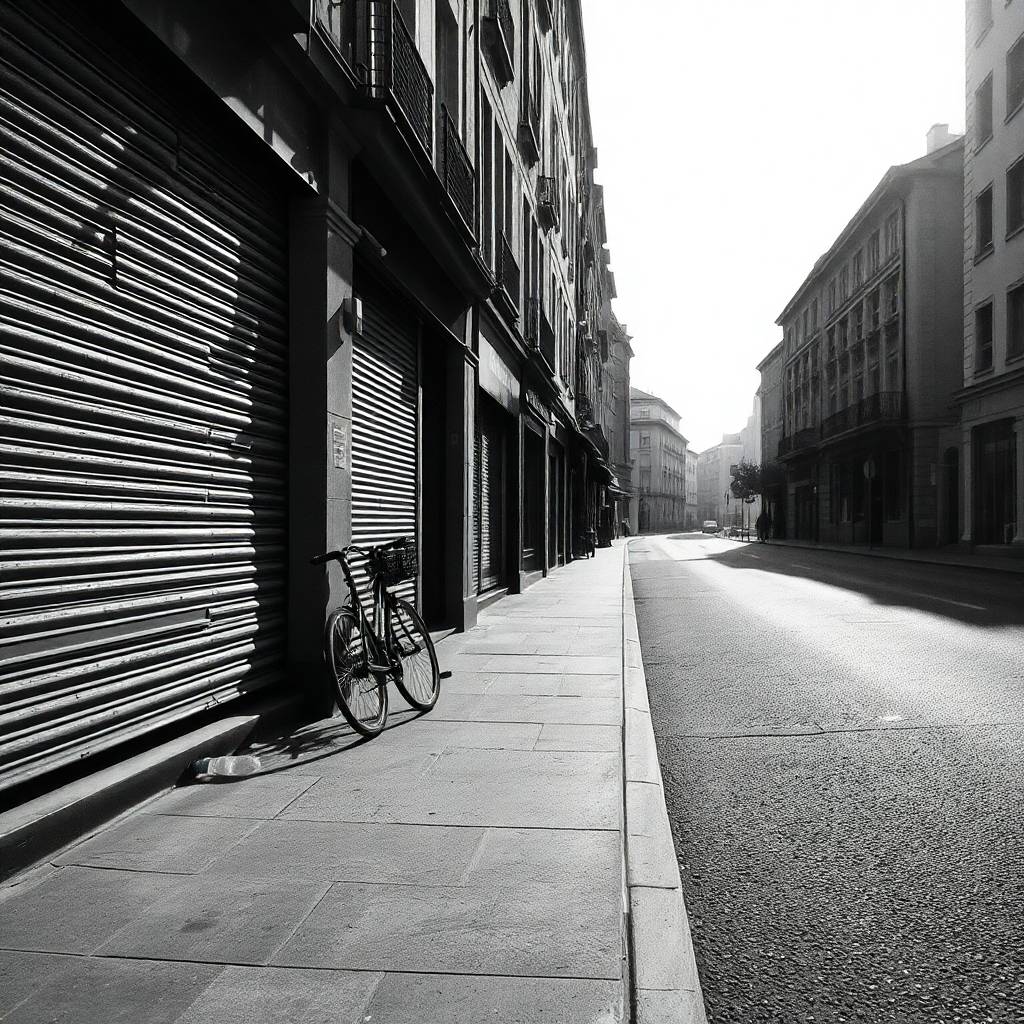
The first thing I remember about that July morning was the silence. Cities are rarely quiet, but the heat pressed down on every surface like a heavy blanket, smothering sound. Even the birds were missing, as though they had flown away in search of cooler skies.
Across Europe, thermometers were breaking records. In Spain, the streets shimmered as if paved with glass. In France, rivers ran low, their banks cracked like desert clay. In London, the underground trains became suffocating ovens, with commuters fainting before the doors could open. By the time meteorologists gave the official report, nearly 2,300 lives had been claimed by the heatwave.
I was in southern Portugal, visiting my grandmother. Her old stone house had always been cool in my childhood memories, but this summer was different. The walls radiated heat like coals, and by midday we had given up trying to cook. Instead, we sat in silence, spraying each other with water bottles, watching the hands of the clock crawl forward.
The local news reported that the beaches were closed. The sand was too hot to stand on, and the ocean itself had warmed to bathwater temperatures. Fishermen shook their heads, saying the sardines had vanished. On the hillside behind my grandmother’s village, a wildfire raged for three days straight, the smoke drifting across the sky in a permanent twilight.
It wasn’t just discomfort—it was danger. Elderly neighbors were collapsing in their homes. Hospitals overflowed with patients suffering heatstroke. The pharmacy ran out of basic supplies like rehydration salts and fans. By the end of the week, even ice had become a luxury, sold out within minutes of delivery.
And yet, in the middle of this crisis, I noticed how the community adapted. My grandmother’s street began to gather in the evenings, dragging chairs into the narrow alley where the breeze still passed. Neighbors who barely exchanged greetings in ordinary times now shared food, water, and stories. Children played with buckets of melted ice, and we adults fanned them with folded newspapers. There was fear, yes, but there was also a sense of stubborn survival.
The scientists later explained that this heatwave was nearly three times more likely because of human-driven climate change. It wasn’t just a bad summer. It was a glimpse of what summers will become if we continue on this path. The numbers were staggering: Europe had endured one of its hottest seasons in history, and the ripple effects touched everything—agriculture, energy, health. Vineyards lost entire harvests. Hydroelectric plants shut down as rivers shrank. Power grids strained under the weight of endless air conditioners, and still, for many, it wasn’t enough.
One evening, my grandmother told me a story from her childhood. She remembered summers when they slept on rooftops because the houses were too warm. “But even then,” she said, “the nights cooled. The mornings were gentle. Now, it is as if the sun never sleeps.”
Her words stayed with me. That was the true horror of the 2025 heatwave: it erased the rhythm of life. Days bled into nights without relief, and what once felt exceptional began to feel permanent.
When I finally left Portugal at the end of August, the airport was filled with red-faced travelers clutching empty water bottles. From the plane window, I saw the land below—patches of scorched earth, fields of yellowed crops, rivers reduced to threads.
Back home, I read reports that climate experts considered this heatwave a warning bell, a sharp sound in the global conversation. But warnings only matter if they’re heard. Too often, the stories fade as soon as the temperatures drop, and we move on until the next disaster.
I think about the faces of the neighbors on my grandmother’s street, the way they laughed despite the sweat dripping down their foreheads, the way they shared what little they had. Survival, in the end, wasn’t about air conditioners or bottled water—it was about people leaning on each other.
The summer the streets melted is not one I will ever forget. Nor should we. If this was a glimpse of the future, then the choice is ours: ignore it and let the silence of heat consume us, or act—loudly, urgently—to make sure the birds, the rivers, and the rhythms of life have a chance to return.
About the Creator
Keep reading
More stories from arsalan ahmad and writers in Earth and other communities.
A Planet the Size of Earth with an Atmosphere Like Our Own
For centuries, humans have looked up at the night sky and wondered whether Earth is the only world capable of supporting life. Advances in modern astronomy have brought us closer than ever to answering that question. Recently, astronomers announced the discovery of a planet roughly the size of Earth with an atmosphere that appears surprisingly similar to our own. This finding has sparked excitement among scientists and renewed hope that life might exist elsewhere in the universe.
By Irshad Abbasi 7 days ago in Earth
The First Rainbow Baby
Pitter-patter, pitter-patter. The rain fell in rhythmic splatters, slowly slowing, but still constant. Mira rolled onto her side pulling the blanket tight against her ears, but still she could hear chitter-chatter and scurrying feet of the creatures that refused to sleep in the lower decks.
By A. J. Schoenfelda day ago in Fiction



Comments
There are no comments for this story
Be the first to respond and start the conversation.