
The Story Beneath Our Feet
Most of us go through life without ever truly looking down. We walk across pavements, fields, and carpets, but rarely pause to think about what lies beneath us.

M Mehran
Most of us go through life without ever truly looking down. We walk across pavements, fields, and carpets, but rarely pause to think about what lies beneath us. Yet, the ground we stand on is not just dirt and stone. It is history. It is memory. It is Earth’s oldest story, waiting quietly for us to listen.
Every grain of sand has traveled. It may have once been part of a mountain, broken down by storms, carried by rivers, and shaped by time. Every pebble has survived pressure, heat, and unimaginable years. Even the soil beneath your shoes is a living world, filled with microbes, roots, and insects working together in a delicate dance. Beneath our feet lies more life than we can ever see with our eyes.
Earth is not just our home—it is our archive. The ground carries fossils of creatures that lived millions of years ago. Layers of rock hold records of ancient climates, showing times when the world was frozen and times when it burned. Volcanic ash buried deep underground tells of explosions that once blackened the skies. If you could peel back the layers, Earth would reveal chapters of its autobiography—chaos, rebirth, survival, and resilience.
But here’s what makes the story extraordinary: Earth is still writing. Every day, new layers are being formed. Seeds fall and grow into trees, which someday will return to the soil. Rivers carve valleys, winds move sand dunes, and tectonic plates continue their slow, grinding dance. Earth is a storyteller that never stops speaking, though its language is slow, patient, and easy to miss.
For us humans, Earth is more than just scenery—it is identity. Cultures all over the world are rooted in the land. Farmers know the character of their soil as well as they know their own families. Indigenous tribes speak of the earth as a mother, a giver of life, deserving of respect. Even our most basic instincts—planting, building, resting—are tied to the ground. It is the one thing that connects us all, no matter where we come from.
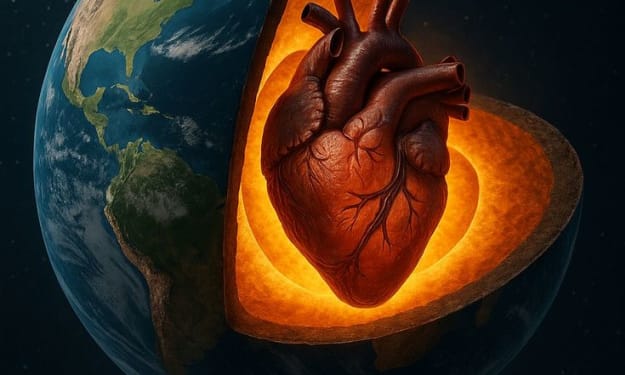
And yet, in the rush of modern life, we forget this connection. We build cities where the earth is buried under layers of concrete. We strip mountains for resources and drill into the land without pause. We treat the ground as something to use, not something to honor. When was the last time you touched the soil with your bare hands? When was the last time you felt the heartbeat of the earth beneath your feet?
But Earth does not hold grudges. Even when scarred, it heals in remarkable ways. A forest cut down will try to regrow. A polluted river will work to cleanse itself over time. Grass pushes through cracks in sidewalks, reminding us that life is stubborn and unstoppable. The resilience of the Earth is a lesson for us—no matter the hardship, growth is always possible.
Standing barefoot on grass may feel simple, but it’s a profound reminder: we belong to this ground. Our bodies, too, are made from Earth. The calcium in our bones once belonged to ancient stones. The iron in our blood was born in stars that exploded long before Earth existed. When we die, our bodies return to the soil, feeding the cycle of life. We are not separate from Earth; we are chapters in its ongoing story.
Perhaps that is why people feel a deep peace in nature. A hike through the woods or a walk on the beach is more than exercise—it is communion. It is the Earth telling us: you are part of me. And when we listen, we feel whole again.
The danger lies not in Earth’s silence, but in our own. If we stop listening, we risk losing not just forests and rivers, but also the wisdom that comes from remembering where we came from. Earth doesn’t need us to survive—it has thrived for billions of years before us. But we need Earth. Without its soil, water, and air, our story ends.
So maybe the act of caring for Earth is not just kindness; it is self-preservation. Picking up litter, planting trees, saving water—these are not small gestures. They are ways of writing ourselves into Earth’s story with love, instead of with destruction.
Next time you walk outside, pause for a moment. Feel the ground beneath you. Think of the millions of years it has endured, the countless lives it has supported, the future it is still shaping. The Earth is not just beneath your feet—it is within you, around you, and waiting for you to remember the truth: this planet is not just where we live. It is who we are.
About the Creator
Keep reading
More stories from Muhammad Mehran and writers in Earth and other communities.
The Living Heartbeat of Earth
M Mehran When we think about Earth, it’s easy to reduce it to a planet: a sphere of rock orbiting the sun, covered in oceans and forests, inhabited by billions of lives. But when you look closer, Earth is far more than that. It is alive in its own way. It breathes, it shifts, it grows, and it sustains us in ways we hardly pause to notice. If Earth were to whisper its story, it would be a tale of resilience, beauty, and warnings we must learn to hear.
By Muhammad Mehran6 months ago in Earth
It’s too warm': Greenland’s fishermen are under threat from climate change
Greenland’s traditional fishing communities are facing an uncertain future as the Arctic warms faster than any other region on Earth, dramatically reshaping the landscapes and livelihoods of the semiautonomous Danish territory. Local fishermen, whose lives have long been tied to sea ice and predictable seasonal patterns, are now confronting unpredictable weather, shifting fish populations, and economic pressures that threaten both their culture and the local economy. A Changing Arctic Reality In the small coastal town of Ilulissat, veteran fisherman Helgi Áargil described how climate change has upended his routines. Where once he relied on stable sea ice and consistent fishing grounds, he now finds warmer waters, rainier conditions, and fish moving to deeper, cooler waters. Last year his boat became trapped in ice that calved from a nearby glacier; this year, instead of strengthening ice, it has been unusually wet — making conditions less predictable and incomes more volatile. Fishing accounts for up to 95 percent of Greenland’s exports, with key markets including China, the United States, Japan and Europe. This heavy economic reliance amplifies the impact of climate effects on fish patterns and harvests. Disappearing Ice, Changing Practices Traditional ice fishing — once conducted on sea ice more than a metre thick — has declined sharply. Older generations recall times when they could easily drill holes in stable ice to fish for cod, halibut, shrimp and snow crab. Today, sea ice is retreating earlier and forming later, forcing many fishermen to rely on boats even in the coldest months. While boats allow access to broader waters, they come with higher fuel costs and greater exposure to the elements, challenging sustainability. Karl Sandgreen, head of the Icefjord Center in Ilulissat, noted that ice thick enough to support traditional fishing began disappearing roughly three decades ago. The shift has not only changed how fishers operate but also increased competition and pressure on stocks closer to shore. Ecological and Economic Pressures Warmer conditions are also affecting fish behavior. Many species are moving deeper or into new areas as they seek cooler waters, complicating efforts to maintain stable catches. A warming ocean can temporarily boost plankton growth — potentially increasing some fish stocks — but it also alters ecosystems in unpredictable ways. Experts warn that fish may not behave as they once did, complicating traditional fishing forecasts and practices. The head of Royal Greenland, the territory’s largest employer, has expressed concern about a future with significantly diminished sea ice, which could push more traditional fishers toward larger, commercial fishing operations. However, this transition is not without risks. Increased fishing pressure near shorelines already shows early signs of overfishing; halibut are getting smaller, a classic indicator of stock stress noted by experts. Cultural Identity at Risk Fishing in Greenland is more than an economic activity; it is a cultural bedrock. In towns and villages across the island, harbours where daily catches are unloaded and sold remain central to community life. Many Greenlanders associate fishing with identity and tradition, and climate change is directly threatening these cultural ties as environmental conditions change faster than adaptation measures can keep pace. “You can have too much ice to sail and yet too little to qualify for safe ice fishing,” noted Toke Binzer, describing the paradoxical challenges fishermen now face. The unpredictability makes planning difficult and income erratic — one trip might bring significant earnings, while the next yields little or nothing. Limited Alternatives and Future Paths Beyond fishing, economic alternatives in Greenland remain limited. Tourism is growing but not at a pace that could offset losses in the fishing sector. With a total population barely over 50,000, opportunities outside harvesting marine resources are comparatively sparse. As dog sledding and other ice‑based traditions also diminish due to changing conditions, entire ways of life are under threat. Efforts to support traditional fishers include loans for boats and business assistance, but long‑term resilience will likely require broader strategies. These could involve sustainable fishing quotas, diversification into aquaculture, and investments in climate adaptation infrastructure. Yet many local observers emphasize that meaningful change must also address the root causes of warming — a challenge far beyond Greenland’s shores. A Climate Warning Sign Greenland’s fishermen are becoming a human indicator of rapid Arctic change. The region is warming faster than the global average, reshaping ecosystems and economies alike. As these communities adapt or struggle, their challenges shed light on the broader global consequences of climate change — illustrating how environmental shifts ripple through cultures, industries and livelihoods thousands of kilometres from major industrial centres.
By Fiaz Ahmed 5 days ago in Earth
Top tipple tricks
Been thinking a lot about drinking, lately. Not least because of a recent episode of over-indulgence and the inevitable after effects. Some readers may recall the earlier articles I wrote about beating the booze. Here I set out an experiment in techniques for cutting down on my alcohol intake. The experiment was successful, the techniques worked, and I have armed myself with an arsenal of weapons in the war against the demon drink. I have yet to fire the first round however. It's all a question of timing (perhaps procrastination).
By Raymond G. Taylorabout 6 hours ago in Psyche



Comments
There are no comments for this story
Be the first to respond and start the conversation.