
The Living Heartbeat of Earth
When we think about Earth, it’s easy to reduce it to a planet: a sphere of rock orbiting the sun, covered in oceans and forests, inhabited by billions of lives
M Mehran
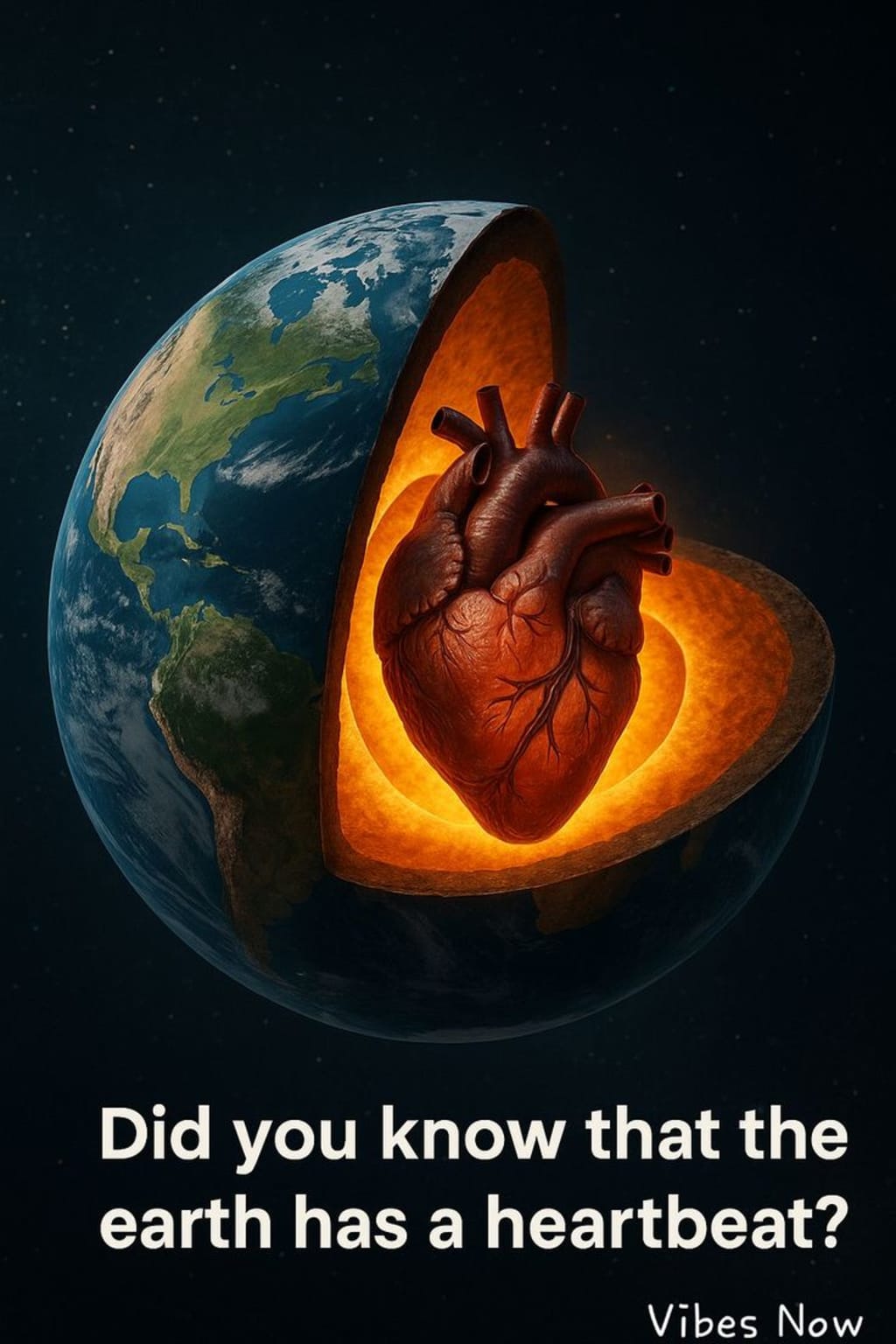
When we think about Earth, it’s easy to reduce it to a planet: a sphere of rock orbiting the sun, covered in oceans and forests, inhabited by billions of lives. But when you look closer, Earth is far more than that. It is alive in its own way. It breathes, it shifts, it grows, and it sustains us in ways we hardly pause to notice. If Earth were to whisper its story, it would be a tale of resilience, beauty, and warnings we must learn to hear.
From the beginning, Earth was chaos. Molten fire churned beneath its surface, and comets collided in fiery displays. Yet even in that violence, life was waiting to emerge. Over time, the chaos gave birth to oceans, skies, and mountains. Rivers carved their paths, glaciers sculpted valleys, and seeds turned to forests that stretched as far as the horizon. The Earth transformed itself into a living canvas of color and wonder.
The miracle is not just that Earth exists, but that it created a perfect balance where life could thrive. Every tree exhaling oxygen is matched by every breath we take. Every ocean current regulates the temperature of continents. Every storm, as destructive as it may feel, redistributes energy and water, keeping the planet alive. Earth does not simply give; it cycles, it shares, it balances.
But here is the secret that many forget: Earth listens. It reacts. It responds to what we do. For centuries, humanity and Earth were partners in survival. People respected the land, harvested only what they needed, and learned to live with the rhythms of the seasons. A bad harvest taught patience. A flood taught respect. A sunrise taught gratitude.
Then something changed. Humanity grew restless, always wanting more. Forests became timber, rivers became dams, and the ground beneath us became an endless mine for resources. We built cities that glittered like stars at night, but each light dimmed the stars above. We grew louder, faster, hungrier. And Earth began to feel the weight.
The signs are everywhere if you choose to see them. Glaciers weep into rising seas. Storms roar louder and arrive with less warning. Animals that once roamed freely now disappear into silence. The Earth is speaking, not with words, but with shifts and tremors, with floods and droughts, with heatwaves that remind us we are not above nature—we are a part of it.
And yet, Earth is not a vengeful spirit. It is patient, forgiving even. For every forest cut down, new growth tries to break through cracks of concrete. For every polluted river, wetlands struggle to filter and heal. For every mistake we make, Earth offers a second chance. It is almost as if the planet believes in us more than we believe in ourselves.
Think about the awe that fills you when you stand at the edge of an ocean, waves stretching endlessly beyond sight. Or the quiet peace of a forest, where sunlight filters through branches and every step crunches softly on fallen leaves. Or the stillness of a desert night, where stars blaze in numbers impossible to count. These are not coincidences. They are invitations—reminders that the Earth is alive, generous, and deeply intertwined with our existence.
The question, then, is not whether Earth will survive. It has endured meteors, ice ages, and volcanic winters. Earth will continue long after us. The real question is: will we choose to be caretakers or destroyers? Will we learn to live with Earth, or will we continue to demand until there is nothing left to give?
Every small act matters. Planting a tree may feel insignificant, but trees grow into forests. Choosing to walk instead of drive may feel like a drop in the ocean, but oceans are built from drops. Even speaking with reverence about Earth, instead of taking it for granted, shifts the way we live. Change is not about grand gestures—it is about remembering that the ground beneath our feet is alive, and it deserves our care.
In the end, Earth’s story is our story. Every inhale you take began with a leaf. Every sip of water has passed through ancient rivers, clouds, and rains. Every step you take rests on rock shaped over billions of years. We are not separate from Earth; we are Earth. Our survival, our beauty, our future—it is all bound to this living planet we call home.
So the next time you feel the wind on your face or hear rain tapping gently against your window, pause. That is Earth, reminding you it is still here. Still breathing. Still waiting for us to remember that we belong to it, as much as it belongs to us.
About the Creator
Keep reading
More stories from Muhammad Mehran and writers in Earth and other communities.
The Living Canvas
M Mehran Earth is more than a planet. It is a living canvas, painted with mountains, rivers, forests, and skies. It breathes in winds, whispers in oceans, and pulses beneath our feet with a rhythm older than humanity itself. Yet, despite its beauty, humans often forget that we are merely guests in this vast masterpiece.
By Muhammad Mehran6 months ago in Earth
The Wow! Signal
How a 72-second radio burst from deep space shocked SETI scientists and remains unexplained after 47 years On August 15, 1977, at 11:16 PM Eastern time, the Big Ear radio telescope at Ohio State University detected a radio signal from space so powerful, so precisely tuned, and so apparently artificial that astronomer Jerry Ehman, reviewing the computer printout data the next day, circled the signal's alphanumeric designation and wrote "Wow!" in red pen in the margin, giving the transmission its now-famous name and creating what remains the most compelling potential evidence of extraterrestrial intelligence ever detected despite nearly five decades of attempts to find the signal again or explain it through natural phenomena. The signal lasted exactly seventy-two seconds, the maximum time any object could be observed by the Big Ear telescope as Earth's rotation carried that section of sky through the telescope's field of view, and it was detected at a frequency of 1420 megahertz, the exact frequency that hydrogen atoms emit radiation, and this frequency is significant because hydrogen is the most abundant element in the universe and because international agreements prohibit terrestrial radio transmissions at this frequency precisely because scientists believe any intelligent civilization would use this frequency for interstellar communication, making it the logical channel to monitor when searching for alien signals.
By The Curious Writerabout 9 hours ago in Earth



Comments
There are no comments for this story
Be the first to respond and start the conversation.