
The Smoke That Never Left the Sky
A True Story from the Heart of the Amazon Fires

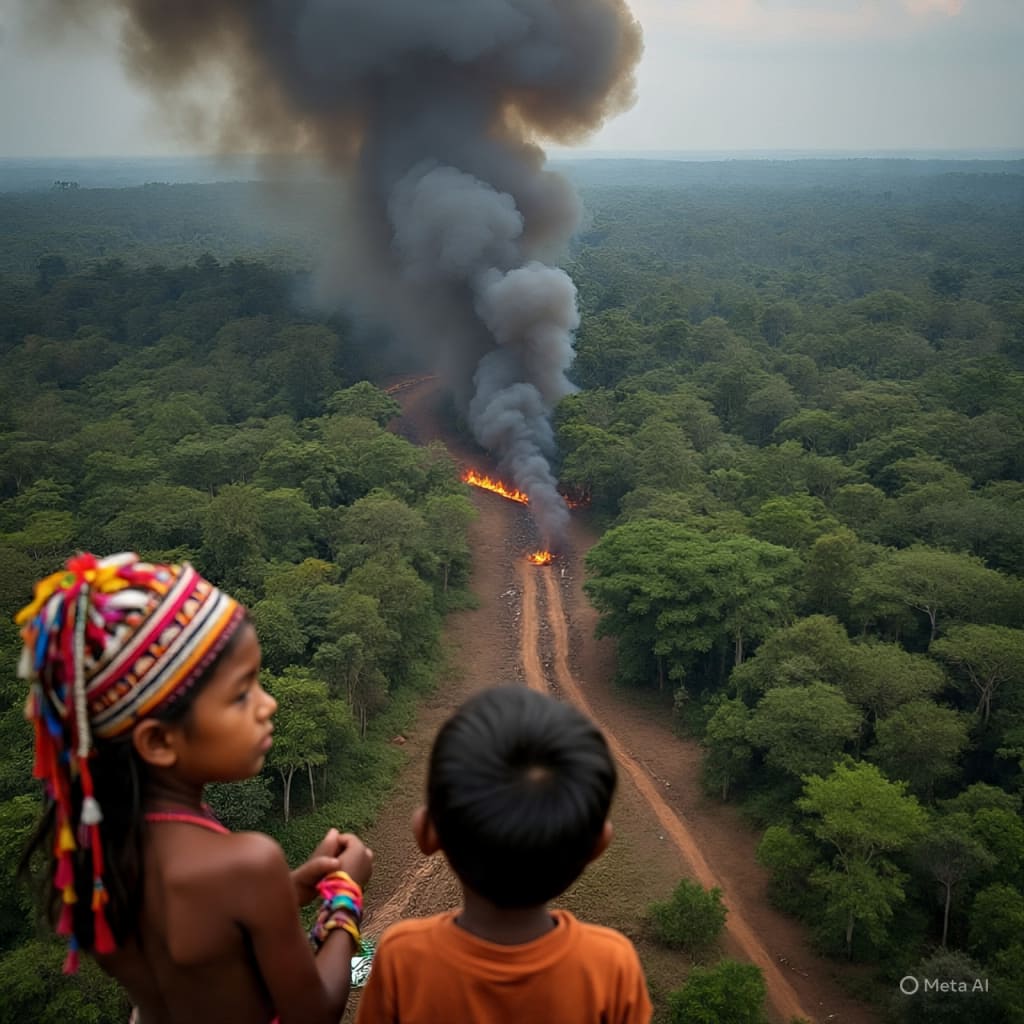
In August 2019, the world watched in horror as flames consumed vast portions of the Amazon Rainforest — often called the “lungs of the planet.” But while headlines trended and hashtags were launched, few outside truly understood the pain, fear, and resilience experienced by the people who lived through it.
This is a true story. Not from a journalist or a politician. But from someone who lost a home, nearly lost her family, and found a deeper purpose amid the ashes.
---
My name is Sneha. My father was born in a small Indigenous village deep within the Amazon basin, where we grew up believing the forest was not just land — it was soul. We never thought it could vanish. Not like that.
We lived near the Purus River in northern Brazil. My grandparents used to say the forest speaks if you listen — the whisper of the leaves, the chatter of monkeys, the hush of rain. It was our soundtrack growing up.
In the early weeks of August 2019, that sound changed.
We first noticed the smell — like burnt wood drifting in with the morning fog. At first, we thought it was a nearby village clearing land. It was common in small patches. But within days, the sky turned strange — grayish red in the afternoons, like the sun was trapped behind layers of grief.
Then, the noise began.
Crackling trees. Distant booms of old giants falling. Birds flying in frantic circles. Even the animals knew: something unnatural was happening.
---
I remember the morning we evacuated.
My younger brother, Thiago, had trouble breathing. He was barely twelve. The smoke was everywhere — it clung to our clothes, our food, our lungs. We packed what we could in cloth sacks and plastic containers and moved towards the river, where we boarded a neighbor’s canoe.
Looking back, I saw the house my father had built with his hands — each log, each nail — now framed by firelight. I still see it in my dreams, collapsing slowly, almost respectfully, as if the forest knew it was killing its own.
---
We were among the lucky ones.
By evening, we reached a missionary outpost that offered us shelter, food, and medical supplies. There, I met an old woman named Ana. She had lost her husband just two days earlier — he’d gone back for their goat, inhaled too much smoke, and never returned.
“I told him the goat would find its way,” she said, her hands trembling. “He didn’t believe animals understand fire.”
She was right, though. The animals did understand. I saw sloths drop from trees, too slow to escape. I saw snakes swimming with fish, side by side — enemies turned refugees.
---
What hurt the most wasn’t just the loss of trees. It was the silence that came after.
No more chirping parrots at dawn. No more rustling branches above our hammocks. Just the endless drone of helicopters, emergency radios, and coughing.
The news finally arrived, weeks later. Some of the fires were started intentionally. For farming. For money. For land.
We felt like we had been betrayed by a world that never even knew our names.
---
In the months that followed, we didn’t just mourn — we rebuilt. Piece by piece.
We formed a local forest-watch group made up of farmers, students, and elders. We learned to use smartphones and GPS. We partnered with NGOs and scientists. We began tracking suspicious activities, documenting illegal logging, and educating nearby towns about sustainable practices.
For the first time, I spoke in front of cameras.
I told our story — about my brother’s asthma, about Ana’s husband, about the goat who never made it home. I told them that this fire wasn't just a moment. It was a message.
And I told them something else — the forest will never forget, and neither should we.
---
Today, I work as an environmental translator, helping bridge the gap between tribal languages and conservation researchers. My brother, Thiago, studies ecology in Manaus. He says he wants to find a way to heal burnt land — to bring life back to the dead zones.
And Ana? She still talks to her husband under the stars, sitting on a wooden stool in front of the rebuilt community hut. She says the goat returned weeks later, singed but alive. We named it “Esperança” — which means “Hope.”
About the Creator
Muhammad Usama
Welcome 😊
Keep reading
More stories from Muhammad Usama and writers in Earth and other communities.
Vanishing Village: How a Swiss Paradise Disappeared Overnight
On May 28, 2024, a serene alpine village in southern Switzerland called Brienz, nestled in the breathtaking Bernese Alps, silently slipped from the world map. Once a postcard-perfect hamlet with timber chalets, lush meadows, and cowbells echoing through green valleys, Brienz became the heart of an environmental tragedy that left not just rubble, but a haunting message for humanity.
By Muhammad Usama8 months ago in Earth
Two Grumpy Old Men Solve the Problem
Marty and Steve were two grumpy old men who lived together. They had known each other for years. Marty had been a bachelor all his life. Steve said it was because no one could stand to ever live with. Marty’s standard reply was “Well, you are, so what sort of a moron does that make you!”
By Calvin Londonabout 17 hours ago in Humor


Comments
There are no comments for this story
Be the first to respond and start the conversation.