
The Smiling Survivor: Inside the Curious Life of the Quokka
This tiny marsupial wears a permanent smile—but behind the grin lies a world of wild survival and misunderstood charm.

What Exactly Is a Quokka?
Quokkas are small marsupials native to a few parts of Western Australia, especially Rottnest Island. Roughly the size of a domestic cat, these nocturnal creatures belong to the same family as kangaroos and wallabies.
- Scientific name: Setonix brachyurus
- Family: Macropodidae
- Habitat: Scrubland, forests, and coastal island ecosystems
- Diet: Herbivorous—leaves, grasses, and succulent plants
Though often referred to as the "world’s happiest animal" due to their natural smile, the Quokka’s life is more complex than viral selfies suggest.
The Famous Smile: Evolution or Illusion?
Their "smile" is actually the result of jaw shape and resting facial expression. It’s not an emotional signal but rather a trick of evolution. That said, it’s helped Quokkas become social media darlings, attracting tourists from around the world.
This viral fame, while adorable, raises concerns. Close human interaction can disrupt their natural behavior and diet.
No Water? No Problem
Quokkas have adapted to survive with little to no free-standing water. They obtain moisture from the vegetation they consume. This ability makes them perfectly suited to their arid island environments.
Their kidneys are efficient at conserving water, and they often rest in shady areas during the heat of the day.
Reproduction: With a Clever Escape Plan
Quokkas have one of the most unusual survival traits among mammals.
- A female carries a joey in her pouch.
- When threatened by a predator, she may drop her joey as a distraction.
While this sounds harsh, it increases the mother’s chance of survival and future reproduction. Nature can be brutal—but it's also smart.
They’re Not as Tame as They Look
Despite their friendly appearance, Quokkas are wild animals. Feeding them is illegal in places like Rottnest Island, and touching them can result in fines.
They can bite if threatened and should be observed respectfully, not treated like pets.
A Tourist Darling, A Conservation Challenge
While their photogenic faces bring in tourism dollars, conservationists are concerned about the long-term impacts. Tourism must be balanced with habitat protection and animal welfare.
Rottnest Island has strict rules in place, but education is still key. Not every visitor knows how to interact responsibly.
Why Quokkas Matter
Beyond the selfies and smiles, Quokkas are important indicators of island ecosystem health. Their survival tells us how well these fragile habitats are functioning.
They remind us that even the smallest creatures deserve big respect.
Limited Habitat Range and Island Life
Quokkas are found only in a few limited areas of Western Australia, most notably Rottnest Island and Bald Island. These island habitats have helped protect them from many mainland predators. However, outside these islands, quokka populations have significantly declined due to habitat destruction, wildfires, and threats from introduced species like foxes and feral cats.
“Smiling” Isn’t Always a Sign of Happiness
While quokkas have gained fame for their “smiling” faces, the expression is actually a result of their natural facial structure, not an indication of emotion like in humans. In fact, getting too close for selfies can cause them stress and impact their well-being. That charming smile? It's nature’s design — not a call for attention.
Unique Survival Strategy: Sacrificing Their Young
In extreme danger, female quokkas have a surprising survival tactic — they may throw their joey (baby) out of the pouch to distract predators. While it sounds brutal, this instinctive move gives the mother a chance to escape and survive, ensuring she can reproduce again later. It's a harsh but real example of how survival works in the wild.
Final Thought: More Than Just a Meme
It’s easy to fall for the quokka’s charm, but behind that endearing face is a creature adapted to one of the planet’s harshest environments. Its survival depends not on its smile, but on evolution, sacrifice, and resilience. As viral fame grows, so does our responsibility to understand, respect, and protect them. Because in the end, quokkas are more than mascots of joy—they’re testaments to the quiet strength of nature’s smallest survivors.
About the Creator
Landscape Beneath Antarctica's Icy Surface Revealed in Unprecedented Detail
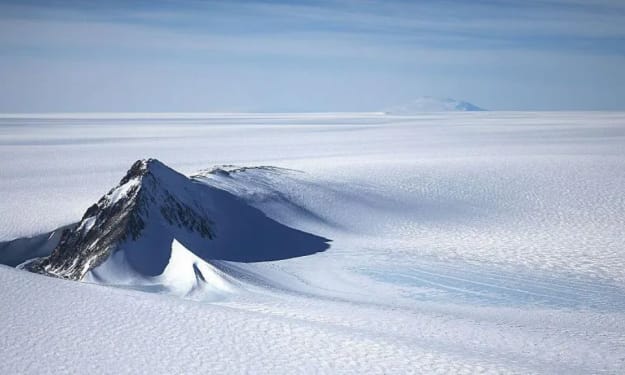
For decades, Antarctica has been the Earth’s ultimate mystery — a vast expanse of ice covering almost 14 million square kilometers, hiding secrets beneath its frozen surface. Now, thanks to advanced radar technology and satellite mapping, scientists have produced the most detailed map yet of the continent’s hidden landscape, revealing mountains, valleys, subglacial lakes, and river systems that were previously invisible. This discovery is more than just a scientific curiosity. Understanding Antarctica’s topography beneath the ice is critical for predicting ice sheet stability, global sea-level rise, and climate change impacts. The new data could also shed light on Earth’s geological history and the ways in which life may survive in extreme environments. How Scientists Mapped the Hidden Terrain For years, researchers have relied on a combination of methods to peek beneath the ice: Ice-penetrating radar: Devices mounted on aircraft or satellites send radio waves through ice layers, which bounce back when they hit bedrock, revealing contours beneath kilometers of frozen water. Satellite gravimetry: Small variations in Earth’s gravitational field help infer the presence of mountains, valleys, and subglacial lakes. Seismic surveys: Explosions or controlled vibrations allow scientists to detect underground structures by measuring the way seismic waves travel through different materials. Using these techniques, a consortium of international researchers created a high-resolution map of Antarctica’s sub-ice topography, revealing features that rival the landscapes of continents that have been visible for millions of years. What’s Beneath the Ice? The map reveals a striking variety of features: Mountain ranges: Peaks rise more than 4,000 meters above the surrounding terrain, hidden beneath miles of ice. Some of these ranges may be older than the Rockies or the Alps. Deep valleys: Vast troughs and gorges, carved by ancient rivers or tectonic activity, provide clues about how the continent evolved over millions of years. Subglacial lakes: Scientists have identified hundreds of liquid water lakes trapped beneath the ice, including the famous Lake Vostok. These lakes remain liquid due to pressure and geothermal heat and may host microbial life isolated for millions of years. Subglacial river networks: Surprisingly, water flows beneath the ice in channels and rivers, slowly carving pathways that affect ice sheet movement. This intricate landscape challenges the perception of Antarctica as a flat, featureless ice sheet. Instead, it is a dynamic and complex environment, where hidden topography influences everything from ice flow to global sea levels. Why This Discovery Matters The importance of understanding what lies beneath Antarctica’s ice cannot be overstated: Predicting Ice Sheet Stability: Ice sheets move more quickly over smooth surfaces than over rugged terrain. Knowing where mountains and valleys lie helps scientists predict which areas of ice may collapse first, potentially raising sea levels faster than anticipated. Climate Change Models: Subglacial lakes and water channels lubricate the ice from below, influencing melting rates. Incorporating these features into models improves accuracy in forecasting future sea-level rise. Earth’s Geological History: The newly revealed landscape offers a window into Antarctica’s past — from tectonic shifts to ancient rivers and climates. This data helps reconstruct how continents drifted and climates evolved over millions of years. Search for Extreme Life: Subglacial lakes may harbor microbial life isolated for millions of years, providing insights into life in extreme environments, potentially even on other planets. Global Implications Antarctica may feel distant, but its ice sheets hold the key to global sea-level stability. Even small changes beneath the ice can have profound consequences for coastal cities around the world. With melting accelerated by climate change, understanding the terrain under the ice is crucial for planning and mitigation. Governments, scientists, and environmental organizations are now using this information to: Improve climate models for sea-level rise predictions Identify vulnerable regions of the ice sheet Guide future research missions to subglacial lakes and mountains The discovery also strengthens the case for continued international collaboration in Antarctica, where research and environmental protection are governed by treaties emphasizing peaceful scientific study. Challenges Ahead Mapping Antarctica is far from complete. Extreme weather, thick ice sheets, and logistical difficulties make the continent one of the hardest places to study. While radar and satellite technologies have advanced, field validation and deeper exploration remain difficult and expensive. Researchers also face ethical and environmental concerns. Drilling into subglacial lakes to sample microbial life, for instance, must be done carefully to avoid contamination. Antarctica’s fragile ecosystem demands that scientific progress balances discovery with protection. Looking to the Future The detailed map of Antarctica’s hidden landscape opens new possibilities for exploration and understanding: Ice Flow Predictions: With accurate topography, scientists can model how ice sheets will respond to warming climates more precisely. Resource Insights: While exploitation is restricted by international agreements, understanding subglacial mineral deposits can inform potential future uses. Extreme Environment Biology: Studying subglacial lakes could reveal new species adapted to cold, dark, and high-pressure environments, broadening our understanding of life on Earth. The data also strengthens international scientific cooperation, as multiple countries share findings and resources to better understand a continent that belongs to no single nation. Final Thoughts Antarctica’s ice may appear static and endless, but beneath it lies a vibrant and rugged landscape filled with mountains, valleys, lakes, and rivers. The new detailed mapping of this hidden world is a landmark achievement in Earth science, combining advanced technology, international collaboration, and the human drive to explore. By uncovering what lies beneath the ice, scientists are not just satisfying curiosity — they are equipping humanity with the knowledge to protect our planet, anticipate climate challenges, and understand the deep history of Earth itself. Antarctica’s secrets, once locked beneath kilometers of ice, are finally being revealed, and what we learn could reshape our understanding of the planet and our place within it.
By Muhammad Hassan3 days ago in Earth



Comments
There are no comments for this story
Be the first to respond and start the conversation.