
The smartphone in your hand is actually a time bomb for brain destruction! You'll be shocked to know how!
Is your smartphone the first thing you look for when you open your eyes? You are not alone if you answered "yes." Like billions of others around the world, we too have become prisoners of that rectangular device we hold in our hands. But the real question is! Is this device just taking up our time, or is it slowly consuming our brains as well?
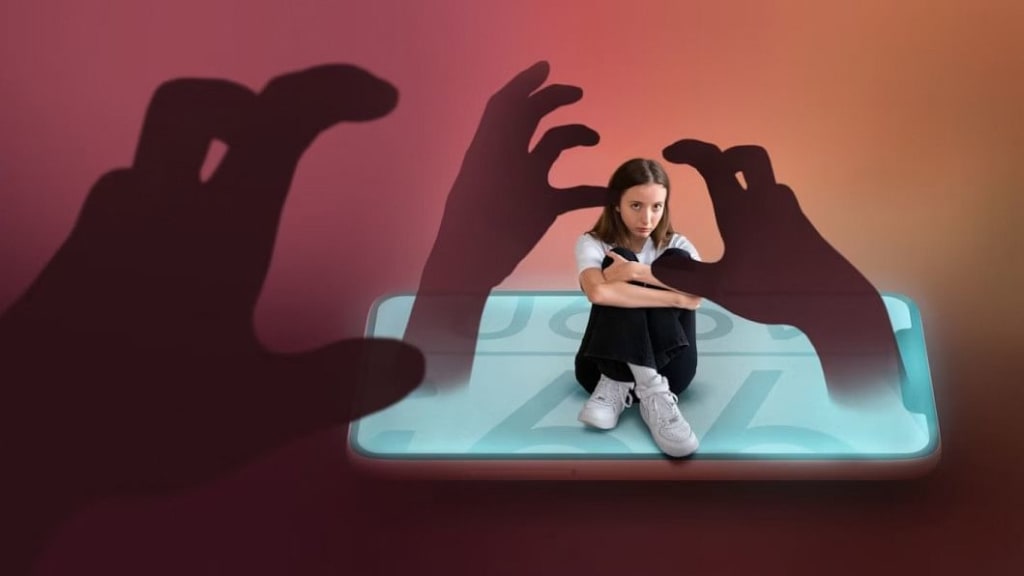
Is your smartphone the first thing you look for when you open your eyes? You are not alone if you answered "yes." Like billions of others around the world, we too have become prisoners of that rectangular device we hold in our hands. But the real question is—
Is this device just taking up our time, or is it slowly consuming our brains as well?
This question is no longer speculation. It is now scientific fact.
Neuroscience researchers at Stanford University have come up with a surprising finding. When we use our smartphones, a chemical called dopamine is released in our brains, which essentially creates a sense of pleasure or reward. But this pleasure is fleeting, short-lived, and deeply dangerous. Because when dopamine is repeatedly stimulated, we become accustomed to a kind of invisible cycle where we scroll, check notifications, open messages, and each time we get stuck in a small pleasure. This is called (dopamine reward loop), a brain-destroying trap.
It's the kind of cycle that used to only be seen in drug addicts. Now it's in all of our lives, day after day.
How is continuous smartphone use changing the structure of the brain?
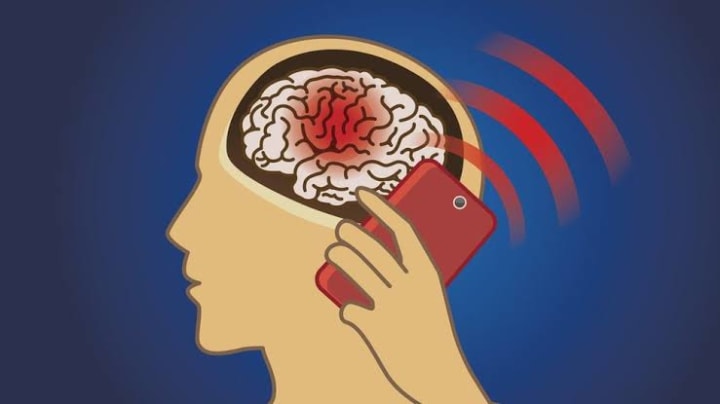
A study from Harvard Medical School found that simply having your phone next to you, even when you're not using it, can significantly reduce your attention span. The study found that people who kept their phones on the side table performed worse on concentration tests than those whose phones were in another room.
This means that the mere presence of the phone is enough to change the course of our thoughts. The brain becomes distracted, the mind is not steady, and the pace of work suddenly stops.
But that's not all. Spending too much time on your smartphone weakens the prefrontal cortex, the front part of your brain. This part is the center of our reasoning, emotional control, and decision-making. In simple terms, it's the real factory that shapes our personality.
Your decision-making ability, your reactions, your knowledge of good and bad are all controlled from here. And everyday unconscious smartphone addiction is driving a knife into that factory.
You might be surprised to know even more terrifying information.

In 2015, Microsoft Corporation published a study that said the average human attention span has now dropped to 8 seconds. And the surprising fact is that this is less than the attention span of a goldfish.
Is this just a coincidence? Not at all. It is directly related to the scrolling culture of the smartphones we hold in our hands.
Forget about other times, it has now reached a point where we are just skipping without paying attention when watching something. This habit of quickly switching attention is training our brain not to stay still, not to think deeply about anything.
And this habit is creating a terrible mental state: attention fragmentation, meaning we can no longer focus on anything at once. A person who once could read 30 pages of a book in one sitting now looks at their phone after only 3 pages, bored.
Sleep, our brain's charging system, is also disrupted.

If you use your smartphone every night before going to bed, your body doesn't produce the sleep-inducing hormone melatonin properly. The blue light from the screen confuses our body clock. As a result, sleep becomes light, choppy, and instead of normal rest, fatigue, irritability, and a kind of invisible depression are created.
A large study found that people who spend time on social media before bed are more likely to have sleep disturbances and depression.
Interestingly, most people don't consider this problem an illness, it's just a new normal for them. However, it is actually a gradual, mute mental amputation. But that's not all. Smartphones are also having a devastating impact on our social relationships. The Department of Psychology at the University of California says that smartphone use damages people's social brains or brain activity related to social behavior. As a result, a person gradually becomes isolated from the real world. This effect is especially high among young people. They become dependent on likes on social media and cannot give importance to real-life relationships. Studies have also shown that spending too much time in front of a screen reduces our empathy, which has an impact on our relationships with friends, family, and even coworkers. Experts call it digital isolation syndrome. It is a type of mental condition where a person feels alone, empty and disconnected even when surrounded by countless people. You will be surprised to hear that a 2019 study found that people who use smartphones for 5 hours or more a day are almost twice as likely to experience loneliness, depression and suicidal thoughts. In particular, spending excessive time on platforms like Instagram or TikTok increases these mental problems.
We are losing both mental and physical health as a result of this habit. Even among teenagers, eye problems, neck pain, and migraines are now common issues. Especially those who spend 7-8 hours a day on their mobile phones, they suffer from dry eyelids, headaches, and sometimes blurred vision. Research says that long-term use of smartphones affects the retina of the eyes, which increases the risk of permanent eye diseases in the future.
Finally, the most important thing is your own awareness. Because if you don't realize it yourself, all the rules in the world will fail for you. If you ask yourself, what would happen if I didn't have my phone in my hand right now? Or is what I'm doing really necessary? Only then can you protect yourself at least a little. Remember, the smartphone is not actually intelligent, you are intelligent. So the decision is yours.
Stop and think. Are you in control of your life right now, or is a small screen controlling your entire life?
About the Creator
Keep reading
More stories from writers in Earth and other communities.
Weather and Climate Understanding the Forces That Shape Our Daily Lives
Weather and Climate Understanding the Forces That Shape Our Daily Lives Weather and climate play a central role in how people live work travel and plan for the future. From daily temperature changes to long term climate patterns these natural systems influence agriculture health economies and even global stability. Understanding the difference between weather and climate and knowing how they affect human life has become more important than ever especially as the world experiences more extreme conditions.
By America today 4 days ago in Earth



Comments
There are no comments for this story
Be the first to respond and start the conversation.