

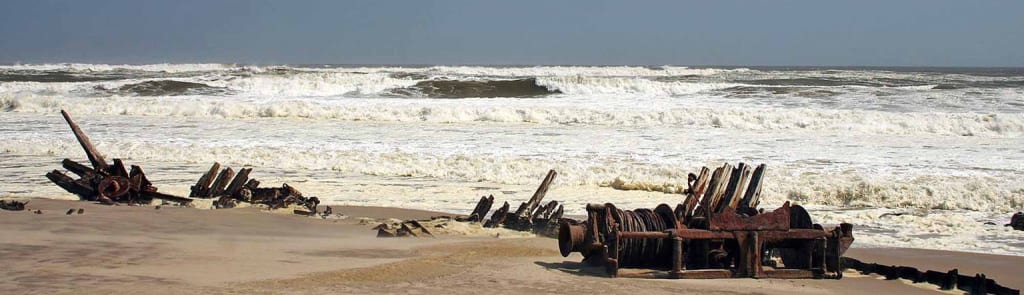
The world’s largest ship cemetary
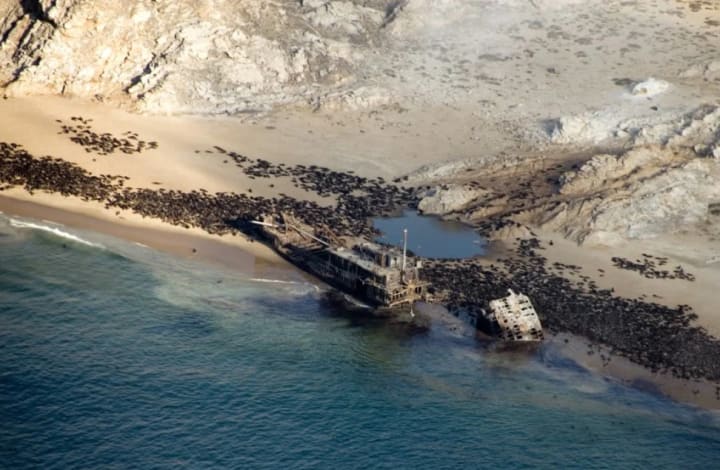
The so called Skeleton Coast is a 40 km wide and 500 km long coastal stretch in Namibia, a hostile but fascinating area. Here the cold and unpredictable Benguela Current of the Atlantic Ocean clashes with the dune and desert landscape of north-western Namibia. The Namibian Bushman are said to have called the coastline ‘the land God made in anger’. Similarly, the Portuguese explorers referred to it as the ‘Gates of Hell’.

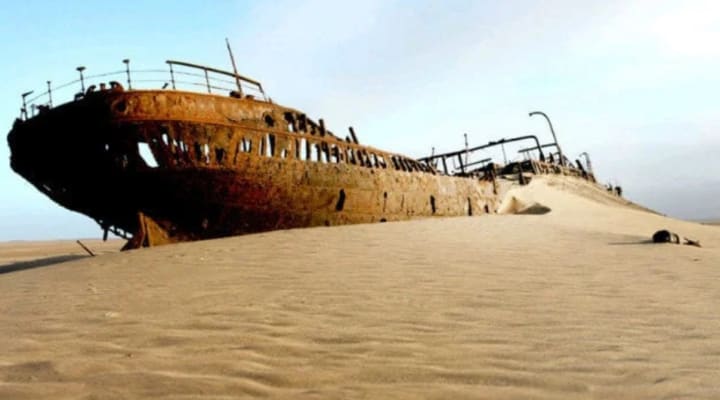
The name Skeleton Coast derived most probably from the huge numbers of stranded whales that lost their life here and whose skeletons could be seen all over the place. The Himba are settling in the far north-eastern parts of Namibia used the whale bones for building their huts.Now also it’s name has continued to be known for all the skeletons of wrecked ships not only found stranded on the coastline but deep inland as the desert has encroached on the ships stranded on the rocks and travelled further into the ocean Beyond those wrecked and stranded ships.
Numerous ships have stranded at the Skeleton Coast thanks to the thick fog, the rough sea, unpredictable currents and stormy winds. The Benguela current which runs down the coast of the icy cold Atlantic Ocean and the world’s oldest desert, the Namibian desert, with its huge sand dunes that run into the Atlantic Ocean is the only desert that does that. It makes a stunning image The sailors who were able to make it to the land did not stand a chance of survival at this inhospitable coast and died of thirst.
Two of my favorite hunter/gather tribes live in Namibia, which is mostly all desert, and also live in and traverse through the skeleton coast. They are the San bushman and the Himba. The San are the oldest people on earth, originating in Southern Africa about 140,000 years ago.


The Himba have settled mainly in the Northern region of Namibia and southern Angola. There is no freshwater in the Skeleton Coast portion of the Namibian Desert, so to survive living in this area you have to know how to find water. How the San and Himba find water, as do the various animals who call the Skeleton Coast home is to collect the thick fog that rolls in every morning and blankets the coastline, settling onto plants which collect in bowl shaped formations Of their leaves or just the shape of the plant in general. they have to drink the water before it evaporates when the hot sun burns out the morning fog. Land animals like Elehants, lion, rhino, hyena and Oryx antelope live here, and sea animals like seals come up onto the rocks and sand. They are all a source of food and water to the San and Himba, who use what liquid they can from the bladders of the creatures they kill or find dead. Life in this desert is very tenuous.
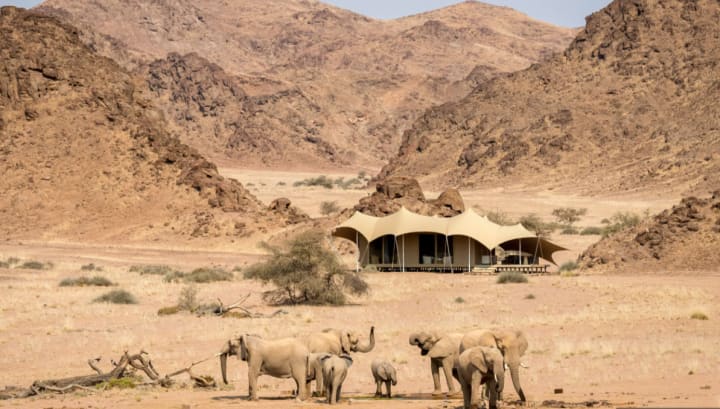

The Skeleton Coast is a rich source of minerals, the most well known is diamonds. The name of the company that mines the diamonds is DeBeers, a name world famously associated with diamonds. The mining industry makes up 15.8% of Namibia’s GDP and in 2008 accounted for 61% of merchandise exports, while the country is “a world-class producer of rough diamonds, uranium oxide, special high-grade zinc and acid-grade fluorspar as well as a producer of gold bullion, blister copper, lead and zinc concentrate and salt”. It seems the desert along the coast isn’t a wasteland at all. Besides mining, tourism is a large part of Namibia’s economy. Adventure tourism is a big part of that, with several companies running safari camps and off road tours of the iconic sand dunes and game viewing.

Next time you think about an exotic, wild adventurist vacation, consider Namibia and the Skeleton Coast.
About the Creator
Guy lynn
born and raised in Southern Rhodesia, a British colony in Southern CentralAfrica.I lived in South Africa during the 1970’s, on the south coast,Natal .Emigrated to the U.S.A. In 1980, specifically The San Francisco Bay Area, California.
Patio Covers Tacoma: A Practical Solution for Damp Weather
At first, I thought patios were mostly for sunny areas, not a place like Tacoma, where the sky is more often gray than not. However, after living through the seasons here, you quickly learn the issue isn't extreme weather; it's the constant dampness. Light rain, mist, cloudy afternoons, and that chilly moisture that lingers even when it’s not raining.
By Backlinks Cart4 days ago in Earth


Comments
There are no comments for this story
Be the first to respond and start the conversation.