
The Silent Race Toward World War III
From NATO Rivalries to Middle Eastern Flashpoints — How Global Tensions Are Converging

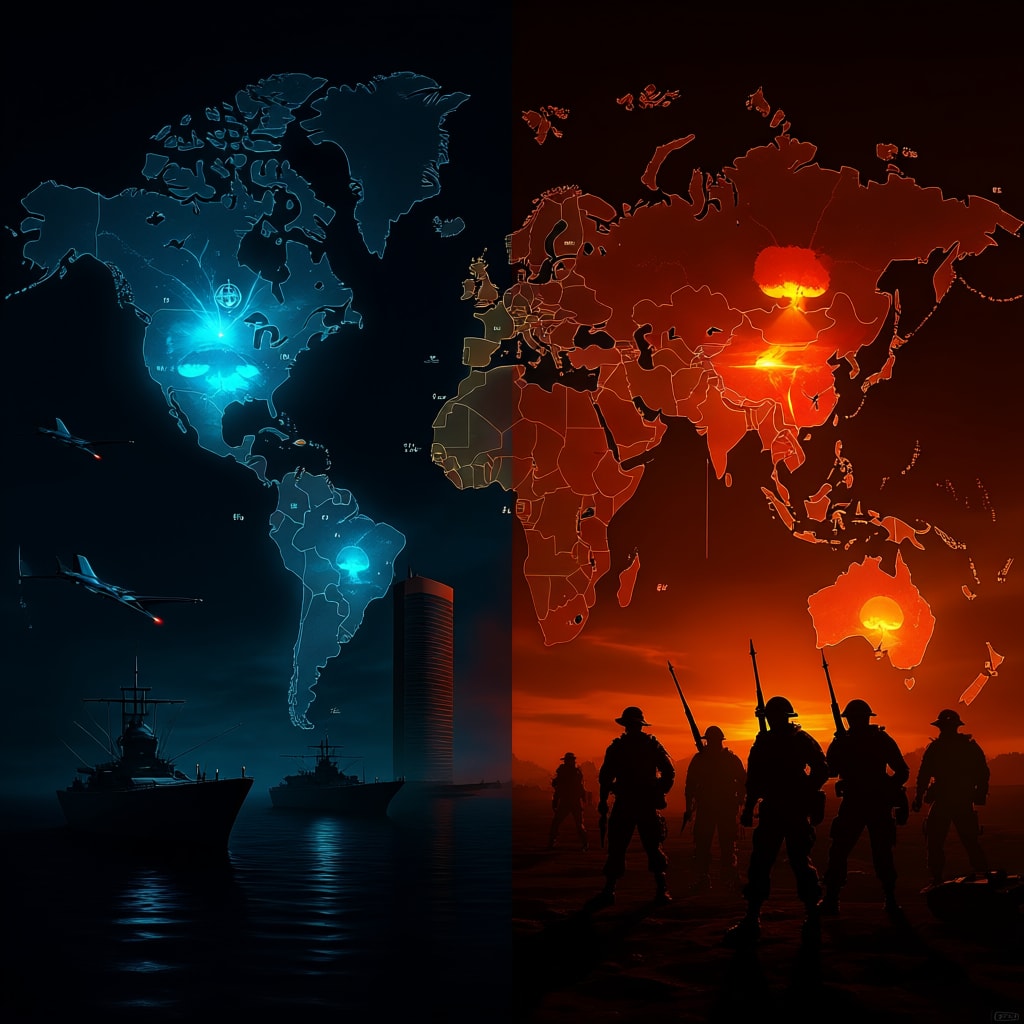
World on Edge: The Silent Race Toward World War III
The 21st century was supposed to be the age of globalization, digital progress, and interconnection. Instead, it is increasingly becoming an era marked by mistrust, militarization, and fragile alliances. From the power games in Europe to the bloodshed in the Middle East, the world is quietly slipping into a dangerous trajectory. While politicians avoid the phrase “World War III,” the signs of converging crises suggest that such a catastrophe may no longer be unthinkable.
NATO Rivalries: The Frozen Fire of Europe
The war in Ukraine continues to serve as a proxy battlefield between NATO and Russia. What began as a regional conflict has become a symbolic line between the Western alliance and Moscow’s ambitions. Billions in weapons, intelligence sharing, and sanctions have drawn NATO deeper into confrontation, even as Western leaders insist they are not at war with Russia.
Yet the reality is unavoidable: Europe is rearming at an unprecedented pace. Germany has poured billions into modernizing its military, Poland is preparing to become a regional military giant, and Finland and Sweden have joined NATO, effectively doubling the alliance’s border with Russia. Each of these moves signals deterrence but also feeds a cycle of escalation.
Russia, meanwhile, has shifted its economy toward total militarization. With support from partners like Iran, North Korea, and a cautious but watchful China, Moscow has shown no signs of backing down. The longer this standoff persists, the more the risks grow — a single miscalculation, an airspace violation, or a cyberattack could ignite something far larger than intended.
Middle Eastern Flashpoints: The Fire That Refuses to Die
If Europe is the frozen front line, the Middle East is the burning battlefield. The Israel-Palestine conflict has returned to global headlines with unprecedented intensity. Gaza lies in ruins, regional anger is spilling into protests, and Muslim countries are under pressure to respond decisively.
Israel’s government, led by Benjamin Netanyahu, insists it is fighting for survival against terrorism. Yet the images of destroyed neighborhoods and civilian casualties have fueled outrage across the Muslim world. This outrage has brought old rivalries back into the spotlight: Iran’s continued support for Palestinian resistance groups, Turkey’s rhetorical pressure on Israel, and the Gulf’s careful balancing act between Western alliances and regional solidarity.
The possibility of a wider regional war — drawing in Lebanon’s Hezbollah, Syria’s fragile landscape, and Iran’s direct involvement — is no longer just hypothetical. Already, U.S. warships patrol the Mediterranean, and NATO states are watching closely, fearing that a Middle Eastern escalation could drag them into a crisis they cannot contain.
The Asian Calculus: China, Taiwan, and the Pacific
As if Europe and the Middle East were not enough, Asia remains another volatile front. China’s ambitions over Taiwan have grown louder, with military drills, naval patrols, and warnings against U.S. interference. Washington, in turn, has strengthened military ties with Japan, South Korea, and the Philippines.
Unlike the Middle East or Eastern Europe, the Pacific balance involves direct great-power confrontation. The United States and China represent the two largest economies and militaries in the world, and neither side is willing to lose credibility. A spark in the Taiwan Strait could therefore have consequences beyond any regional war — it would immediately be a global economic disaster and a military showdown with nuclear shadows looming.
The Silent Race: Technology, Cyberwar, and Nuclear Shadows
Beyond traditional battlefields, the race is taking place in digital and unseen arenas. Cyberwarfare has become a silent weapon, disrupting financial systems, hacking state institutions, and planting fear without firing a bullet. Artificial intelligence is now a military tool, guiding drones, surveillance systems, and automated decision-making.
Nuclear weapons, once considered tools of deterrence, are quietly being modernized. Russia has tested hypersonic missiles, the U.S. is upgrading its nuclear triad, and smaller states are exploring ways to secure their own arsenals. The doctrine of “mutually assured destruction” that kept Cold War rivals cautious may not work in a world with multiple actors and asymmetric powers.
A Converging Crisis
Individually, each of these flashpoints might be containable. But the true danger lies in their convergence. A Russian strike in Europe, an Israeli escalation in Gaza, or a Chinese blockade of Taiwan might not remain isolated. Instead, alliances, treaties, and rivalries could trigger a chain reaction. NATO would be obligated to respond in Europe. Muslim nations would face pressure to act in the Middle East. The U.S. and its allies would be drawn deeper into Asia.
This interconnectedness is what makes today’s world more fragile than in previous eras. Globalization, once thought to prevent wars, now means that every crisis has ripple effects across markets, economies, and societies. A regional war no longer stays regional.
The Question Ahead: Prevention or Sleepwalking?
The lessons of history are sobering. World War I was not planned as a global conflict; it was the result of alliances and miscalculations spiraling out of control. Today, the world is similarly sleepwalking — aware of the dangers but unable, or unwilling, to change course.
Diplomacy remains the only barrier. Institutions like the United Nations, weakened by divisions, must somehow regain credibility. Regional organizations must rise above politics to prioritize peace. And citizens — through protest, pressure, and public discourse — must demand restraint from their leaders.
The world is indeed on edge, balancing between cooperation and catastrophe. Whether it tips toward war or peace depends not only on presidents and prime ministers but also on the collective will to recognize that no nation can win in World War III. The only victory possible is preventing it altogether.
About the Creator
Wings of Time
I'm Wings of Time—a storyteller from Swat, Pakistan. I write immersive, researched tales of war, aviation, and history that bring the past roaring back to life
Keep reading
More stories from Wings of Time and writers in Earth and other communities.
Pakistan as a Superpower in World War 3
Pakistan as a Superpower in World War 3: A Strategic Imagination The idea of Pakistan becoming a superpower in the context of a possible World War 3 may sound ambitious, even unrealistic at first. Yet, in geopolitics, wars often transform nations in unpredictable ways. Countries that were once considered secondary players can rise to global dominance if they combine geography, military strength, alliances, and national resilience at the right historical moment. If World War 3 erupts, Pakistan—situated at the crossroads of South Asia, Central Asia, and the Middle East—could emerge as a decisive global power.
By Wings of Time 4 months ago in Earth
US Balks as UK and France Pledge Troops to Postwar Ukraine
As the war in Ukraine grinds on with no clear end in sight, the debate over what comes after the fighting has taken a sharper turn. The United States has signalled reluctance about committing troops to Ukraine once the war ends, even as the United Kingdom and France openly pledge to consider deploying forces in a postwar security role. The divergence has exposed differing strategic priorities among Western allies and raised new questions about how Ukraine’s future security will be guaranteed. While all three nations remain united in their support for Kyiv during the war, the emerging split over postwar troop commitments highlights the complexity of planning for peace in a conflict that continues to reshape Europe’s security landscape. What the UK and France Are Proposing British and French leaders have increasingly spoken about the need for long-term security arrangements for Ukraine once active hostilities end. Their position reflects a growing concern that any ceasefire or peace agreement could be fragile, leaving Ukraine vulnerable to renewed aggression. The idea under discussion is not a combat deployment in an active war zone, but rather a stabilisation or reassurance force. Such troops could help train Ukrainian forces, protect critical infrastructure, and serve as a visible deterrent against future attacks. Supporters argue that a limited but credible international presence would help ensure that any peace settlement is respected. For London and Paris, this approach fits within a broader European push to take more responsibility for continental security. Both governments see Ukraine not only as a partner but as a frontline state whose stability directly affects Europe as a whole. Why Washington Is Hesitant The United States, while remaining Ukraine’s most significant military backer during the war, has taken a more cautious stance on postwar troop deployments. American officials have stressed that there are no plans to send US forces into Ukraine, even after a potential peace agreement. This hesitation is rooted in several factors. First, Washington remains wary of any move that could risk a direct confrontation with Russia. Even in a postwar scenario, the presence of US troops on Ukrainian soil could be portrayed by Moscow as a provocation, escalating tensions rather than reducing them. Second, domestic considerations play a major role. After years of overseas military engagements, there is limited appetite among the American public and political class for new long-term deployments abroad, particularly in a region where risks remain high and outcomes uncertain. Finally, US strategy has increasingly emphasised supporting allies through funding, training, and equipment rather than large-scale troop commitments. From Washington’s perspective, enabling Ukraine to defend itself may be preferable to stationing American forces on the ground. A Question of Deterrence At the heart of the debate lies a fundamental question: what will actually deter future aggression against Ukraine? The UK and France appear to believe that a physical presence, however limited, would send a powerful signal of commitment. Troops on the ground would demonstrate that Ukraine’s security is directly tied to that of major European powers, raising the cost of any future attack. The US, by contrast, seems to place greater faith in alternative mechanisms such as long-term military aid, security guarantees, and sanctions frameworks. American officials argue that deterrence does not necessarily require boots on the ground, especially if Ukraine emerges from the war better armed and more integrated with Western institutions. This difference reflects broader strategic cultures. European powers, facing the immediate proximity of the conflict, may feel a stronger need for visible reassurance measures, while the US assesses risks from a more global perspective. Implications for NATO Unity Although Ukraine is not a NATO member, the discussion has clear implications for the alliance. Any deployment of UK or French troops would be closely scrutinised for what it means for NATO’s role and credibility. NATO operates on consensus, and the absence of US support for a postwar troop presence could complicate coordination. Even if London and Paris act independently or as part of a smaller coalition, questions would remain about command structures, rules of engagement, and the political backing required for such a mission. At the same time, the situation underscores a broader shift within NATO, with European members increasingly expected to shoulder more responsibility. If the UK and France proceed with their plans, it could mark a significant step toward a more autonomous European security posture. Ukraine’s Perspective For Kyiv, the debate is both encouraging and frustrating. On one hand, the willingness of major European powers to consider troop deployments signals long-term commitment and recognition of Ukraine’s security concerns. On the other hand, uncertainty from the US—Ukraine’s most powerful ally—adds another layer of unpredictability. Ukrainian leaders have consistently argued that security guarantees must be concrete, not symbolic. From their perspective, any postwar arrangement must ensure that Russia cannot simply regroup and strike again. Whether this is achieved through foreign troops, binding treaties, or accelerated integration with Western institutions remains an open question. What is clear is that Ukraine wants assurances that go beyond promises and declarations. The Risk of Mixed Signals One potential danger of the current divergence is the message it sends to Moscow. Differing positions among Western allies could be interpreted as hesitation or lack of unity, potentially weakening deterrence rather than strengthening it. At the same time, open debate is not necessarily a sign of weakness. Allies often disagree on tactics while remaining aligned on broader goals. The challenge will be ensuring that these differences do not undermine the core objective of securing a stable and sovereign Ukraine. Diplomats on both sides of the Atlantic are likely to continue working behind the scenes to narrow the gap, even if public statements suggest a clear divide. Looking Ahead The question of postwar Ukraine remains largely theoretical while fighting continues. Yet the discussion itself reveals how seriously Western governments are taking the long-term consequences of the conflict. The UK and France’s willingness to pledge troops reflects a belief that peace must be actively protected. The US reluctance highlights concerns about escalation, sustainability, and domestic support. Reconciling these approaches will be one of the most important diplomatic challenges once the guns eventually fall silent. For now, the disagreement does not signal a breakdown in alliance unity, but it does expose the difficult choices ahead. As the war continues, planning for peace is proving almost as complex—and politically sensitive—as managing the conflict itself.
By Muhammad Hassan6 days ago in Earth
US Lawmakers Arrive in Copenhagen to Counter Trump’s Greenland Threats
In a high-stakes diplomatic maneuver, a delegation of U.S. lawmakers recently arrived in Copenhagen to discuss Greenland’s future, aiming to counteract the aggressive rhetoric and territorial ambitions expressed by former President Donald Trump. The visit comes amid rising concerns over Greenland’s strategic importance in the Arctic and the implications of any unilateral moves by the United States. For Denmark, Greenland’s autonomous territory, the presence of U.S. lawmakers underscores both Washington’s interest in Arctic security and the need to maintain strong transatlantic ties. For the United States, the visit signals a delicate recalibration of policy following Trump’s controversial proposals regarding Greenland, including his infamous attempt to buy the island outright during his presidency. Why Greenland Matters Geopolitically Greenland is more than a frozen expanse of ice; it is a geopolitical prize. Strategically located between North America and Europe, Greenland is key to: Arctic shipping routes that are becoming increasingly navigable due to melting ice Natural resources, including rare earth minerals, oil, and gas reserves Military and surveillance installations, notably the Thule Air Base, which is critical to U.S. missile warning systems and space surveillance The Arctic region is warming faster than any other part of the planet, making Greenland both a resource hub and a potential flashpoint for international competition. Trump’s proposals had alarmed Denmark and other NATO allies, raising questions about the United States’ long-term commitment to respecting international norms and allied sovereignty. The Lawmakers’ Mission The delegation, composed of senators and representatives from both political parties, is tasked with: Reassuring Denmark that the U.S. government respects Greenland’s autonomy Discussing security cooperation, particularly regarding Arctic defense and NATO commitments Exploring economic partnerships that benefit Greenland while maintaining regional stability Officials emphasize that this visit is not about reversing Trump’s statements retroactively, but about ensuring that future U.S. policy reflects diplomatic consensus rather than unilateral ambition. Denmark’s Response Denmark has maintained a firm stance on Greenland’s sovereignty, consistently stating that the island is not for sale. Danish leaders have welcomed the U.S. delegation as a positive step toward strengthening trust and clarifying intentions. Copenhagen also hopes to use the opportunity to reinforce cooperative approaches to Arctic security, particularly in light of growing Russian and Chinese interest in the region. For Denmark, maintaining strong relations with the United States — while safeguarding Greenland’s autonomy — is a balancing act that requires careful diplomacy. Greenland’s Perspective Greenlanders themselves are increasingly vocal in the debate over their future. Many support greater economic independence and political autonomy, and local leaders insist that Greenlanders should have the final say over any decisions affecting their land and resources. The U.S. delegation’s visit highlights the need to consult Greenlandic authorities directly, rather than negotiating solely with Denmark. This approach is seen as a step toward more inclusive, respectful diplomacy, which acknowledges Greenland’s status as more than just a strategic asset. The Role of NATO and Transatlantic Relations Trump’s proposals regarding Greenland strained transatlantic relations, raising concerns among NATO members about the reliability of U.S. commitments. The arrival of bipartisan lawmakers in Copenhagen aims to reaffirm NATO solidarity and demonstrate that U.S. policy is consistent with alliance obligations. By engaging Denmark directly, Congress seeks to prevent miscommunication and maintain stability in a region that is increasingly vital for global security. Analysts note that Greenland’s location provides the United States with a critical vantage point for Arctic monitoring and missile defense, making cooperative relations essential. Global Implications The Greenland issue has broader consequences for international geopolitics and Arctic governance. Key points include: Resource security: Greenland’s rare earth minerals are essential for electronics, renewable energy, and defense technologies, making control and access highly strategic. Climate change and navigation: Melting ice is opening new shipping lanes, which could shift global trade patterns and increase competition for influence. Power dynamics in the Arctic: Russia and China have also shown growing interest in the Arctic, prompting the United States and Europe to strengthen alliances and prevent unilateral exploitation. The lawmakers’ visit signals to the international community that the U.S. is committed to diplomatic solutions rather than transactional or coercive strategies. Challenges Ahead Despite the visit’s diplomatic intent, challenges remain: Political polarization in the U.S.: Future administrations may have different approaches to Greenland, raising uncertainty about long-term commitments. Geopolitical competition: Russia and China continue to advance their presence in the Arctic, complicating cooperative efforts. Local autonomy: Greenlandic voices must be prioritized, or any policy may face resistance at the local level. Successfully navigating these challenges will require transparent dialogue, careful planning, and sustained international cooperation. The Path Forward The visit of U.S. lawmakers to Copenhagen is a cautionary and corrective measure. It signals that while Greenland is strategically important, it is not a bargaining chip. Future cooperation will likely focus on: Strengthening Arctic security frameworks Promoting economic development for Greenlanders Maintaining stability in U.S.-European relations Ensuring that Greenlandic voices remain central to decision-making This proactive approach reflects a broader understanding that diplomacy, not unilateral action, is essential in regions of high strategic value. Final Thoughts Greenland has moved from the margins of global attention to the forefront of geopolitical strategy and climate concern. The arrival of U.S. lawmakers in Copenhagen underscores the importance of measured, inclusive diplomacy in the Arctic, contrasting sharply with the impulsive rhetoric that characterized Trump’s Greenland proposals. As nations navigate the Arctic’s emerging opportunities and challenges, Greenland’s sovereignty and the voices of its people will remain central to regional stability, global security, and international cooperation. The lawmakers’ visit represents a step toward rebuilding trust, reinforcing alliances, and charting a sustainable path forward for one of the planet’s most strategically vital territories.
By Muhammad Hassanabout 17 hours ago in Earth




Comments
There are no comments for this story
Be the first to respond and start the conversation.