
The Shoebill Bird: A Rare and Mysterious Species
Discovering the Rare and Endangered Species of Central and East Africa

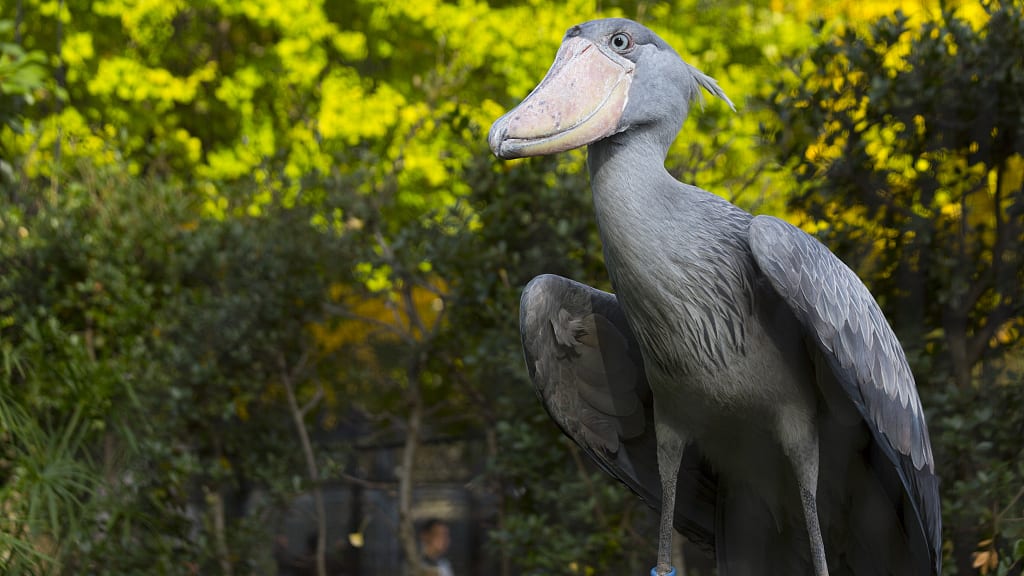
The Shoebill bird, also known as the Whalehead, is a large and rare bird species found in the tropical swamps and marshes of central and east Africa. This bird species is known for its large, shoe-shaped bill, which is its most distinctive feature, and the reason why it got its name. Shoebill birds are considered as one of the most enigmatic and unusual birds on the planet, and are highly sought after by birdwatchers and wildlife enthusiasts.
Appearance and Characteristics
The Shoebill bird is a large bird, standing at an average height of four to five feet, and weighing up to 15 pounds. They have a unique appearance, with a large head, a big bill, and a long neck that makes them look like a prehistoric bird. Their bill is one of the most recognizable features of the Shoebill bird, and is used to catch and feed on their main prey, the lungfish. The bill is about 9 to 11 inches in length, and has a distinctive, shoe-shaped appearance.
Shoebill birds have a blue-grey coloration, with a white belly and underparts, and a small tuft of black feathers on their head. They also have large, wide-spread wings, which they use to fly and glide over the water in search of their prey. The Shoebill birds are powerful flyers and can fly for long distances, making it easier for them to hunt for food.
Habitat and Distribution
The Shoebill bird is found in the swampy and marshy areas of central and east Africa, including countries like Uganda, Zambia, Tanzania, and the Democratic Republic of Congo. These birds prefer areas that are near large water bodies and that have a lot of vegetation, such as papyrus and reeds, which they use for shelter and nesting.
The Shoebill bird is considered a species of the lowlands, and they can be found at elevations of up to 500 meters above sea level. These birds are not migratory and tend to stay in their habitats all year round.
Diet and Hunting Behavior
The Shoebill bird is a carnivorous species, and their main diet consists of lungfish and other large fish, frogs, and even small mammals. They hunt by standing still in the water, waiting for their prey to swim by. When they spot their prey, they use their powerful bill to grab the fish and swallow it whole.
The Shoebill bird's bill is well adapted for hunting, and it is used to grab and hold their prey, making it easier for them to swallow it whole. The bill is also used to break open hard-shelled prey, like snails and clams.
Breeding and Reproduction
The Shoebill bird is a solitary bird, and they only come together to breed. During the breeding season, the males build large nests in the vegetation near the water, and use them to attract a mate. The females lay one or two eggs in the nest, which are incubated by both the male and the female.
The Shoebill bird's chicks are born covered in downy feathers, and they are fed by both parents until they are ready to leave the nest. The young birds are highly dependent on their parents for food and protection, and they are not capable of hunting on their own until they are several months old.
Conservation Status
The Shoebill bird is considered to be a vulnerable species, and their populations are declining due to a number of threats. The main threats to the Shoebill bird include habitat loss, as a result of the conversion of swamp and marsh areas into agricultural land, and poaching of hydroelectric dams. In addition, the Shoebill bird is hunted for its feathers, which are considered to be a symbol of status and wealth, and for its bill, which is believed to have medicinal properties.
Another threat to the Shoebill bird is the loss of its main food source, the lungfish, which is being overfished in many areas. The decline in lungfish populations has a direct impact on the Shoebill bird's ability to find food, which in turn affects its reproductive success and overall population size.
Conservation efforts have been undertaken in several countries in Africa to protect the Shoebill bird and its habitats. These efforts include creating wildlife reserves and protected areas, and enforcing laws that prohibit hunting and commercial trade in Shoebill bird parts. In addition, research and monitoring programs have been established to better understand the Shoebill bird's biology, ecology, and populations, and to inform conservation strategies.
Conclusion
The Shoebill bird is a unique and fascinating species, with a distinctive appearance and behavior that sets it apart from other birds. Despite its declining populations, conservation efforts are underway to protect this species and its habitats, and to ensure its survival for future generations. Whether you are a birdwatcher or a wildlife enthusiast, the Shoebill bird is a species that is definitely worth seeking out, and experiencing for yourself.
I hope this article has added to your knowledge and you enjoyed reading it. I request you to subscribe or follow me for more such blogs. Please mention your feedback in comments.
If you want me to write a blog on any topic of your wish, please mention that in comment.
You can find me on following social media platforms.
My Official Website:
www.thetecplanet.com
www.thetecmart.com
Follow Programming Hub on Facebook.
https://www.facebook.com/profile.php?id=100089858752142
Follow me on LinkedIn:
https://www.linkedin.com/in/mohammad-azeem-b37431161/
Follow me on Twitter:
https://twitter.com/Mohamme49054008
Cheers!
About the Creator
Keep reading
More stories from Programming Hub and writers in Earth and other communities.
Understanding Diabetes: Causes, Prevention, and Diagnosis
Diabetes is a condition in which the body is unable to produce insulin or effectively use it, leading to high levels of glucose (sugar) in the blood. Insulin is a hormone that helps regulate blood sugar levels by converting glucose into energy for the body's cells to use.
By Programming Hub3 years ago in Humans
Is Australia’s Pilbara the Oldest Place on Earth?
Deep in the remote landscapes of Western Australia lies a region that scientists believe may be one of the oldest places on Earth. Known as Pilbara, this vast and rugged area has attracted global attention from geologists and researchers who study the early history of our planet. With rocks estimated to be more than 3.5 billion years old, the Pilbara region provides a rare window into Earth’s distant past.
By Irshad Abbasi a day ago in Earth



Comments
There are no comments for this story
Be the first to respond and start the conversation.