
THE PRICEY PRICE OF ROYAL JELLY
What makes Royal Jelly so expensive, here are some facts
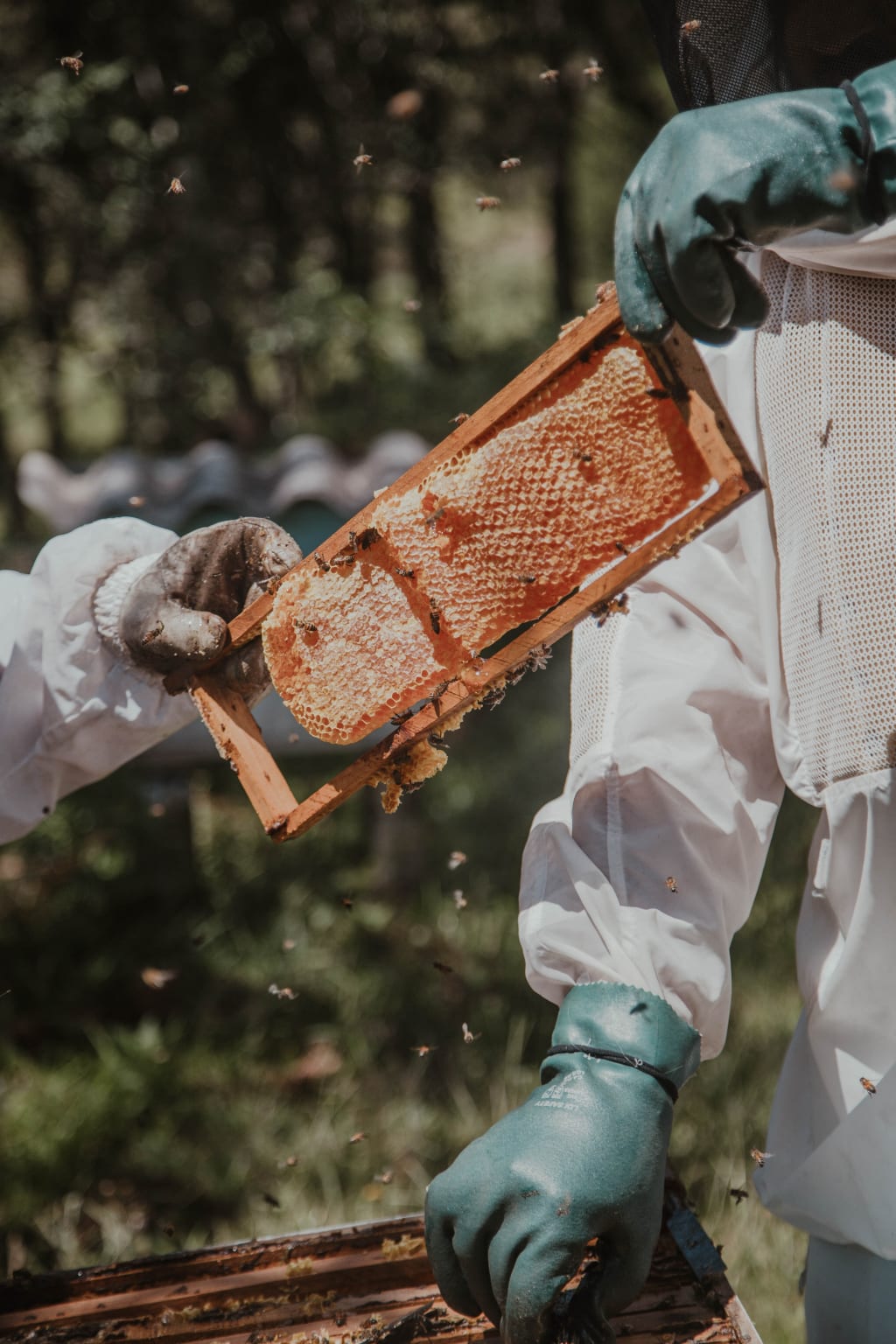
Royal jelly is a substance produced by honeybees to feed their larvae. It is a thick, white liquid that is rich in nutrients, including proteins, vitamins, and minerals. Royal jelly has been used for centuries in traditional medicine for its purported health benefits, including boosting the immune system, improving sleep, and reducing stress.
The Role of Rapeseed Flowers and Bee Species:
Rapeseed flowers play a vital role in the production of high-quality royal jelly. These bright yellow flowers attract bees and create favorable conditions for the hive's population and productivity. China, where 90% of the world's royal jelly production originates, has experienced a surge in production since the 1980s. Chinese beekeepers adopted the use of a high-yielding bee species called Apis mellifera lagustica spinola, which greatly boosted royal jelly production. However, the declining bee population due to factors like pesticide use and climate change poses a threat to the sustainability of royal jelly production.
However, royal jelly is also quite expensive. A pound of royal jelly can cost upwards of $125. There are a few reasons for this high price tag.
First, royal jelly is a very labor-intensive product to produce. Honeybees only produce a small amount of royal jelly, and it takes a lot of bees to produce a significant amount. Additionally, the process of harvesting royal jelly can be delicate and time-consuming.Beekeepers often remove the queen from the hive to stimulate royal jelly production. This is achieved by placing the queen in a separate section of the hive, while worker bees diligently fill larvae cells with royal jelly. Workers complete this task within 72 hours, during which beekeepers carefully monitor and collect the cells containing the precious substance. The extraction of royal jelly from each cell must be done by hand, ensuring the larvae's survival while obtaining maximum yields.
Second, royal jelly is a perishable product. It must be stored in a cool, dark place and consumed within a few weeks of being harvested. This makes it difficult to transport and distribute, which also contributes to the high price tag.
Finally, royal jelly is a popular product. There is a high demand for royal jelly, which drives up the price.
Despite the high price, royal jelly remains a popular health supplement. Royal jelly is hailed for its superior nutritional content, surpassing that of honey. It contains proteins, minerals, and other unidentified compounds, which have led to various health benefit claims, including being an aphrodisiac and a key to long life. However, it's important to note that scientific evidence supporting these claims is limited and inconclusive. Many of the beliefs surrounding royal jelly's benefits are based on observations of queen bees, which grow larger, have extended lifespans, and exhibit increased reproductive capabilities compared to other bees. Some people believe that the health benefits of royal jelly are worth the cost. However, due to limited scientific evidence to support these claims, if you are considering taking royal jelly, it is important to talk to your doctor first.
The Controversy and Alternative Options:
The controversial aspects surrounding royal jelly production involve the substantial number of larvae killed or consumed during the process. Ethical concerns have prompted the exploration of lab-grown royal jelly as an alternative. However, synthetic royal jelly lacks the same benefits as the natural product and has even proven fatal to queen bees that consumed it. The changing climate and pesticide use further aggravates the decline in bee numbers, emphasizing the need for sustainable practices and environmental stewardship.
Here are some additional facts about royal jelly:
- Royal jelly is produced by worker bees for the queen bee.
2.Royal jelly is a rich source of nutrients, including proteins, vitamins, and minerals.
3.Royal jelly has been used for centuries in traditional medicine for its purported health benefits.
4. Royal jelly is a perishable product and must be stored in a cool, dark place.
5. Royal jelly is a popular health supplement, but there is limited scientific evidence to support its claims.
About the Creator
Keep reading
More stories from Kellen Muguchu and writers in Earth and other communities.
Exploring the Unique Vision of Animals: Seeing the World from Their Perspective
The animal kingdom is a diverse and fascinating realm, and one aspect that sets different species apart is their unique ways of perceiving the world. While humans rely heavily on our visual senses, it is intriguing to discover that animals have distinct visual capabilities that often surpass our own. In this article, we will delve into the extraordinary vision of various animals, shedding light on how their eyes perceive the world differently and uncovering some astonishing facts about their visual abilities.
By Kellen Muguchu3 years ago in Earth
Laura Dern Names Adam Sandler as Her Favorite On-Screen Kissing Partner
In a recent interview that has fans buzzing, Oscar-winning actress Laura Dern revealed that her favorite on-screen kissing partner is none other than Adam Sandler. Known for her impressive body of work across drama and comedy, Dern’s revelation adds a playful, humanizing touch to the glitz of Hollywood life.
By Aarif Lashari4 days ago in Earth
After the Storm
After the storm of winter snow there sat a small bear by the name Ted, of course. He loves the snow and likes to roll around in it making all sorts of trails and whatever he has a mind to do. He wondered where all the people are, but in a way, he is hoping that they are all snug in the homes maybe drinking hot chocolate-one of his favorite drinks with mini-marshmallows and eating something homemade for he likes this winter wonderland all to himself to romp and play and maybe even catch some fish down by the river.
By Mark Graham6 days ago in Fiction




Comments
There are no comments for this story
Be the first to respond and start the conversation.