
The Power of Poop
From Ancient Fertility to Modern Pollution — How Manure Shaped and Shaken Human Civilization

The Smell of Manure: A Historical Mark and the Impact of Agriculture
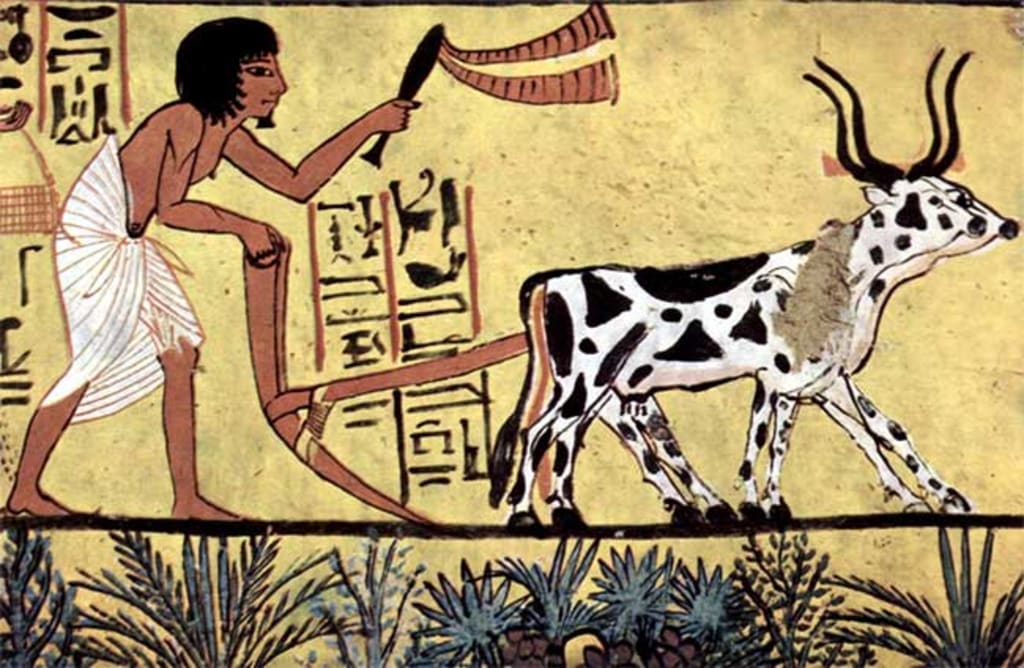
Thousands of years ago, when the first farmers realized the value of animal manure, they inadvertently laid the foundation for the long-term success of agriculture. These early farmers, with their observation and knowledge, discovered that manure was not just waste, but a valuable source of nutrients for the soil, aiding in plant growth. This, in turn, contributed to the development of human civilization.
The Smell of Manure: A Beginning of Life
Throughout human history, manure has been seen as something repulsive. However, this reaction is not instinctive, but rather something we learn as we grow. Infants are not repelled by manure, and some mammals, including primates, even eat feces to supplement their intake of vitamin B12. In fact, some herbivorous animals like rabbits consume their soft feces to re-digest food that wasn’t fully absorbed the first time, thereby gaining additional nutrients.
The characteristic odor of animal manure mostly comes from the anaerobic bacteria in the digestive system. These bacteria break down the residual waste left after digestion, producing volatile compounds that easily diffuse into the air, creating unpleasant odors. Compounds like C6H4(OH)CH3 and C9H9N found in animal feces contribute to the foul smell similar to rotting flesh. The smell of manure is a sign of natural decomposition, reflecting the powerful biological processes that support other life forms, even though humans tend to find it unpleasant.
Manure: A Key to Agricultural Development
Thousands of years ago, when the first farmers recognized the importance of manure in fertilizing the soil, they contributed significantly to the advancement of agriculture. These ancient farmers realized that animal manure could improve the quality of the soil, promote the growth of plants, and thus increase crop yields. This marked a major shift from natural harvesting to more systematic and effective farming practices.
As early as 7,000 years ago, archaeologists have discovered evidence that manure was used in ancient agricultural practices in regions such as Greece and Central Europe. For these early farmers, the smell of manure was not something to be feared or avoided, but a sign of hard work and a way of sustaining life. Manure, when mixed with straw and other materials, became a vital tool in fertilizing and enriching the soil.
Today, with advances in science, we have a greater understanding of the processes behind manure and chemical fertilizers, which help humans achieve high yields in agriculture. Manure is often processed with straw and other organic materials and left to ferment, reducing harmful bacteria and improving its effectiveness as fertilizer.
Industrial Agriculture and the Smell of Manure
While manure can improve soil, in modern industrial agriculture, concentrated animal farming operations have created more significant problems with odor and environmental pollution. These farms, housing large numbers of animals in confined spaces, produce massive amounts of manure, leading to air pollution and health risks for nearby communities. Each cow can produce around 30 kg of manure daily, and the odor from these farms can travel for miles.
The smell of manure from industrial farms is not only unpleasant but also poses serious health risks. C6H4(OH)CH3 found in animal waste is harmful to lung cells, while methane, a gas produced during decomposition, is highly flammable and can be explosive. These conditions have even led to fatalities in farms due to methane buildup. This situation also contributes to the pollution of land, water, and air, exacerbating global climate change.
Chemical Fertilizers: The Benefits and Drawbacks
With the development of chemical science, fertilizers emerged in the early 20th century, boosting agricultural productivity and helping drive population growth. However, the widespread use of chemical fertilizers has brought about significant negative environmental impacts. Chemical fertilizers, while increasing crop yields, also degrade soil quality and contribute to pollution of water and air.
Although chemical fertilizers have been a significant factor in increasing food production, they also contribute to soil degradation, loss of biodiversity in ecosystems, and accelerate climate change. The widespread use of synthetic fertilizers is also responsible for several environmental issues such as contamination of groundwater and the emission of greenhouse gases. The smell of manure from industrial farms symbolizes a break in the natural cycle of agriculture: extracting nutrients from the soil and returning them for continued nourishment. It represents the isolation of organic matter, separated from the Earth’s natural life cycle.
The Modern Industrial Farming Smell: A New Reality
The smell from large-scale farms represents the shift to industrialized agriculture, which differs greatly from traditional farming practices. In traditional farming, manure was an integral part of the natural cycle, helping to maintain soil fertility. In contrast, industrial agriculture’s reliance on synthetic fertilizers and concentrated animal farming has led to a decoupling of these cycles, with the resulting pollution and environmental harm.
Modern industrial farms do not compost manure to make fertilizers because it is not economically efficient. In the 19th century, chemists discovered that fertilizers contained essential nutrients for plants. By the early 20th century, two German chemists, Fritz Haber and Carl Bosch, developed a method to produce ammonia-based fertilizers from nitrogen in the air.
Since then, chemical fertilizers have dominated, leading to a rapid increase in agricultural productivity. Today, chemical fertilizers are used five times more than manure. While the rise of synthetic fertilizers has driven technological advancements and contributed to the growth of human civilization, it also has long-term negative impacts on the environment, contributing to soil erosion, pollution, and climate change.
Conclusion
The smell of manure, although unpleasant, carries an important message about the development of agriculture. From the earliest days of civilization, manure has played a vital role in nourishing the soil, fostering plant growth, and supporting human life. However, in the modern world, we must consider carefully how we use fertilizers and seek sustainable solutions to mitigate the negative impacts on the environment and human health. Manure is not just a waste product; it is an essential part of the natural cycles that sustain life on Earth. As we continue to evolve, we must strive for a balance that preserves the health of our planet while ensuring the continued growth of human civilization.
About the Creator
Eleanor Grace
"Dream big.Start small.Act now."
Keep reading
More stories from Eleanor Grace and writers in Earth and other communities.
Anaxagoras: The Man Who Challenged the Gods with the Truth About the Moon
More than 2,500 years ago, when myths and gods ruled the minds of men, one Greek philosopher looked up at the night sky and saw something entirely different: not a celestial deity, but a silent, rocky world floating in darkness. His name was Anaxagoras, and his bold observations about the Moon—and the universe at large—not only changed the course of human understanding, but also brought him dangerously close to death.
By Eleanor Grace9 months ago in Earth
Japan Furniture Market Size and Forecast 2025–2033
Introduction Japan’s furniture industry stands at a unique intersection of tradition and innovation. Renowned worldwide for its craftsmanship, minimalist design, and functional aesthetics, Japanese furniture reflects the nation’s cultural emphasis on harmony, efficiency, and simplicity. Today, as Japan’s population becomes increasingly urban, digitally connected, and environmentally conscious, the furniture market is undergoing a quiet but significant transformation.
By Janine Root 6 days ago in Earth
Maryland to Get Its Own Smaller Version of the Las Vegas Sphere
Maryland is about to become home to a new entertainment icon. Inspired by the famous Sphere in Las Vegas, a smaller version of the massive immersive venue is planned for the state, promising to deliver a combination of live entertainment, cutting-edge technology, and a new tourist attraction. While the Las Vegas Sphere has already made headlines worldwide for its futuristic design and mind-blowing shows, Maryland’s version aims to bring a scaled-down but equally captivating experience to the East Coast.
By Muhammad Hassanabout 15 hours ago in Earth



Comments
There are no comments for this story
Be the first to respond and start the conversation.