
The Mysteries of the Pyramid: Unveiling Ancient Secrets
Exploring the history, purpose, and enigmatic allure of the world’s most iconic structures.

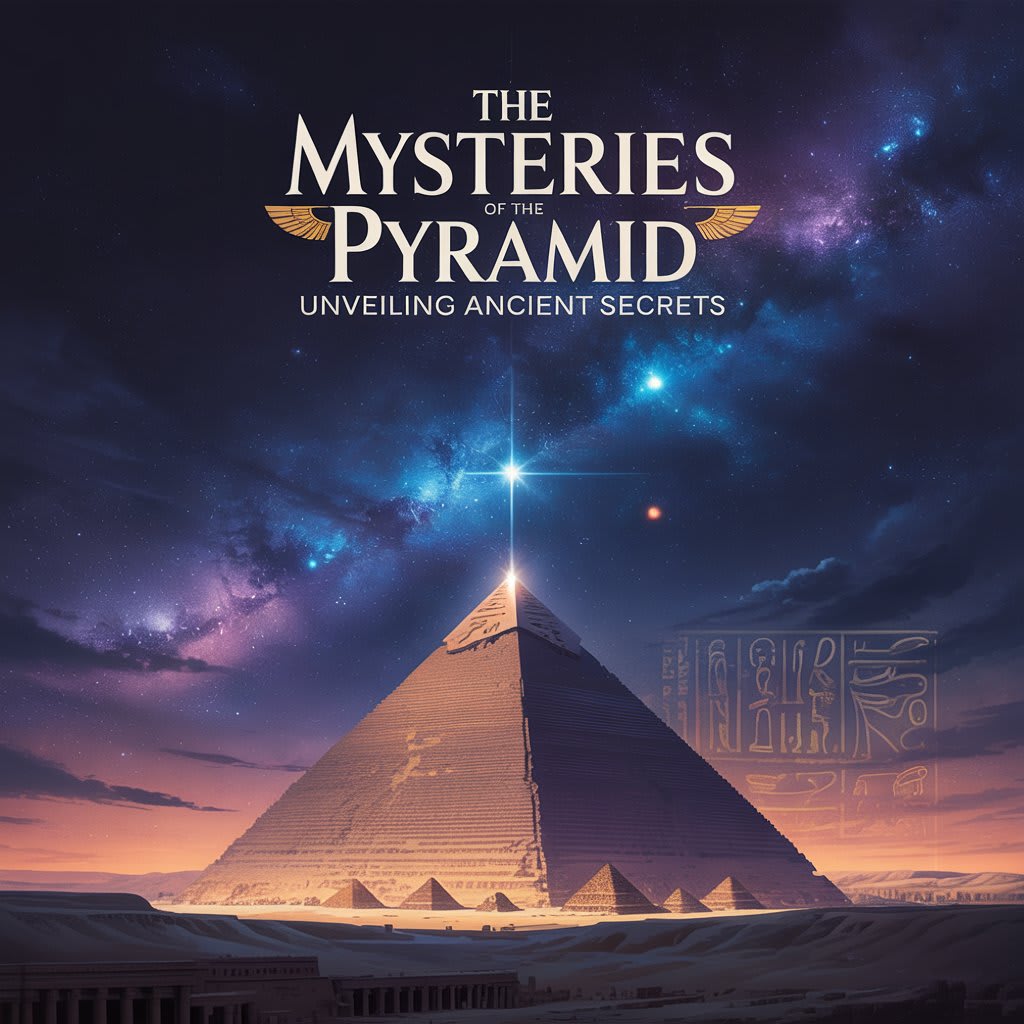
The pyramids of Egypt have long captured the human imagination, inspiring awe, fascination, and countless theories about their purpose and construction. These monumental structures, built thousands of years ago, stand as some of the most enduring and enigmatic symbols of ancient civilization. But beyond their grandeur and historical significance, there is something deeply mysterious about the pyramids—particularly their alignment with the stars and the possibility that they were constructed with knowledge far beyond their time.
Among the many questions surrounding the pyramids, one of the most intriguing lies in their connection to the night sky, particularly the Orion Belt stars. The alignment of the pyramids with the stars has led many to wonder: were the Egyptians simply creating monumental tombs, or were they channeling celestial forces to unlock deeper mysteries of the universe?
In this article, we will explore the historical context of the pyramids, the theories surrounding their construction, the connection to the Orion Belt stars, and the enduring mysteries that continue to captivate scholars and mystics alike.
The Pyramids: Monumental Achievements of Ancient Egypt
The pyramids, especially the Great Pyramid of Giza, are among the most famous and iconic structures in the world. The Great Pyramid, constructed around 2580 BC for the Pharaoh Khufu (also known as Cheops), was the tallest man-made structure on Earth for over 3,800 years. Standing at a height of 481 feet (146 meters), it remains an awe-inspiring testament to the engineering prowess of ancient Egyptians. Today, the Great Pyramid is one of the Seven Wonders of the Ancient World and the only one still largely intact.
Despite their impressive size and durability, the true purpose of the pyramids has been the subject of intense debate for centuries. The mainstream belief has long been that the pyramids served as tombs for pharaohs and important officials. However, their construction methods, exact purpose, and alignment with celestial bodies suggest there may have been deeper spiritual, religious, and astronomical significance behind their design.
The Construction: Theories and Methods
How did the ancient Egyptians build these massive structures with limited technology and resources? The construction methods of the pyramids are still a topic of heated debate. Archaeologists and historians have proposed various theories, but none fully explain the methods used to build the pyramids with such precision.
One of the most widely accepted theories involves the use of massive stone blocks, which were transported from quarries and then moved into place using a system of ramps. These ramps could have been straight, zigzagging, or spiral in design. Workers, most likely peasants or skilled laborers, would have used ropes, levers, and manpower to move the stones into place.
The precision of the pyramid’s construction, particularly the alignment with the cardinal directions, suggests an advanced understanding of geometry and astronomy. For example, the Great Pyramid’s sides are aligned almost exactly with the four cardinal points—north, south, east, and west—a feat that would have required knowledge of the Earth’s movement and stellar positions.
The Astronomical Alignment: Pyramids and the Stars
Perhaps one of the most fascinating aspects of the pyramids is their alignment with the stars, particularly the Orion Belt. The alignment of the Great Pyramid, and the other pyramids of Giza, with the stars of Orion has been well documented, and it raises important questions about the ancient Egyptians’ knowledge of astronomy.
The Egyptians believed that the gods lived among the stars and that the souls of deceased pharaohs would travel to the heavens, joining the gods in the afterlife. As a result, the ancient Egyptians had a profound connection to the stars, and their knowledge of the night sky played an essential role in their religious practices.
The constellation Orion, in particular, was of great importance to the ancient Egyptians. Orion was associated with Osiris, the god of the afterlife, resurrection, and fertility. According to Egyptian mythology, Osiris’s soul was believed to reside in the constellation, and his image was often depicted as a man with a starry belt.
The Orion Belt: Key to the Afterlife
The alignment of the pyramids with Orion’s Belt suggests that the ancient Egyptians intentionally designed these monumental structures to mirror the stars in the sky. The three pyramids of Giza—Khufu’s pyramid, Khafre’s pyramid, and Menkaure’s pyramid—are aligned with the stars Alnitak, Alnilam, and Mintaka, the three stars that make up the iconic “belt” of the Orion constellation. This alignment is not coincidental. It was believed that the pharaohs’ souls would ascend to the heavens and become one with Osiris in the afterlife. The pyramids, acting as symbolic stairways to the stars, were designed to help facilitate this journey.
The alignment of the pyramids with the stars of Orion is thought to represent the pharaohs’ connection to the divine and their path to eternal life. It is believed that the Egyptians used the stars as a cosmic guide for their religious beliefs and practices, and the pyramids were built with this celestial connection in mind.
The Role of the Nile River: A Celestial and Geographic Connection
In addition to their alignment with the stars, the pyramids also have a close connection to the Nile River, which flows northward through Egypt. The river was central to Egyptian life, and it played a significant role in the construction of the pyramids.
The positioning of the pyramids along the western bank of the Nile River was deliberate, as the west was associated with the realm of the dead in Egyptian cosmology. In fact, the ancient Egyptians believed that the sun set in the west, which was symbolically linked to death and rebirth. The east, where the sun rose, represented life and resurrection. By placing the pyramids on the west side of the Nile, the Egyptians were reinforcing the idea that the pharaohs would travel westward to the afterlife, where they would be reborn in the realm of the gods.
The Mystical Allure of the Pyramids: Secrets Yet to Be Unveiled
Despite centuries of research, much about the pyramids remains shrouded in mystery. What is the true purpose of the Great Pyramid? Could it have been more than just a tomb? Was it a giant cosmic machine designed to channel energy from the stars, or even a powerful symbolic gateway to the afterlife? Scholars, archaeologists, and mystics continue to search for answers, but the full story of the pyramids may never be fully understood.
For many, the pyramids are not just ancient relics; they are part of an ongoing mystery that connects humanity to its past—and to the cosmos. Their perfect geometric design, astronomical alignment, and connection to the stars suggest a civilization with knowledge and capabilities that far exceeded what we might expect from ancient people.
As the world continues to study the pyramids and uncover new secrets hidden within their stones, one thing remains certain: the pyramids will always be more than just monuments. They are a testament to the ingenuity, spirituality, and cosmic vision of the ancient Egyptians—reminders that the pursuit of knowledge, both on Earth and in the stars, is a timeless quest.
Conclusion: The Cosmic Connection
The mystery of the pyramids is a puzzle that continues to intrigue us. Through their alignment with the stars, particularly Orion’s Belt, the ancient Egyptians demonstrated an advanced understanding of astronomy and cosmic forces. The pyramids were not only tombs for pharaohs but gateways to the heavens, where the divine and the mortal could meet. Today, the pyramids continue to stand as enduring symbols of human curiosity, ambition, and the desire to understand the mysteries of the universe.
Whether viewed as incredible architectural feats or as mystical, celestial machines, the pyramids remain as enigmatic today as they were thousands of years ago. Perhaps, in time, we will uncover even more of their secrets—secrets that may bring us closer to understanding the true role of the pyramids in the cosmic story of human existence.
About the Creator
ZALAN KHAN
Sharing insights on education, tech, science, news, health, and motivation. I aim to inform, inspire, and empower through practical tips and thoughtful content.
Keep reading
More stories from ZALAN KHAN and writers in Earth and other communities.
Magic vs. Science: The Battle of Belief and Reality
A journey through myth, logic, and the human quest to understand the unknown. Since the dawn of human civilization, people have looked to the skies, the earth, and the mysterious forces of nature for answers. In doing so, two powerful forces emerged in our quest to explain the unknown: magic and science. Though they often appear to be opposing forces—one based on wonder and the supernatural, the other rooted in logic and evidence—they share a common purpose: to make sense of the world around us.
By ZALAN KHAN10 months ago in Chapters
How Bad Is AI for the Environment, Really?
Artificial intelligence is rapidly becoming part of everyday life. From chatbots and image generators to recommendation algorithms and automated customer service, AI systems are now embedded in countless digital tools.
By Navigating the Worldabout 22 hours ago in Earth


Comments
There are no comments for this story
Be the first to respond and start the conversation.