
Magic vs. Science: The Battle of Belief and Reality
A journey through myth, logic, and the human quest to understand the unknown.
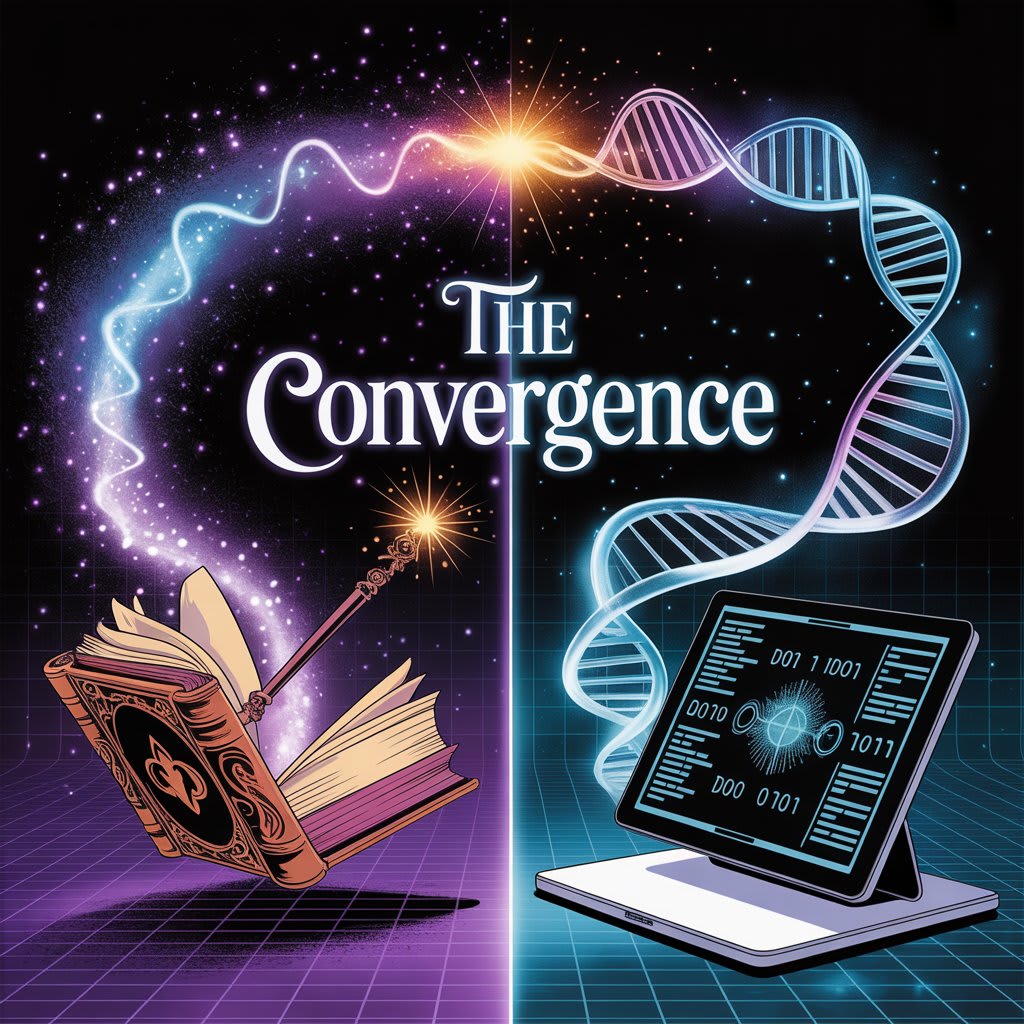
A journey through myth, logic, and the human quest to understand the unknown.
Since the dawn of human civilization, people have looked to the skies, the earth, and the mysterious forces of nature for answers. In doing so, two powerful forces emerged in our quest to explain the unknown: magic and science. Though they often appear to be opposing forces—one based on wonder and the supernatural, the other rooted in logic and evidence—they share a common purpose: to make sense of the world around us.
But where do we draw the line between what is magical and what is scientific? Are they truly enemies, or simply two sides of the same coin?
The Origins of Magic and Science
Long before modern science took shape, ancient civilizations used magic to explain natural events. Thunder was the voice of angry gods. Illness was caused by curses or evil spirits. Magical rituals, chants, and potions were used to control the forces that humans couldn’t understand.
In ancient Egypt, priests used "magical" incantations during medical treatments. In Babylon, astrologers read the stars to predict future events. These practices weren’t seen as fiction—they were real to the people who lived by them. Magic wasn’t just entertainment; it was a system of knowledge.
Then came science, slowly rising through observation, reasoning, and experimentation. Thinkers like Aristotle, Galileo, and Isaac Newton began to question old beliefs and search for natural laws to explain phenomena. Lightning, once considered divine punishment, was discovered to be an electrical discharge. Disease, once blamed on spirits, was found to come from bacteria and viruses.
The more science uncovered, the more magic began to fade into the realm of myth.
Where Magic Ends and Science Begins
One of the most famous quotes linking magic and science comes from writer Arthur C. Clarke, who said, “Any sufficiently advanced technology is indistinguishable from magic.” This idea invites us to consider that what seems magical today may become scientific tomorrow.
Take, for example, the smartphone in your hand. To someone living in the 1800s, the idea of a glowing screen that lets you talk to someone across the planet, take photos, or search a global library of knowledge would seem like pure sorcery. But for us, it's everyday technology.
So, is magic just science we haven’t explained yet?
In many ways, yes. Science demystifies magic. What was once “witchcraft” is now chemistry. What was “prophecy” can now be seen as data prediction or psychology. The more we learn, the more we understand the hidden mechanisms behind the seemingly impossible.
Magic as Culture and Symbolism
Still, magic hasn’t disappeared—it lives on in literature, film, and culture. Stories of wizards, potions, and enchanted lands still capture our imagination. Magic provides a sense of wonder and possibility, reminding us that not everything must be explained to be powerful.
In fact, some scientists and artists argue that magic plays a valuable role in creativity. It represents the human desire to believe in something greater, to explore the impossible, and to think beyond the limits of current knowledge.
Magic also reflects emotions, intuition, and spirituality, which science often cannot measure. While science explains how the heart works, magic expresses what it feels like to fall in love. Where science brings clarity, magic adds color and mystery.
Science: The Power of Proof
Unlike magic, science demands evidence. It is based on the scientific method—asking questions, forming hypotheses, conducting experiments, and analyzing results. This process ensures that conclusions are not based on belief or tradition, but on repeatable, observable facts.
Science has brought about astonishing breakthroughs—curing diseases, sending humans to space, creating renewable energy, and connecting the world through the internet. It helps us live longer, safer, and more connected lives.
But science isn’t perfect. It evolves, sometimes makes mistakes, and is constantly being challenged. What we accept as true today may change with new discoveries tomorrow. This willingness to change is what makes science powerful—it grows with our understanding.
The Human Element
The truth is, both magic and science come from the same place: the human mind. Both are born from curiosity, creativity, and the desire to understand and shape the world.
In some ways, magic and science need each other. Magic inspires dreams, while science turns those dreams into reality. Think of flight—it was once a magical idea, inspired by birds and myths. Today, it’s the science of aviation. Space travel was once the stuff of legends; now it’s a scientific goal with real missions to Mars.
Even modern technology borrows from magical language—“spells” are now called algorithms, and virtual reality lets us live in imagined worlds.
Conclusion: Not a Battle, but a Balance
"Magic vs. Science" isn’t just a battle of belief and reality—it’s a conversation between two powerful ways of seeing the world. While science seeks to explain, magic seeks to inspire. We need both. We need facts to guide our actions, but we also need wonder to fuel our imaginations.
As we continue to explore new frontiers—from artificial intelligence to quantum physics—what seems magical today may be tomorrow’s science. And even then, the human heart will always long for a little mystery.
About the Creator
ZALAN KHAN
Sharing insights on education, tech, science, news, health, and motivation. I aim to inform, inspire, and empower through practical tips and thoughtful content.
Keep reading
More stories from ZALAN KHAN and writers in Chapters and other communities.
From Bricks to Smart Devices: The Mobile Evolution
Not long ago, a mobile phone was a luxury—a device so large and heavy it earned the nickname “the brick.” Fast forward to today, and smartphones have become essential tools that fit in our pockets yet hold more power than early space shuttles. The journey of mobile phones from bulky, voice-only gadgets to sleek, multifunctional smart devices is not just a story of technological advancement—it’s a revolution that has transformed how we live, work, and connect.
By ZALAN KHAN10 months ago in Chapters


Comments
There are no comments for this story
Be the first to respond and start the conversation.