

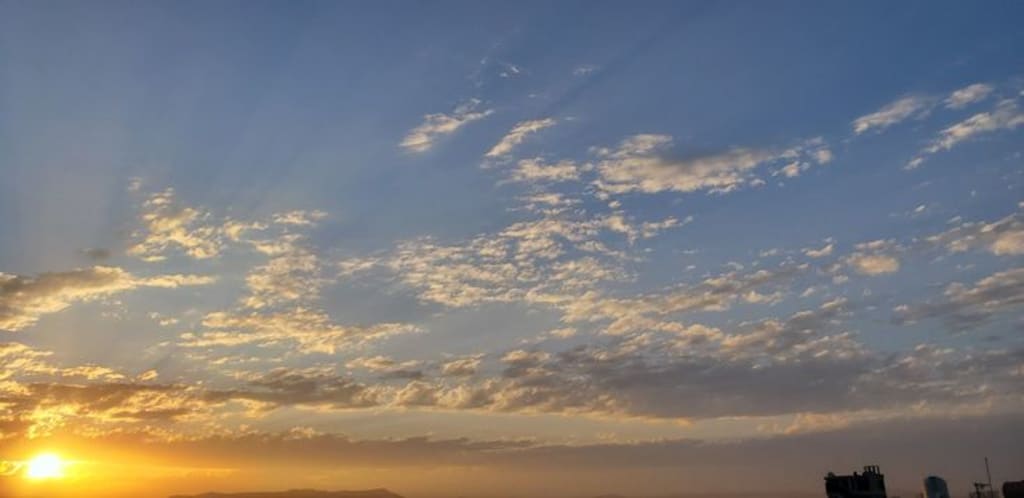
The Magic of the Night Sky
Since I was a child, the night sky has fascinated me. The twinkling stars, the calm moon, and the fleeting shooting stars filled me with wonder. Science could explain them, but my heart preferred the magic—the stories, the dreams, the mystery.
I imagined walking among the clouds, drifting toward the stars, feeling their glow. The sky wasn’t just space; it was alive, hiding secrets in its darkness. The more I stared, the more it pulled me in, like an unsolved riddle.
People are drawn to what they can’t fully understand. The sky, like our deepest emotions, is vast and mysterious. We may never fully grasp it, and that’s okay. Sometimes, just feeling connected to it is enough.
Looking up at the stars reminds me that life is more than facts—it’s about wonder, imagination, and the quiet joy of being part of something bigger. Maybe we don’t need all the answers. Perhaps the beauty is in the mystery itself.
The Reality of the Sky
The sky is not magic—it’s science. The stars aren’t twinkling just for us; they’re giant balls of burning gas millions of miles away. The moon isn’t a glowing pearl—it’s a cold, dead rock reflecting sunlight. And those “shooting stars”? Just space dust burning up in our atmosphere.
The clouds aren’t fluffy chariots—they’re water vapor, drifting where the wind takes them. The vast darkness isn’t mysterious—it’s mostly empty, a vacuum where sound doesn’t travel and light takes years to reach us.
We look up and see beauty, but the universe doesn’t care. Stars explode, black holes devour, and planets freeze in the dark. There’s no meaning—just physics, chance, and time.
Yet, we still stare. We still wish on falling debris and whisper to the moon. Maybe the real magic isn’t in the sky, but in us—the stubborn humans who insist on finding wonder in a universe that follows only cold, hard rules.
The truth? The sky is indifferent. But we aren’t. And that’s enough.
How the Sky Works: A Simple Explanation
The sky we see every day is Earth's atmosphere—a layer of gases (mostly nitrogen and oxygen) that surrounds our planet. Here's how it works:
1. Why the Sky is Blue (During the Day)
Sunlight appears white, but it’s made of all colors (like a rainbow). When sunlight enters Earth’s atmosphere, it collides with air molecules. Blue light scatters more than other colors because it travels in shorter waves, making the sky look blue.
2. Why Sunsets Are Red/Orange
At sunrise or sunset, sunlight passes through more of the atmosphere. The blue light gets scattered away, leaving behind the longer red and orange wavelengths—giving us those colorful skies.
3. Clouds: Floating Water
Clouds form when water vapor (gas) cools and condenses into tiny droplets or ice crystals around dust particles. When enough droplets gather, they become visible as clouds. If they get too heavy, rain or snow falls.
4. Why the Sky is Dark at Night
The sun lights up only half of Earth at a time. When our side faces away from the sun, we see space—which has no light unless stars, the moon, or city lights reflect off the atmosphere.
5. Stars & Planets: Distant Suns
Stars are giant balls of burning gas (like our sun, but much farther away). Planets (like Venus or Mars) don’t produce light—they reflect sunlight, which is why they look like bright dots in the night sky.
6. Shooting Stars: Space Rocks Burning Up
"Shooting stars" aren’t stars—they’re tiny rocks (meteoroids) from space that burn up as they crash into Earth’s atmosphere at high speed. If they survive and hit the ground, they’re called meteorites.
7. The Moon: Earth’s Rocky Neighbor
The moon doesn’t produce light—it reflects sunlight. Its phases (full, crescent, etc.) change based on how much of its sunlit side we can see from Earth.
8. Space is a Near-Vacuum
Beyond the atmosphere, space is almost empty—no air, no sound, just silence. The "blackness" is because there’s nothing to scatter light as our sky does.
Final Fact: The Sky is an Illusion
The sky isn’t a solid thing—it’s just the part of space we see through Earth’s air. Without an atmosphere (like on the moon), the sky would always look black, even during the day.
About the Creator
Ch Arham
...
The Jinn Fled
This short story was narrated by my grandson Taimoor, who is thirteen years old. He heard it from the family of his friend Zain Ali. Zain Ali’s mother, Nusrat Bibi, loves Taimoor like her own son. She is a pious, well-mannered, kind-hearted, and refined woman.
By Sudais Zakwan6 days ago in Earth
Trump ‘Has Stopped Dyeing His Hair’ and Thinks He Will Be Dead in a Decade,
A Surprising Revelation About Trump According to recent reports, former President Donald Trump has reportedly stopped dyeing his hair and has openly mentioned that he believes he may only have about a decade left to live. This personal revelation has surprised the public and media alike, as Trump’s hair has been a defining feature of his persona for decades. The news comes amid ongoing discussions about Trump’s health, legacy, and future political ambitions, offering a rare glimpse into his personal reflections on aging and mortality. The Significance of Hair in Trump’s Public Image For years, Donald Trump’s hair has been iconic and heavily scrutinized, appearing in political cartoons, late-night shows, and public discussions. His distinctive style has often been associated with his brand and image as a larger-than-life figure. Stopping hair dyeing could be interpreted in multiple ways: As a personal choice embracing aging, or A subtle reflection of his acknowledgment of mortality In any case, this change signals a departure from the meticulously maintained public image Trump has cultivated for decades. Trump on Mortality The report suggests that Trump has shared his thoughts about his life expectancy, stating he believes he may die within the next decade. While he has not specified reasons for this belief, it has prompted public discussion about how political figures perceive aging and legacy. Many observers note that contemplation of mortality is not unusual for someone in their mid-70s, yet when expressed publicly by a former world leader, it can influence media coverage, public perception, and political discourse. Public and Media Reaction News of Trump’s decision to stop dyeing his hair and his remarks about life expectancy has led to a mix of reactions: Some view it as a humanizing moment, revealing vulnerability in a figure often portrayed as invincible. Others see it as a potential political signal, possibly affecting perceptions of his energy, future political involvement, or campaign strategies. Social media users and commentators have highlighted the story humorously, reflecting how Trump’s personal choices often become public fascination points. Despite the lighthearted responses online, serious discussions have emerged regarding the intersection of personal health, public image, and political leadership. Aging and Politics Trump’s candid acknowledgment of aging raises broader questions about how political figures confront their mortality while remaining in the public eye. History shows that aging leaders often face intense scrutiny regarding: Health transparency Cognitive and physical ability Future political plans and legacy By discussing his own life expectancy, Trump may be indirectly addressing public curiosity about his capacity to continue influencing politics, particularly as speculation about a potential 2024 candidacy persists. The Cultural Obsession with Trump’s Appearance The attention on Trump’s hair is emblematic of a larger cultural phenomenon: society’s fascination with appearance and identity in leadership. From style choices to physical health, the public often interprets a leader’s personal traits as indicators of vitality, credibility, or capability. Stopping hair dyeing could therefore be seen as a small but symbolic moment, signaling a shift in how Trump chooses to present himself, potentially prioritizing authenticity over image cultivation. Reflections on Mortality and Legacy Expressing thoughts about mortality is not unique to Trump. Leaders and public figures often grapple with questions of legacy, impact, and how they will be remembered. For Trump, who remains a polarizing figure, contemplating life expectancy may intersect with considerations of: Historical perception Political influence Personal and familial legacy Observers note that sharing such reflections publicly can humanize political figures but also invite scrutiny and speculation about decision-making and priorities. Public Curiosity and Media Coverage Trump’s comments have fueled a wave of media coverage, from traditional news outlets to social media discussions. Key aspects driving public curiosity include: The juxtaposition of personal vulnerability and political power The cultural fixation on Trump’s hair and appearance The broader implications for his political future This coverage highlights how personal revelations of public figures can become national conversations, influencing both public perception and political narratives. Implications for Political Discourse While the story may seem trivial at first glance, it offers insight into how personal image, aging, and public commentary intersect in contemporary politics. Trump’s decision may also spark debate over: The role of personal health transparency in leadership How aging leaders maintain influence in high-stakes political environments Media emphasis on appearance versus policy or ideology These conversations contribute to a larger understanding of political culture in the modern era, where private life and public persona are deeply intertwined. Conclusion Donald Trump’s reported choice to stop dyeing his hair and his reflections on mortality provide a rare window into the personal life of a highly visible political figure. Beyond the surface, this story raises questions about aging, legacy, and public perception, highlighting how personal decisions can resonate widely in the media and among communities. As public fascination continues, the story underscores society’s complex relationship with leaders’ appearance, vulnerability, and mortality, reminding us that even the most powerful figures confront the universal truths of aging and legacy.
By Aarif Lashari7 days ago in Earth


Comments
There are no comments for this story
Be the first to respond and start the conversation.