
The Los Angeles Wildfires and the Urgency of Rethinking Global Warming
How New Findings on Aerosols and Climate Models Shed Light on Our Environmental Crisis

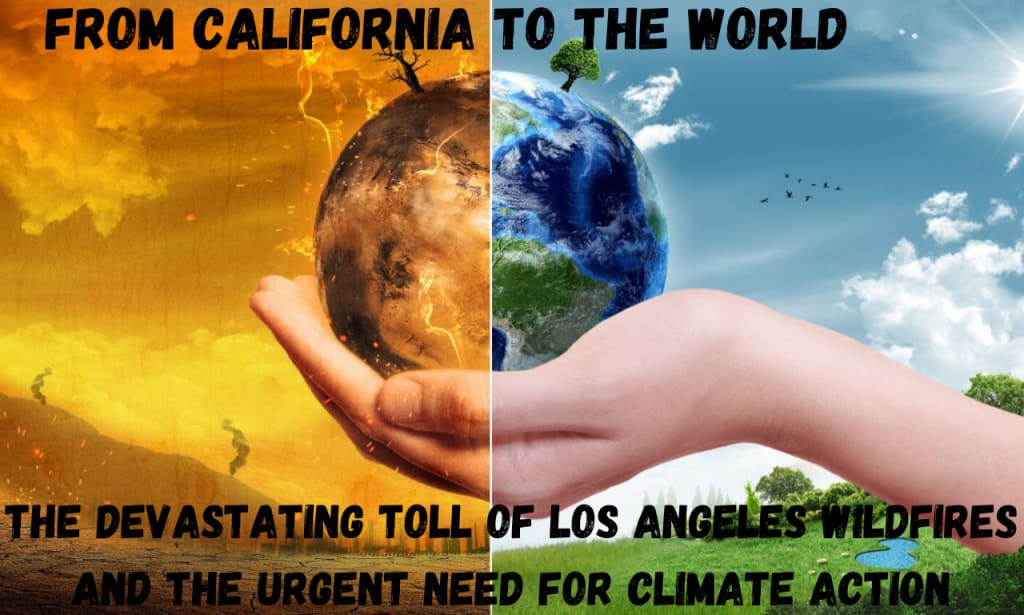
The skies over Los Angeles are shrouded in a smoky haze, a stark reminder of the wildfires that have become an increasingly devastating feature of California’s landscape. These fires, fueled by rising global temperatures and prolonged droughts, serve as a fiery warning: we must reevaluate our understanding of global warming and its driving forces.
A recent groundbreaking study by Professor Daniel Rosenfeld of the Hebrew University of Jerusalem reveals that the cooling effect of aerosols—tiny particles in the atmosphere—has been grossly underestimated. These findings necessitate a recalibration of climate-change models, offering new insights into the balance between global warming and cooling factors.
The Firestorm in Los Angeles
Los Angeles, like much of California, has become a battleground against nature’s fury. Prolonged droughts, higher-than-average temperatures, and erratic weather patterns have created a perfect storm for wildfires to ignite and spread with unprecedented ferocity.
This year’s fires have engulfed vast stretches of land, forcing evacuations, destroying homes, and claiming lives. The thick plumes of smoke carry more than ash; they are a grim testament to the environmental imbalance that humanity has accelerated.
The Cooling Effect of Aerosols
In a world grappling with rising temperatures, aerosols—particles from dust, vehicle exhaust, and other sources—have offered an unexpected form of respite. These tiny particles enhance cloud formation, reflecting sunlight back into space and cooling the Earth’s surface.
Professor Rosenfeld’s study, published in Science, highlights that this cooling effect has been underestimated—potentially by a factor of two. Using advanced satellite imaging techniques, his team developed a method to separate the effects of aerosols from vertical winds in cloud formation, allowing for a more accurate calculation of aerosols’ impact on the climate.
The Double-Edged Sword of Aerosols
While aerosols cool the Earth, they are not without drawbacks. Rosenfeld posits that aerosols lodged in deep clouds, 10 kilometers or more above the Earth, could paradoxically contribute to warming. Additionally, their benefits are dwarfed by the relentless rise in greenhouse gas emissions, which have outpaced aerosols’ cooling effects.
“If aerosols are cooling the Earth more than we thought, then the warming effect of greenhouse gases must be even larger,” Rosenfeld explains. This troubling realization underscores the magnitude of human-induced climate change and its far-reaching impacts.
Implications for Climate Models and Predictions
Current climate models predict a global temperature increase of 1.5 to 4.5 degrees Celsius by the end of the century. Rosenfeld’s findings suggest these predictions may need significant adjustments. Aerosols play a critical role in the Earth’s energy balance, and their effects on cloud composition and temperature regulation demand deeper exploration.
Accurate climate models are not just academic exercises—they are essential tools for policymakers, urban planners, and environmental advocates. The ability to predict the pace and scale of global warming will determine the success of mitigation and adaptation strategies.
The Link Between Wildfires and Climate Change
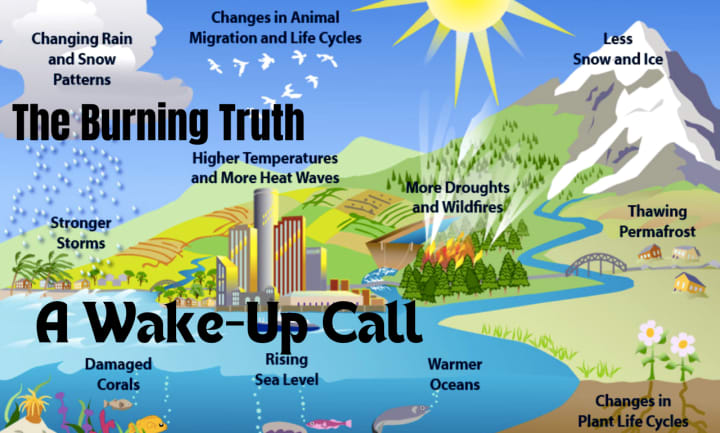
As global temperatures climb, the conditions for wildfires worsen. The Los Angeles wildfires are not isolated events but part of a broader trend fueled by climate change. Drier vegetation, higher winds, and prolonged heatwaves create tinderbox conditions that turn small sparks into raging infernos.
Moreover, wildfires release massive amounts of carbon dioxide, exacerbating the greenhouse effect and creating a vicious cycle of warming and destruction. The need for immediate action has never been more urgent.
Hope on the Horizon
Despite the grim outlook, advancements in climate science and technology offer hope. Rosenfeld’s research, funded by the Joint Israel Science Foundation and the National Natural Science Foundation of China, represents a significant step forward in understanding the intricate dynamics of our planet’s climate.
Efforts are also underway to combat the effects of wildfires. From innovative firefighting technologies to reforestation initiatives, communities are mobilizing to address the crisis. However, these efforts must be complemented by global action to reduce greenhouse gas emissions and transition to sustainable energy sources.
A Call to Action
The Los Angeles wildfires and Rosenfeld’s findings converge on a crucial point: humanity must rethink its approach to global warming. The delicate balance between natural cooling mechanisms and human-induced warming is tipping dangerously out of control.
The choices we make today—investing in renewable energy, adopting sustainable practices, and supporting climate research—will determine the world we leave for future generations.
About the Creator
mureed hussain
Hi, I’m a creative writer passionate about health & wellness, love, longevity, aging, and pet care. With extensive Quora experience, I craft engaging posts, thoughtful questions, and insightful answers.
Find me at>>[email protected]
Keep reading
More stories from mureed hussain and writers in Earth and other communities.
Ashes of History: Los Angeles Wildfires Claim Priceless Architectural Heritage
Los Angeles, a city renowned for its rich history and architectural splendor, now bears the scars of a fiery devastation that has reshaped its cultural landscape. As the Eaton and Palisades wildfires continue to rage, their wrath has extended far beyond homes and businesses, consuming the very fabric of the city’s heritage. At least 35 historically significant structures, many of which embodied decades or centuries of history, have been reduced to ash.
By mureed hussainabout a year ago in Earth
Nature’s Hidden Gems: Discovering the Rarest Flowers on Earth
Introduction: When Beauty Meets Rarity Nature is filled with wonders, but few are as captivating—and as elusive—as the rarest flowers on Earth. From enormous parasitic blooms to delicate orchids that appear only under precise conditions, these plants challenge our understanding of survival, evolution, and beauty.
By Ahmed aldeabella3 days ago in Earth
Verizon Outage Today
A sudden Verizon outage can feel unsettling, especially when your phone switches to “SOS” or “emergency calls only” without warning. Across social media and outage-tracking platforms, users often rush to ask the same questions: Is Verizon down right now? Why is my phone in SOS mode? What happened to Verizon today, and when will Verizon be back up? While outages are never convenient, they are not uncommon for large national carriers like Verizon Wireless. Understanding what a Verizon service outage means—and how to respond—can help reduce confusion during moments when connectivity disappears. Is Verizon Down? Understanding Service Outages A Verizon wireless outage occurs when part of Verizon’s cellular or data network becomes unavailable. This can affect voice calls, text messages, mobile data, or all services at once. Some outages are isolated to specific cities, such as Verizon outage NYC, Atlanta, Houston, or New Jersey, while others expand into a broader Verizon nationwide outage. When service is disrupted, users commonly report: Verizon down today Verizon network down Verizon not working Is Verizon down in my area? Verizon service outage These reports often surface within minutes, especially on outage-monitoring platforms. Why Does My Phone Say SOS? One of the most alarming signs during a Verizon outage today is seeing SOS, SOS only, or emergency calls only at the top of an iPhone. This leads many to ask, “Why is my phone in SOS mode Verizon?” SOS mode does not mean your phone is broken. It indicates that your device cannot connect to the Verizon network but can still place emergency calls using any available carrier signal. Common searches during outages include: Why does my phone say SOS only? iPhone stuck in SOS mode Why is my phone on SOS Verizon? What does SOS mean on iPhone? How to get phone out of SOS mode In most cases, the issue resolves automatically once Verizon restores network connectivity. What Caused the Verizon Outage Today? When connectivity drops, users naturally want immediate answers to what caused the Verizon outage today. Verizon does not always publish technical details right away, but outages are typically linked to: Network maintenance or system upgrades Fiber or backend routing failures Power outages affecting Verizon towers Severe weather or environmental damage Unexpected network congestion Despite online speculation, most Verizon outages are not related to cyberattacks. Searches like “Verizon cyber attack today” often trend during disruptions, but confirmed causes are usually infrastructure-related and temporary. How to Check Verizon Outage Status in Real Time If you’re wondering “Is Verizon still down?”, there are several reliable ways to check. Downdetector Verizon Platforms like Downdetector and Down Detector Verizon track real-time user reports. A spike in complaints usually confirms a Verizon outage before official statements are released. Verizon Outage Map Verizon provides a Verizon wireless outage map, sometimes including outage views by ZIP code. This helps answer questions like: Is there a Verizon outage near me? Is Verizon down in my area? My Verizon App and Network Status Pages The My Verizon app and Verizon’s official network status tools may display service alerts and updates during larger outages. Verizon Customer Service During an Outage During a widespread Verizon service outage, many users attempt to call Verizon customer service or search for the Verizon customer service number. While support teams remain active, wait times often increase significantly during major disruptions. Important things to keep in mind: Customer service representatives usually cannot provide exact repair timelines Rebooting your phone repeatedly during an outage rarely helps Network restoration often happens region by region Monitoring Verizon outage updates is typically more effective than calling support during peak outage periods. When Will Verizon Be Back Up? The most pressing question remains: When will Verizon service be restored? The answer depends on: Whether the outage is local or nationwide The cause of the disruption Whether physical repairs are required Minor outages may resolve within minutes or hours. Larger incidents—such as a Verizon cellular outage affecting multiple states—can take longer. Verizon generally prioritizes emergency communications before restoring full voice and data services. Search trends during outages often include: When will Verizon be fixed? How long will Verizon be down? When is Verizon going to be back up? While exact times are rarely guaranteed, service usually returns gradually rather than all at once. Verizon, Competition, and Broader Impact High-profile outages often spark comparisons with competitors like AT&T and T-Mobile. Searches for AT&T outage or T-Mobile outage frequently rise at the same time, as users explore alternative networks. Although outages generate headlines and social media frustration, they rarely have lasting effects on Verizon stock unless disruptions become frequent or prolonged. What to Do If Your Phone Is in SOS Mode If your phone shows SOS only during a Verizon outage: Enable Wi-Fi calling if available Avoid changing SIM or resetting network settings mid-outage Keep your device charged and updated Check Verizon outage updates periodically Once Verizon’s network stabilizes, most phones exit SOS mode automatically. Final Thoughts A Verizon outage can be disruptive, especially when communication suddenly feels out of reach. However, seeing SOS mode does not mean your phone is damaged—it simply reflects a temporary network issue. Staying informed through trusted sources like Downdetector, Verizon’s outage maps, and official Verizon updates can help users navigate these moments with clarity. While outages are frustrating, they are typically temporary, and service restoration is usually a matter of time rather than cause for alarm.
By Saboor Brohi 4 days ago in Earth
Silver Screen Magic with Mae West
American actress and singer Mae West became a popular film actress during the Great Depression. She started entertaining in vaudeville, then performed on Broadway, and finally went to Hollywood. She signed up with Paramount Pictures and made her debut in the 1932 film “Night After Night.” She also starred in musicals, comedies, and crime dramas. The American Film Institute named her one of the best classic Hollywood actresses.
By Rasma Raisters5 days ago in Geeks


Comments
There are no comments for this story
Be the first to respond and start the conversation.